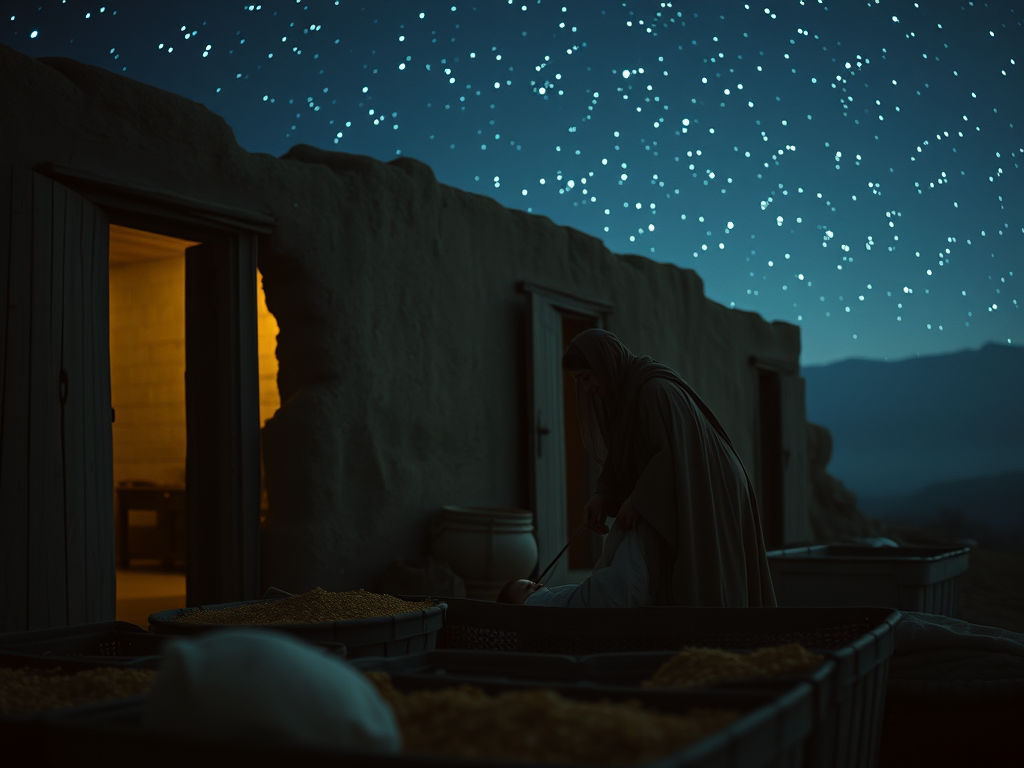
CHRISTMAS 2025: IT WASN’T SUPPOSED TO BE THIS WAY

Sometimes it seems like so much is wrong, so many things are not the way they are supposed to be. It feels like the world is spinning in chaos, out of control. But God is still in charge. He is working out everything according to his plan, and that is good for all who love God. During that first Christmas, it seemed like nothing was working out the way it was supposed to. But God was powerfully working all things according to his plan.

To listen to the sermon, click the triangle “play” button below

You can also find us on Spotify at https://open.spotify.com/show/6KKzSHPFT466aXfNT2r9OD

(This will open to the latest sermon. You can search from there if you are looking for a previous one)

“This wasn’t supposed to happen.” “This is not the way it was supposed to be.” Those are powerful feelings. They are feelings I have myself, right now. My life, and that of my family, has been turned upside down. My youngest daughter has cancer; a very serious, life-threatening cancer. Even now, she is fighting for her life.

Some of the rest of you have probably experienced some times when it feels like it wasn’t supposed to be this way. Maybe like me, a loved one of yours is in danger of losing their life, or maybe even has lost it. Maybe your career didn’t turn out the way you thought. Maybe your future is horribly different from the future you dreamed of, years ago. Your marriage wasn’t supposed to be this way.

It may surprise you to learn that Christian History is full of “this is not the way it was supposed to be’s.” Abraham and Sarah weren’t supposed to be so old, and they thought they were supposed to have more than one child. Jacob wasn’t supposed to marry Leah. Joseph wasn’t supposed to be sold as a slave, and later he wasn’t supposed to be thrown in prison too – he deserved none of it. The people of Israel weren’t supposed to be slaves in Egypt. The twelve tribes weren’t supposed to be oppressed by the surrounding peoples. The shepherd boy wasn’t supposed to have to fight the giant warrior. The anointed King, David, wasn’t supposed to have to run for his life in the wilderness. He also wasn’t supposed to have an affair. The prophets weren’t supposed to be rejected. The Kingdom of David was not supposed to be split, and the nations were not supposed to be destroyed and the people deported.

I’m sure a lot of the people involved in the very first Christmas might have felt the same way. Let’s hear from some of them.

(Zechariah and) Elizabeth: “We were supposed to be parents. We would have a house full of laughing, running children. Little girls that I would teach to sew and cook and clean. Little boys that Zechariah would teach to care for the animals and the house. Boys and girls both that we would teach the Law and the Prophets. Instead, now we are old. It is a joy, I am sure, to have a child, even now, but we were supposed to be young and fit. We were supposed to run with our children, and take them on picnics, and journeys to the temple, and play. But now, our bones are old, and we need our rest. This is no time to have a child. This is not how it was supposed to be.

Joseph: This was not the way it was supposed to be. On my wedding night, I was to be the man of the hour, honored, celebrated. I was supposed to be serenaded by the wedding party outside my house. Then we were supposed to process through the town singing songs and laughing and joking, and then we’d arrive at Mary’s house. She would come out, radiant, beautiful, perfect. We’d join hands and parade joyfully back to my house, the toast of the town, and then the feast. We would laugh and dance and eat until our stomachs and hearts were full to bursting. Then, we would go to the marriage bed, pure and uncomplicated, and consummate the joy of God’s gift of marriage.

Instead, we had to leave Nazareth under a cloud of shame. No procession, no singing, dancing or feasting, just contempt and disgust on the faces of our friends and families—contempt that we do not deserve. Mary’s young body is already stretched and changed by a child, and I’ve never even so much as kissed her lips. Instead of a parade of laughter and joy and singing, we are on this journey of cold and hardship and not much to eat, going to a town I barely remember from my childhood, a town where no one knows us enough to take us in, a town where we can’t even find paid lodging at an inn.

And then this! This birth. Mary heard from the angel, and I heard from the angel, and at least we knew this child was to be special. This is God’s own king, the promised Messiah. But there is not even a cradle or bed for him. We have to make do with an animal’s feed stall. No kings or princes are here, only plain shepherds who are even worse off than ourselves. Surely this is not the way it was supposed to be.

We all have those moments: It wasn’t supposed to be like this. This wasn’t supposed to happen. One of the most powerful scenes in Forrest Gump (my favourite movie of all time), is when Lieutenant Dan Taylor pulls Forrest out of bed in the middle of the night. Taylor has just lost his legs in combat. He feels that his destiny has been stolen from him, and with that he has lost not only his legs, but everything that matters in life. He says in despair. “This wasn’t supposed to happen. Not to me.” And later: “What am I going to do now?”

My own life feels like it has plenty of “this was not the way it was supposed to be” factors. My daughter wasn’t supposed to get cancer, and be in danger of losing her life, or her leg. I wasn’t supposed to be facing the rest of my life with grinding, unrelenting pain. My writing career was supposed to be bigger.

I’m sure each one of you could list all sorts of this is not the way it was supposed to be’s for your own lives. I can think of several big ones for those of you whom I know. And there are some pretty common ones out there for everyone: “This isn’t the way my career was supposed to go.” “This isn’t the way my marriage was supposed to be.” “I was supposed to be like that by this point in my life.” There are big ones in the world at large. We weren’t supposed to be so bitterly divided by politics. The world wasn’t supposed to be so unsafe as nations compete with each other. Sometimes it seems like the whole of the past few years is one giant “this is not how it was supposed to be.”

The ultimate: “This wasn’t the way it was supposed to be,” occurred almost two thousand years ago now. The God of the universe wasn’t supposed to come into the world, to unite his God-nature to our human nature. And if he were to do something like that, he wasn’t supposed to be poor, with no place for him to sleep. He certainly wasn’t supposed to die, certainly he wasn’t supposed to die like that, because of injustice. He wasn’t supposed to be the victim of a cruel, tortuous murder.

Or was he?

All praise to God, the Father of our Lord Jesus Christ, who has blessed us with every spiritual blessing in the heavenly realms because we are united with Christ. Even before he made the world, God loved us and chose us in Christ to be holy and without fault in his eyes. God decided in advance to adopt us into his own family by bringing us to himself through Jesus Christ. This is what he wanted to do, and it gave him great pleasure. So we praise God for the glorious grace he has poured out on us who belong to his dear Son. He is so rich in kindness and grace that he purchased our freedom with the blood of his Son and forgave our sins. He has showered his kindness on us, along with all wisdom and understanding.
God has now revealed to us his mysterious will regarding Christ—which is to fulfill his own good plan. And this is the plan: At the right time he will bring everything together under the authority of Christ—everything in heaven and on earth. Furthermore, because we are united with Christ, we have received an inheritance from God, for he chose us in advance, and he makes everything work out according to his plan. (NLT, Ephesians 1:3-11, italic formatting added to some parts for emphasis)

So many things seem like they weren’t supposed to happen, at least not like this. But God makes everything work out according to his plan. We are never outside of God’s reach. Even when everything screams at you that it was not supposed to be this way, God is at work.

It is good and healthy to leave room for grief and sadness about how we wanted it to be. It is not wrong to mourn the things that are lost, to be upset about the way things turned out. That’s one of the things I love the most about that scene from Forrest Gump. It gives the grief room to breathe. It’s OK, to feel: “This wasn’t supposed to happen. What am I going to do now?” But sorrow is not the last word. When the grieving is done, we find that God is still at work. The world is not spinning away, flying by accident out of His reach. No. Every moment that seemed like it wasn’t supposed to be that way turned out to be God working all things out according to his plan. He, himself, tells us that this is true:

28 And we know that God causes everything to work together for the good of those who love God and are called according to his purpose for them. 29 For God knew his people in advance, and he chose them to become like his Son, so that his Son would be the firstborn among many brothers and sisters. 30 And having chosen them, he called them to come to him. And having called them, he gave them right standing with himself. And having given them right standing, he gave them his glory. (NLT, Romans 8:28-30)

R.C. Lenski, the great Lutheran Bible scholar, has this to say about these verses:

So here the thought is simple and appropriate: God’s loving providence takes perfect care of those who love God. The idea is just as natural as that a father should keep his own beloved and loving children…

“All things are working together for good,” all of them without exception operate together to produce “good” in the sense of what is beneficial for God’s lovers. This includes every kind of painful experience in Christian lives, all those that press groans from our lips and make us groan inwardly in unuttered and unutterable distress. Some of the things that Paul has in mind he states in v. 38, 39. The Old Testament story of Joseph is a striking example of the mysterious and the wonderful way in which God makes the evil done to us eventuate for our good. Another instance is the story of the persecution precipitated by Saul. It scattered the great congregation at Jerusalem to distant parts, it seemed to be a calamity but served only for the good of the church by planting it in a hundred new places to flourish more than ever. (Lenski’s commentary on the New Testament, Romans 8:28)

Maybe, just maybe, God is still in charge. Maybe, just maybe, when things go wrong, God is still working all things out according to his plan. Maybe, just maybe, the Bible is true when it tells us that God’s plan creates the best possible good for us.

God’s son was more innocent than the youngest, sweetest child. His life was more precious than all the children in the world together. He deserves more honor than all the heroes in history put together. Yet he was beaten, mocked, insulted, spit upon. He was whipped and nailed to one of the most horrific instruments of torture ever devised. Surely that wasn’t how it was supposed to be.

But it was.

In that horrendous moment of shocking injustice and gruesome, violent, torture, God was working out all things according to his plan. It was surely the most appalling this is not the way it was supposed to be moments that ever occurred in history. And yet it was also the moment that God used to defeat evil, to allow justice and love to exist peacefully together forever.

Return again to that scene on that cold night in Bethlehem. The son of God entering the world, as a human, in an obscure town in an obscure country, not even recognized by the people right next door, let alone the powerful and influential people of the world.

If we humans were setting it up, there would have been a warm, bright room in a palace in the most important city in the world, and servants standing by, and a doctor and nurses and a host of people making sure everything went just right. But in reality, they didn’t even have a proper room. No bed, no clean sheets. It seemed they were abandoned and forgotten, alone.

But in all of it, God was working out everything according to his plan. What looked like a mistake, an oversight, a failure – was actually the unseen hand of God.

God is still at work. He is working out everything according to his plan, and for the good of his people. It’s OK to give ourselves space to grieve; in fact, it’s necessary. Even so, as much as we may feel it sometimes, we are not abandoned, not alone, not forgotten. From the distance of two-thousand years we can look back at Zechariah and Elizabeth, Joseph and Mary, and say, “Don’t sweat it. God is in control. I know it seems almost impossible, but actually this is exactly the way it is supposed to be. I know you can’t see it or feel it at this exact moment, but you are right in the heart  of God’s plan.”

Perhaps we can see the faithful, powerful working of God that very first Christmas, and step back and say the same thing to ourselves, and to each other. It seems like it wasn’t supposed to be this way. It looks like we are alone and abandoned. But that has never stopped God. In fact, it is in the moments like this when he seems to work most powerfully.

All that was required for Elizabeth and Zechariah, Joseph and Mary, was to trust God. He said he would do it. He assured them that he had a plan, and he would carry it out. That is all that is required of us, as well. Look back at that first Christmas, a birth that looked like it happened at the worst possible time, in the worst possible way, and learn to trust that nothing is beyond God’s reach. He is working out all things according to his plan. All that we need to do to be a part of that is to trust Him. Will you do that right now? Take a moment of silence and tell him that you do trust him, and you will continue to trust him, with his help.

Merry Christmas!

2025 ADVENT WEEK 4: ALMOST THERE

Photo by Adi K on Pexels.com

This is the final advent sermon of Wade Jones, friend to me (Tom) and to the Life Together Churches network.

We are almost there. And it is appropriate in this Advent season to take that expression several different ways. We are almost to that moment when we celebrate the birth of the Incarnate God in Jesus the Messiah. We are almost to that moment when He breaks into our lives to win a decisive victory. We are almost to that moment when He makes all creation new and right under His complete authority and the new life begins in all its fullness. We are almost there…but we are not there yet. And God uses this Advent season so richly in my life, and in our lives, to help us experience the tension that comes from living in a space where the light is always just beginning to dawn. The sun has not risen yet, but He is about to rise. And as certain as we are of the dawn that is coming, as much as we are able to see by the glow that is beginning to give light, we still live in a world with shadows and dimness. As the Apostle Paul says in First Corinthians 13:12, “For now we see in a mirror, dimly, but then face to face.”

As I write this, Tom and Kari’s daughter Elise is back in the hospital, and she is struggling. By the time you read and discuss this, she may be back home and doing much better. That’s what I am praying for. We know that eventually she will be fully healed. That’s where our hope ultimately lives. But in the dimness now, we don’t know what the next days, weeks, and months hold. What a strange thing it is to live in the timelines of God, where our state a thousand years from now is in some ways more certain than our state tomorrow. And that is where we are. We wait for God to finish forever what He has begun in Jesus.

Once again, it is good to be with you at New Joy Fellowship and the other churches in Tom’s network. I am Wade Jones, a pastor at Priest Lake Christian Fellowship and part of the Hilperts’ extended family. And today we will engage the last Sunday of Advent together. It’s interesting to me the way I have bounced around the gospel of Matthew in this Advent season – beginning in chapter 24, then going back to chapter 3, forward again to chapter 11, and now, as Advent draws to a close, we go to almost the beginning of the gospel. We are going to skip reading the genealogy part, although there is much to learn from it. In fact, the Swiss reformer Zwingli said, “The Genealogy of Jesus, if understood correctly, contains the essential theology or the main message of the Reformation.” I won’t get into all that today, but I will point out that Matthew is grounding today’s passage in the history of Israel, beginning with Abraham, the father of the nation, going through David, the great king, to the lesser-known figures after the return from exile, and finally bringing us to Joseph, who is the husband of Mary, the mother of Jesus the Messiah.

For Matthew, it is critical to situate the life and work of Jesus firmly in the history of God’s work through His people Israel. Jesus is not some sudden departure from what God has been doing for centuries; rather, He is the culmination of all that God has been doing from the very beginning.  We will talk about some of that as we go through this passage today. Let’s go to the text now. I am going to read from the Gospel of Matthew 1:18-25.

18 The birth of Jesus Christ came about this way: After His mother Mary had been engaged to Joseph, it was discovered before they came together that she was pregnant by the Holy Spirit. 19 So her husband Joseph, being a righteous man, and not wanting to disgrace her publicly, decided to divorce her secretly.

20 But after he had considered these things, an angel of the Lord suddenly appeared to him in a dream, saying, “Joseph, son of David, don’t be afraid to take Mary as your wife, because what has been conceived in her is by the Holy Spirit. 21 She will give birth to a son, and you are to name Him Jesus, because He will save His people from their sins.”

22 Now all this took place to fulfill what was spoken by the Lord through the prophet:

23 See, the virgin will become pregnant
and give birth to a son,
and they will name Him Immanuel,

which is translated “God is with us.”

24 When Joseph got up from sleeping, he did as the Lord’s angel had commanded him. He married her 25 but did not know her intimately until she gave birth to a son. And he named Him Jesus.”

After taking us through the genealogy, Matthew begins this passage with another Old Testament allusion. He chooses the Greek word genesis for the birth of Jesus. This is not an unusual word choice, to be sure, but for any Jewish readers it would immediately connect them to the very beginning of the story. “In the beginning…” from Genesis 1:1, and now a new genesis, a new beginning, a new entry of God into His creation is here. The echoes of Creation surround the Incarnation and birth of the Son of God.

Matthew tells us this story primarily through Joseph’s eyes. In most of our Christmas storybooks or plays, we combine Luke and Matthew’s information so that we don’t leave anything out, but today I want to pay attention to how Matthew, under the inspiration of the Holy Spirit, has chosen to tell the story. Why does he share from Joseph’s perspective? I think he is being pretty intentional with this choice. And it connects to the genealogy he has just taken his readers through.

For us, as twenty-first century Gentile readers, the title “Son of David” is one we could acknowledge belongs to Jesus, but it’s one we don’t think about very much. In fact, at times, the Gentile church has tended to overlook (at best) the Jewish nature of our Messiah. We can forget that we are grafted into the root that God established in Israel, and sometimes that forgetting has had tragic consequences. But if when we read Matthew’s gospel, he is going to make it very clear that Jesus is the climax of a plan that God has been working on for generations, for centuries. And that plan is rooted in the children of Abraham.

For first-century Jews, the title “Son of David” was not an afterthought. It was a key component of their Messianic expectations. When the Messiah comes, He is going to be another David. And while Jesus will redirect some of those expectations, and outright refuse others, God’s people were right to expect King David’s successor to appear. Jesus is coming as the answer to hundreds of years of prayer and prophecy, which Matthew is going to repeatedly point out – including explicitly in this passage. So, it is important to Matthew and his readers to know that the lineage of Jesus through Joseph, who was His father legally if not biologically, can be traced back to David. Jesus is a descendant of the great king.

By pointing us to Joseph, Matthew may also be highlighting one of the aspects of response to God. In Luke’s gospel, Mary is more passive – she receives what God is doing in her and through her. In Matthew’s gospel, God acts, and His actions call for Joseph to take action in response.

(As an aside, neither of these are better or worse ways to respond. Both are appropriate ways that both men and women will respond to God at times. God is always the primary actor, but sometimes His actions call for us to wait patiently for Him to act, and sometimes His actions call for us to act in response. Matthew tends to emphasize the ways we can act in response – think about the judgment scene in Matthew 25, for example. We cannot act to deliver ourselves, but we can and do sometimes act in response to the deliverance that God has provided.)

So, who is this Joseph, besides a many-times-great-grandson of King David? Matthew describes him as a man who is righteous or just. That is, someone who is concerned with obedience to God. Don’t hear this in legalistic terms. Think about Psalm 119: the longest chapter in the Bible filled with 176 verses of inspired affirmation of the goodness of knowing what God wants from His children. Like the psalmist, Joseph knows that the way to a real life is through doing what God has asked us to do. And part of that is the sexual integrity He expects from His children.

Now, Joseph has found out that his fiancée is pregnant, and he is one of two people who can be absolutely certain that the baby is not his. At this point, he has the right to make this a scandal and make Mary pay for her betrayal, but, because he is a man who seeks the heart of God, he has decided not to make this any worse for her than it has to be. He is going to end the engagement quietly and let her go. (Many of you already know this: first-century Jewish culture took engagement very seriously. It was almost a marriage except that the bride and groom did not live together or have a sexual relationship until the wedding day. But in other ways, their commitment to each other was already considered to be in place. From all Joseph could have known, Mary had to have violated this covenant agreement – whether willingly or unwillingly — so he couldn’t, in good conscience, go forward with the marriage.)

Think about how painful this must have been for Joseph! We know how the story is going to develop, so it’s easy for us to just move right one from verse 18 to verse 20. But Joseph had to live in verses 18 and 19 for at least a little while. We don’t know how long. But even if it was just one afternoon, what a miserable, disappointing, heartbreaking afternoon that must have been for him. And Matthew doesn’t give us a calendar. This part of the hurt may have lasted for days or weeks before God tells him more of the story.

I want to sit with that thought for a moment. Joseph had done nothing wrong. He wasn’t jumping to any conclusions based on gossip. And the emotions he felt, the struggle he faced, was one I think many of us can identify with on at least some level. What do you do when it seems that a decision you thought you had made well, made prayerfully, made in line with God’s will, turns out to be something completely different than what you had expected? Yes, God is going to make it all right (at least as far as Joseph’s relationship with Mary). But that doesn’t negate the wrestling that Joseph had to do in the meantime, as he lived through verse 19.

And it’s likely that we are all going to spend significant parts of our lives in our own versions of verse 19. We’ve made thoughtful decisions. We have sought the will of God and wise counsel. We’ve prayed about it and set out on a course of action, confident that we are walking in the will of the God we honor. And then things take a turn. The business goes under. The friendship falls apart. The new house has black mold. And while we believe that God will always act to redeem, we don’t know what the timetable will be. How will we react in the meantime? As we wait through Advent, can we be okay as people who can still wait on God in trust when things appear to be falling apart?

Waiting doesn’t always mean passivity. Joseph is taking steps to deal with the crisis in his life, and he is trying to take them in ways that honor God. I find great comfort in this part of the story. When Joseph is about to miss what God is doing, even though he is trying to follow Him, God shows up. He doesn’t leave him hanging out there forever (maybe for a while – a painful while, but not forever). Instead, He shows up to Joseph with an angelic messenger in a dream – the first of three times that a messenger of God will appear to Joseph in a dream. And each time, God tells him to change course – to stop something he was planning to do or doing and begin to do something different. In a way, there is an echo here of what it will mean when John and then Jesus tell Israel to “Repent, for the kingdom of heaven is at hand.” It’s time to turn your head, change your direction, and go a different way so that you can participate fully in the surprising thing that your God is doing.

In this case, once he comes to terms with what God is telling him, I imagine this “repentance” would have been pleasant for Joseph. No, you don’t have to abandon this woman that you were planning to spend your life with. And no, she hasn’t been unfaithful to you. This is actually something that I have caused to happen. So, stop planning for the divorce, and resume your plans for the wedding and the marriage. You and Mary still have work to do together.

By the way, notice here that Matthew does not really try to explain or defend the birth of Jesus to a virgin mother. He, like Luke, just accepts it as something that is known by faithful believers to be true. The gospels give us hints that questions – and not polite ones – were asked about the circumstances of Jesus’ birth, and to an extent, the gospel writers are just setting the record straight. “This is what it was actually like.” No pagan mythological encounters. No detailed biological mechanics. Just a straightforward statement that God did this, and we accept it. Honestly, when we look at the rest of Jesus’ life, death, and finally resurrection, this is just one incredible part of a long miraculous story. And if our modern ears have trouble with it, that says more about us than it does about Jesus. If we are Christians, we believe in a God who does impossible things. The virgin birth is one of them.

Now, I do wonder if it was hard for Joseph to accept this at first. I mean, it does seem rather strange to us. But remember (and hear Matthew’s intended echoes here), this is not the first time that God has been involved in the conception of a child. Yes, this One is different. This One is unique – the unique Son of the Father who has existed together with Him and the Holy Spirit since well before the creation began. And also, this difference is in line with ways that God has acted throughout the history of His people. Joseph, as a righteous Jewish man, would have known that. Go back to the beginning of Israel, with Abram and Sarai (yes, before their names changed). God promised a son to a couple that was way too old to have a child. They struggled to believe it and even tried to find ways to help God with His plan (which was a terrible idea, as it generally is). But eventually, God gave Isaac. And He gave Samsom to Manoah and his anonymous wife. And He gave Samuel to Hannah and Elkanah. Does Joseph fully grasp the mystery that the Eternal God is already incarnate in his fiancée’s womb? I seriously doubt it. Does he know that he serves a God who has caused miraculous births before? Absolutely he does. And based on that knowledge of what God has done in the past, he is ready to accept that He is doing something similar now, and that God wants him – Joseph – to be a part of it.

So, Joseph acts. Now remember, his action is in response to God’s. Joseph doesn’t cause the Incarnation. Joseph doesn’t bring God to be Immanuel with His people, present with them as an embodied part of Israel. But he does have a part to play. And he does it. He puts down the idea of divorce and picks up his pregnant fiancée, along with the snide comments, and damage to his reputation, and possible loss of business that will come with it. He marries her and takes cold showers until the child is born. He accepts a burden that he can’t even imagine at this point, although it will start to become clear early on when he and his family have to flee the country. And in doing so, he becomes the man that will raise the Son of David and the Son of God.

Church, what surprising thing is God asking you to respond to in this Advent season? Oh, He isn’t going to ask any of us to raise His Son – that job only needed to be done once. But I assume that most everyone listening to or reading this message is trying to live a righteous and just life in response to the love of God shown to us in Christ Jesus. He has come, as this passage says, to save His people from their sins. And there are ways He would like us to respond to that. There are good works, as the Apostle Paul says in Ephesians 2:10, “which God prepared beforehand that we should walk in them.” A lot of them are going to be like the life Joseph was living before the dream. We listen to the Word of God and do what He says. Love our neighbors and our enemies, put off anger and drunkenness and greed, put on humility and gentleness and peace. But sometimes – and maybe more often than we might expect – there will be something specific. Something unique. A work that God prepared ahead of time planning for you – no one else, you – to do.

That work may be like what He asked of Joseph. It may require you to lay aside legitimate emotional hurt. It may require you to ignore the way it will look to others. It may mean that you end up having to leave a relatively settled, comfortable life behind for a few years or longer. It might even mean you attract the unwanted attention of the wealthy and powerful when your obedience threatens the cultural or political narratives that serve their purposes.

Here’s what we know. If we listen to God, what He accomplishes in and through us will be good. Not necessarily my specific good – I’m not sure what Joseph personally got out of all this. But the good of His people. The good of His creation. The good of His purpose and plan to “gather together in one all things in Christ, both which are in heaven and which are on earth – in Him.” (Ephesians 1:10)

Jesus is coming. The new Creation is coming. The day of the Lord is coming. And if we listen to Him, if we respond to Him, if we lay aside our own agendas to agree with Him and live His way – we will rejoice when the sun finally does crest the top of the hill and we are fully immersed in the Light. Until then, we respond to Him and we wait.

ADVENT 2025, WEEK 3.

Thanks again to Wade Jones for helping us out during this time while we are trying to help our daughter, Elise.

To listen to the sermon, click the play button:

For some people, the player above may not work. If that happens to you, use the link below to either download, or open a player in a new page to listen.

You can also find us on Spotify at https://open.spotify.com/show/6KKzSHPFT466aXfNT2r9OD

(This will open to the latest sermon. You can search from there if you are looking for a previous one)

Matthew 11:2-11 – Advent Week Three
December 14, 2025

            New Joy Fellowship, thank you for letting me be with you again this week. I don’t think I actually introduced myself last week. My name is Wade Jones, and I am one of the pastors at Priest Lake Christian Fellowship in Antioch, Tennessee, as well as a good friend of your pastor Tom. I’m filling in through the Advent and Christmas season this year so that Tom and Kari can focus on Elise and her health. Lord, have mercy and heal Elise. Amen.

As we enter this week into the third week of Advent, we are again engaging with John the Baptist. Last week, Jesus was “off-stage,” and John was the focus, with the family of the Herods in the background. This week, the Herods are still an important part of the setting and the context, and the conflict between the kingdom of Herod and those like him and the kingdom of heaven remains a major part of the narrative. However, it is now John who has exited the stage, and Jesus has taken the center. This is what John saw coming in Matthew chapter three, and what he was looking forward to. But as we will see in today’s reading, the way things have unfolded in the time period between chapter three and chapter eleven has raised some questions in John’s mind. I want to look at two things in this passage: John’s question to Jesus and Jesus’ answer to John’s question. But first, let’s catch up on where we are in the story Matthew is giving us.

Not long after last week’s passage in Matthew 3, where John announced that he was preparing the way for the coming Anointed One of God, Jesus came to John for baptism and went into the desert. After His temptation there, Jesus hears about John’s arrest and begins His own public ministry. John stays in prison for the rest of his life, but he continues to hear about Jesus and His ministry. That’s what leads to the question John has in today’s passage. I’m going to read from Matthew 11:2-11.

When John, who was in prison, heard about the deeds of the Messiah, he sent his disciples to ask him, “Are you the one who is to come, or should we expect someone else?”

Jesus replied, “Go back and report to John what you hear and see: The blind receive sight, the lame walk, those who have leprosy are cleansed, the deaf hear, the dead are raised, and the good news is proclaimed to the poor. Blessed is anyone who does not stumble on account of me.”

As John’s disciples were leaving, Jesus began to speak to the crowd about John: “What did you go out into the wilderness to see? A reed swayed by the wind? If not, what did you go out to see? A man dressed in fine clothes? No, those who wear fine clothes are in kings’ palaces. Then what did you go out to see? A prophet? Yes, I tell you, and more than a prophet. 10 This is the one about whom it is written:

“‘I will send my messenger ahead of you,
    who will prepare your way before you.’

11 Truly I tell you, among those born of women there has not risen anyone greater than John the Baptist; yet whoever is least in the kingdom of heaven is greater than he.”

     In Matthew chapter three, John seems pretty clear about Jesus and who He is. Now, he has questions. And I think these questions are real. Some scholars suggest that John is really only asking these questions for his disciples’ benefit, or that he is not serious about his question in some way. I don’t think that takes John very seriously as a human being. And I think sometimes we are tempted to do that with the people we read about in Scripture. We want to make them “heroes of the faith,” and in that light, we have trouble processing the truth that they were (with the exception of Jesus, of course), human beings who were just as susceptible to sin and doubt and failure as we are. I think when we do that, we miss one of the main points of the story of the Bible, which is a story of a perfect and righteous God who continues to work redemptively with a bunch of flawed and sinful human beings. All that to say, I think John was having some real questions. And I think we can understand why.

            John was expecting a Messiah who would quickly bring judgment and fire, to set right the injustice of this world and putting the people of God in their rightful place as partners with YHWH in governing the world He had created. Instead, a Herod had locked John up (and will, in fact, kill him soon – you can read about that in Matthew 14). And meanwhile, Jesus doesn’t appear to be doing anything about the unjust systems of the kingdoms of this world. Instead, He is going about doing things that are good, to be sure, but not at all the good John was expecting.

            Can’t we relate to that? It is so easy, at least it is for me, to decide that based on what I know of God and His character, I can predict what He is going to do, and when He is going to do it. And then when He doesn’t operate on my schedule, or when things go in a direction I did not expect, I can fall into discouragement, doubt, and even despair. And all that can happen for me without the additional challenges of being incarcerated as a religious prisoner simply for saying things that God has said are true.

I think we should take John’s question at face value: Jesus, I really believed You were the Messiah who was coming to bring judgment to God’s enemies and relief to His people, but I don’t hear You taking the steps that would seem to me to lead to those results. Did I miss it? Is there another Messiah coming?

One other factor to consider here: remember, John is the last of the Old Testament prophets. That means he has sporadic, occasional experiences with the Holy Spirit. The Spirit of God comes on him, gives him words to speak or actions to perform as He did with Elijah, Isaiah, Ezekiel and so many others. But the Holy Spirit is not a permanent presence in John’s life – that is one of the things that shift for us with the death and resurrection of Jesus, but we’ll have to talk about that another time. And like any responsible prophet, John can question whether or not he heard the Lord as clearly as he thought he did. Prophets can make mistakes, not by being dishonest (unless they are false prophets), but simply by being human. John knows that he has sent followers to Jesus because of what the Spirit of God told him about Jesus. He feels some responsibility. And now, he needs to know if he has made a mistake.

What John does next is really wise. He asks Jesus directly. At least, as directly as he can while locked up. He sends some of his own disciples to Jesus with a direct question: was I right about You, or was I wrong? I love this approach from John. He doesn’t rely on his own ability to figure it out. He doesn’t let his potential frustration with Jesus, or with YHWH, drive a wedge between them. He doesn’t just stew in self-pity and disappointment. He goes directly with his questions and expects to receive an answer. And that in itself is a beautiful example for us. When God doesn’t act and respond in the ways that we expect Him to, what are we going to do with our discouragement? I encourage us to act like John – go directly to Him and ask, “What’s going on? Why are You doing things this way? This is not how I thought You would handle the situation – did I miss it? Are You who I think You are?”

Brothers and sisters, I believe if we are honest with ourselves and our faith, we are going to have questions like this. If God has not surprised you yet, follow Him a little longer. He will. And while the pleasant surprises rarely raise questions for me, the unpleasant ones definitely do. If John could ask this question, we can too. And I regularly do. In fact, we’ve been in the middle of those questions for years with Tom and his pain (as well as others in our fellowship at Priest Lake). And now, we ask them with Elise as well. “God, we know You can heal. We are confident that You intend to give us resurrected bodies that are fully healed. Why not do some of that now for these people we care about?” Whether or not we understand His answers – and sometimes I do, but sometimes I don’t – I think it is good and right for our relationship with Him for us to ask the questions.

And in Matthew 11, Jesus doesn’t seem to take any issue with the question John’s disciples bring to Him. He takes the question seriously, but He doesn’t take offense at it. And He answers it indirectly, which I think He does on purpose. So often, Jesus responds to a question by addressing the deeper needs under the question. He could just tell John’s disciples: “Yes, I’m the Messiah. John was right.” Instead, he answers the question in a way that is both practically wise, and more importantly, an invitation for John, John’s disciples, and the crowd following Jesus to engage more deeply with the question of what God intends to do in and through His Messiah.

Let’s dispense with the practical reason first. We’ve been talking for two weeks about the conflict between the kingdom of this world, which Herod and his descendants exemplify, and the kingdom of heaven, which John prophesied and Jesus is inaugurating. We already know that Herod the Great, the dad of the Herod who imprisoned John, wiped out all the baby boys in a village to eliminate a potential threat to his kingdom. There’s no reason to think that his son’s response will be any different. If someone in the crowd carries word back to this Herod that Jesus, John’s cousin, has declared Himself the new David, God’s anointed king over Israel, then this conflict may come to a head sooner than God intends. Jesus has work to do before His execution, and He doesn’t want word to get out too soon to the wrong people. Remember how often He tells someone He has healed, “Don’t tell anyone about this.”? His answer to John is a little bit cryptic, and it’s intended to be that way.

But the cryptic answer has another, bigger purpose. Even John, great as he was, has a different picture of what it means for Jesus to be Messiah. Jesus lists all these works that we, two thousand years later, think of as actions of the Messiah: healing the blind, the lame, the leper, returning the dead to life, speaking good news to the poor and oppressed. Because we know the whole story, because the writers of the gospels and the rest of the New Testament have explained some of the prophecies to us, we see these as Messianic actions. But first century Jews did not. Who is their model for God’s Anointed? David. Now, David did some pretty spectacular things – like the time he took down Goliath. But none of these miracles Jesus lists bring David to mind, do they? They sound like actions of God’s people, and they were actions first century Jews associated with the kingdom of heaven. But they weren’t supposed to happen yet. John was expecting the same order: first judgment on the rebellious powers of this world’s kingdom, then an age of healing, liberation, and real life will begin. They expect judgment to precede mercy.

I can understand their perspective. From one angle, what good does it do to heal someone, or return someone to life, or bring the poor out of poverty, or set free the slave, in a world that is still full of disease, death, oppression, and slavery? Doesn’t it make sense to abolish the cause first, then deal with the effects? What good does it do to proclaim freedom when the Herods and the Romans still appear to have power? They believe that until they have national liberation, healing and good news for the poor are not especially relevant – they can’t last. But Jesus is offering a new way of understanding God’s timeline. Judgment is absolutely coming – for Israel, for Rome, for every world power before or since – and one day, for us. But God is going to bring mercy first, then judgment. What Jesus is doing is bringing the reality of the kingdom of heaven into the middle of the world dominated by the kingdom of Herod. He is offering an appetizer for the banquet that is coming – a taste of the feast that God will set out for all His people in the new heavens and the new earth.

And He knows this is going to be a challenge. It’s not the kind of neat and tidy solution that we would like – or at least think we would like. But when I get worked up and stressed out in my desire for God to eradicate all evil, it’s good for me to ask myself, “What about the evil that remains in me? What about the evil that remains in those I love? I don’t really want God’s fire there yet, do I?” Our desire for God’s judgment is generally directed toward those people over there. But God doesn’t have “those people over there.” All human beings are His children, and He does not desire that any of them should perish, but that all should come into the life that the kingdom of heaven brings. So He initiates the breakthrough of the kingdom of heaven through the merciful healing, reconciling, and saving power of Jesus. In doing that, He challenges our belief that mercy is for “us” and judgment for “them.” And Jesus recognizes this challenge: “Blessed is the man who does not fall away on account of me.” In other words, “I know I’m doing this differently than you expected, John. In fact, I’m doing it differently than almost anyone expected. You’re going to have to watch and listen to me to develop your definition of Messiah; you can’t use your definition of Messiah as a filter for what I do and say.”

With John’s question, we enter a long section of Matthew’s gospel where Jesus is defining for us what Messiah is going to mean. John isn’t the last one to ask these questions. Religious leaders will ask them. Family members will ask them. The crowds around Him will ask them. And His closest followers will ask them. But Matthew is leading us to chapter 16, where Peter identifies Jesus as the Messiah, the Son of God. Not that they understand it all even then, but the disciples have come to a point where Jesus becomes the starting point for understanding God and what He is doing, instead of insisting that He fit into the models they have devised (not that they don’t still try – it takes the fact of the Resurrection and the presence of the Holy Spirit to fully deal with those misconceptions).

Brothers and sisters, this remains the challenge Jesus puts in front of us. I don’t agree with a lot of what the French philosopher Voltaire said, but he is right on with this one: “In the beginning God created man in His own image, and man has been trying to repay the favor ever since.” This is one of the primary reasons for the opposition to Jesus in His own day, and in every generation since then: We keep thinking we know what kind of God we want, and what we want Him to act like. Sometimes those pictures come from evil places in ourselves or our culture – but often, like with John the Baptist, they come from desires that sound right, and that are partially in line with God. But any picture of God that begins with me is, inherently, wrong. My brain, my heart, my will are never going to be mature and complete enough to actually develop a framework for God that is totally correct. Instead of beginning with me, I have to begin with God. And God has told us that His nature is most fully revealed in the Incarnation of the Son, Jesus. It is Jesus who displays most completely the nature of the Godhead in a way that we have some chance to comprehend. We won’t get it fully right – but it’s the only right place for us to begin. That is what Jesus is asking John to do in this passage: start with what you see me doing and hear me saying and let that define what it means to be the Messiah.

As we get ready to wrap up this week, let me pose some questions for each of us to ponder.

  • What do I see and hear God doing in my life and the world around me?
  • Where do I experience tensions between what God appears to be doing and the things I would expect Him to do?
  • When does it bother me for God to act with mercy first, especially when I don’t yet see the judgment coming?
  • How can the Holy Spirit help me remove the filters of my expectations for God so that I can see Him more clearly?
  • How do I develop trust that what God is doing is right even when it doesn’t make sense to me and may not meet the needs I feel most painfully in this moment?

Brothers and sisters, the kingdom of heaven is breaking into our lives, and sometimes it will do that in ways that disappoint or disturb us. This week, as we draw closer to the celebration of the birth of Jesus, may God help us receive Him as He is, and not as we would have Him to be. Amen.

ADVENT WEEK 2, 2025

Photo by George Becker on Pexels.com

I was very excited to do an Advent series this year. I had a pretty strong sense of what we might do. However, before I was putting the final touches on my first Advent sermon, we found out that my youngest daughter has a rare and very serious kind of bone cancer. I’ve spent most of the past two weeks sitting by her hospital bed, along with my wife, her siblings, and may friends. I would deeply appreciate your prayers for her.

My friend Wade Jones, who did the Serenity Prayer series for us, called and offered to share his own advent sermons, so that I can be with my family in all the ways I am needed. I am very grateful to Wade for helping us out.

Without further ado, here’s Wade:

To listen to the sermon, click the play button:

<p>For some people, the player above may not work. If that happens to you, use the link below to either download, or open a player in a new page to listen.

You can also find us on Spotify at https://open.spotify.com/show/6KKzSHPFT466aXfNT2r9OD

(This will open to the latest sermon. You can search from there if you are looking for a previous one)

Matthew 3:1-12 – Advent Week Two
December 7, 2025

       This morning as I begin this sermon, I feel pretty significantly conflicted. On one hand, I am glad to be back with New Joy Fellowship and the churches in Tom’s network. And I always enjoy preaching during this season of Advent as we engage the coming of Christ (past, present and future). It is such a season of hope and joy and expectation. And at the same time, the reason I am preaching for a few weeks – the serious illness of Tom and Kari’s daughter Elise – is deeply painful. I feel an emotional tension between what I want Advent to be about, and what, this year, Advent is for the Hilpert family and all of us who love them.

       In some ways, this tension is inherent in Advent. Advent is full of God’s promises about what it means for Jesus to come as Messiah, and Advent takes place in the middle of a world in which those promises are not yet fully realized. And that isn’t really the main direction I’m going today, but it is impossible for me to start without acknowledging the truth of the pain that is an important part of our community here right now. So, I’m going to pray for Elise and her family and then move into today’s Advent message.

       Father, You love Elise and her family. You are able to heal. We have seen You heal. And we ask You to heal in ways that show Your Glory to the world and Your love to and for Elise. You tell us to ask You for what we need and desire, and so we ask for her complete healing. And even as we ask this, we also trust You to do what is good and right. Your will, not mine be done. In the name of Jesus our Deliverer, Amen.

       One of the most familiar figures of Advent is John the Baptist. Last of the great prophets of the Old Testament (I know Matthew is in the New Testament, but John really belongs to the stream before Jesus, not the one after). The one whose birth was announced to his priestly father in the temple and the announcement was so surprising that Zechariah’s reaction got him muted for months. The same child who leapt in his mother’s womb in recognition of the Messiah that Mary was carrying in her pregnancy. But all those stories come to us from Luke’s gospel, and we are reading today from Matthew’s. Since the Holy Spirit was at work on purpose in guiding each of those men in how they told the story of Jesus, let’s take a look at how Matthew is setting the stage for John the Baptist. What is he telling us about John’s role in announcing the coming of Jesus, the Advent of the promised Messiah?

       Matthew begins with a genealogy – not of John, of course, but of Jesus. And he tells us more about Joseph than Mary. An angel tells Joseph to stay with his pregnant fiancée. Magicians come from the East to visit and worship the baby after His birth. And then an angel appears again to Joseph warning him to run for Egypt because the local king, Herod, is trying to have the baby killed. Then Joseph has a third angelic dream telling him that Herod is dead, and they can come back home – but since Herod’s son is ruling Judea, they go north to Nazareth in Galilee instead.

Not a word about Zechariah, Elizabeth, or John yet. In fact, if I counted right, the personal name that is mentioned most often in the first two chapters of Matthew is actually Herod. More than Mary, more than Joseph, more than Jesus. I think that’s on purpose. Matthew is setting up the conflict between the heir of King David, the true Messiah, and the kingdom that Herod and those like him rule over. It’s in the middle of this conflict that we come to today’s passage: Matthew 3:1-12. Let’s read that together.

3 1In those days John the Baptist came, preaching in the wilderness of Judea 2 and saying, “Repent, for the kingdom of heaven has come near.” 3 This is he who was spoken of through the prophet Isaiah:

“A voice of one calling in the wilderness, ‘Prepare the way for the Lord,
    make straight paths for him.’”

4 John’s clothes were made of camel’s hair, and he had a leather belt around his waist. His food was locusts and wild honey. 5 People went out to him from Jerusalem and all Judea and the whole region of the Jordan. 6 Confessing their sins, they were baptized by him in the Jordan River.

7 But when he saw many of the Pharisees and Sadducees coming to where he was baptizing, he said to them: “You brood of vipers! Who warned you to flee from the coming wrath? 8 Produce fruit in keeping with repentance. 9 And do not think you can say to yourselves, ‘We have Abraham as our father.’ I tell you that out of these stones God can raise up children for Abraham. 10 The ax is already at the root of the trees, and every tree that does not produce good fruit will be cut down and thrown into the fire.

11 “I baptize you with water for repentance. But after me comes one who is more powerful than I, whose sandals I am not worthy to carry. He will baptize you with[c] the Holy Spirit and fire. 12 His winnowing fork is in his hand, and he will clear his threshing floor, gathering his wheat into the barn and burning up the chaff with unquenchable fire.”

Wow! John the Baptist hits the gospel of Matthew like a lightning bolt out of a clear blue sky. He just shows up. And he shows up dressed like Elijah, the Old Testament prophet who wore a garment made of hair and a leather belt around his waist (2 Kings 1:8). Now if Elijah is known for anything, it’s probably the conflicts he had with King Ahab and his wife, Jezebel: drought, famine, the epic divine battle with the prophets of Baal on Mt. Carmel, the death sentence on Elijah’s head after that, and the confrontation over Naboth’s vineyard. Do you see what Matthew is setting up here? The parallels to John’s life and death? John is coming to denounce the way that God’s people have turned from their loyalty to Him. Oh, they don’t serve crude idols anymore (the exile pretty much broke that), but they are not wholeheartedly devoted to YHWH above all else and exclusive of all other priorities. They have their own agendas and aims. And all that means when God draws near, just as in the days of Elijah and Ahab, it’s going to create real issues for anyone who is trying to make the kingdom of this world work.

“In those days” … well, really, it’s been almost thirty years from chapter 2 to chapter 3. Jesus is now a grown man, although we don’t meet Him in today’s reading. We do hear about Him though. But that isn’t where John begins. And even the famous quote from Isaiah isn’t where John begins. The first words John the Baptist speaks here are these: “Repent, for the kingdom of heaven is near.” There it is, right out in the open. The things Herod was afraid of when the Magi reported to him: another king is coming, and he is going to take your throne. In fact, the king is already here, although no one recognizes Him yet. Jesus will begin His public ministry in the next chapter. And here are the first words Jesus speaks when He begins to preach: “Repent, for the kingdom of heaven is near.” (Matthew 4:17) He picks up where John left off when John got arrested.

What does it mean for us to “Repent, for the kingdom of heaven is near.” Let me start by telling what John (and later Jesus) is not saying. He is not saying, “One day you will die, and when you do you will go to either heaven or hell, so you need to say the sinner’s prayer now so that you can go to heaven when you die instead of hell.” John (and Jesus) might agree with all of that, but that is not what either of them are proclaiming in their preaching. No, the coming kingdom that they are proclaiming is not “coming someday, maybe thousands of years from now.” It literally “has come near.” When Jesus shows up, YHWH is beginning to reclaim His rule over all the nations. And John is looking out at the children of Israel and recognizing that yet again, as has happened so many times in their history, the children of Israel are not ready for their God to show up. He is coming, and if Israel does not change, it’s going to be a disaster.

That’s why we get the quote from Isaiah: Prepare the way for the Lord! God is headed this way. His arrival is imminent. And I have just looked at the roads, and they are a mess. Is this really the way you want to welcome your God? N.T. Wright observes that by and large, most of the time we keep our houses relatively clean. But the standard for day-to-day clean that we live in suddenly feels insufficient when you hear a knock on the door and it is the king. (Or maybe your mother or grandmother has come for a surprise visit.) Things that are “good enough” for just us suddenly look like glaring problems in the light of an important and prestigious visitor who we’d really like to impress – and maybe one we’d like to ask for a favor.

That is a part of what John is saying to Israel. You think you are ready for God to show up. Why? Because you’re doing better than the nations around you? Because you Pharisees rigorously keep the Law and honor the Prophets (or at least you try to)? Because you Sadducees are maintaining the Temple and its sacrifices? Yes, do all those things – but you are settling for half-measures. The God who is coming to take up His throne among you is not looking for surface compliance, or trying to do enough to get by, or checking the right boxes. He is asking for – really, He is demanding – all of it! He is coming to rule, not only Israel, but the entire world system that has been in rebellion against Him. And you who should be ready for Him to do that think that what you are offering is good enough to get by! John is telling them that they are sadly mistaken. The God of Israel and of all creation will not be satisfied with anything less than all of it. And they have not given Him all of it.

They need to repent! Now, what are they repenting of? We tend to think of repentance in terms of particular sins. I told this lie. I said this word in anger. I had too much to drink. I took a second look at her because she was hot. I responded judgmentally to an action my neighbor took. John would agree with repenting of all those – but it goes deeper. It’s not the actions themselves. It’s the attitude of rebellion against God that they indicate. Those actions are just symptoms of the real problem. And the real problem often comes down to this: I don’t really want God to be King. At least, I don’t want Him to be King of all of it. And that’s not going to fixed by a plan to “stop cussing in 21 days.” It requires a deeper change; a change of identity.

Look at what John says to the religious leaders (both groups): Don’t count on being children of Abraham to save you from the consequences of your self-centered lives. What you have as Jews is not enough (of course, for pagan Gentiles the gap is even greater, but John is talking to Jews). Is the throne room vacant and ready for God to take His seat, or do you still think that you have a right to determine how and when that will happen? Do you have a God that needs to meet your conditions and satisfy your requirements so that you can let Him be in charge? If that’s where you are, Israel – and it is! – the ax and the fire are coming for you.

I want to take a breath here. Some of you might be hearing me say, “You have to have it all together or when God shows up, you are condemned.” Let me be clear. That’s why we need Jesus. That’s why He came to us through the incarnation, born of the virgin Mary, through a life as God fully in the flesh of a man. That’s why the suffering, the death, the burial, and the resurrection were all needed. Because we were never going to get it right. We had to have God visit us in the person of Jesus Christ to take our humanity and transform it into something that could bear the weight of the presence and the glory of God. And He has done that. What John’s baptism could not accomplish, our baptism into Jesus has. We are saved by grace, through trust in the person of Jesus Christ, not by anything we do or don’t do. And also…

Israel was saved by grace as well. The Exodus was grace. The times of deliverance through the judges were grace. The victory over the Philistines through Saul and David was grace. The return from exile was grace. But grace does demand a response. And the response is to let the Gracious Deliverer be king. To turn our back on Herod in all his forms and live in the kingdom of heaven that is already breaking into our lives.

Israel was about to miss it. Not all Israel. Peter, James, and John got it (eventually). Mary Magdalane and Mary (Jesus’ mother) and Salome got it (maybe a little more quickly). Paul got it, even if he had to be hit over the head with it. But in large part, Israel missed it. And the hellfire of Rome would rain down on them and they would be demolished as a nation and a people in ways that would take hundreds of years or more to recover from. What John saw coming, what Jesus saw coming, came to pass. The kingdom of heaven showed up, and the people of God were not ready for it. God Himself appeared, and His people didn’t recognize Him or respond to Him.

Brothers and sisters, Israel was not unique. And they certainly weren’t uniquely wrong. So now, as those who have been grafted into Israel, how do we respond differently? Certainly, the presence of the Holy Spirit in us helps. But I think we face some of the same challenges as Israel – and we could miss it too. So, what does it look like for us to “repent, because the kingdom of heaven is here.”

The kingdom of Herod (and those like him) is sneaky. Most of us aren’t in danger of falling into the obvious rebellions. But the Pharisees weren’t either. And yet, they could fall into the trap of deciding for God what His reign would look like. For one thing, they knew who belonged and who didn’t. There were “good people” and “bad people,” and God was for the “good people” and against the “bad people.” And then Jesus showed up and hung out with all the wrong people. People who could do nothing for Him. People who were broken, needy, and a mess. And He chose to welcome them into the kingdom while some of the “good people” stayed outside. Am I trying to tell God who does and doesn’t deserve His mercy, His time and attention? Then I need to repent, because the kingdom of heaven is here.

The Sadducees had a different route figured out. They knew how important the Temple worship was, and they were willing to work with the kingdoms of this world to keep things going at the temple. If giving in a little to Herod here and Pilate there meant they kept freedom to worship as God had commanded, wasn’t that a worthwhile trade? A few decades later Christians would face the question of offering a pinch of incense to the emperor to escape death. It seems like a small trade-off, doesn’t it? But God, the King of heaven, wants all of us – not some, or most, but all. Am I willing to give the kings of this world something, even something small, to make it easier for me to live the way I want to live? Where am I willing to collaborate with principalities or powers because “that’s just what you have to do to get by in this world”?

John is not concerned about getting by in this world. And he ends up dead. Jesus was not concerned about getting by in this world. And he ends up dead. Stephen, James, Peter, Polycarp, Justin, and centuries of faithful followers decided that they would live for and in the kingdom of heaven. And they ended up dead. “Repent, for the kingdom of heaven is near” isn’t a guarantee that you’ll die for your faith. In our context that seems unlikely at the moment. But I think it does guarantee that we will be uncomfortable. That as we live by the teachings of Jesus, we will seem ridiculous. That our abandonment of common sense for the Word of God will cost us in our jobs, our finances, our relationships. But the thing is, the kingdom of heaven really is here. Jesus really has already begun to reign. And we are called to be citizens of the kingdom of heaven forever, beginning now. May God help us by His Holy Spirit to do just that. Amen.