WHAT’S THE DIFFERENCE BETWEEN PETER AND JUDAS?

peter-denies

Peter is my hero. He seems to mess up more than any of the other disciples, but he is my hero because of what he does after he makes mistakes. Every time, he repents, and goes back to Jesus in humility and faith. It’s not about how often you fall down: it’s about what you do after you fall. And Peter always does the right thing after he falls. He’s a terrific example for us.

To listen to the sermon, click the play button:

To download, right click on the link (or do whatever you do on a Mac) and save it to your computer:
Download Matthew Part

Matthew #96. Matthew 26:69-27:10

There is a lot going on here. Matthew tells the tale as it happened, so we are jumping back and forth between various events. So far, I have not spoken about the physical suffering that Jesus experienced, beginning with his arrest. I will continue to put that off until another message, and this time, instead, we will concentrate on Peter and Judas.

In the book of Acts, Luke describes the fate of Judas in these terms:

18Now this man acquired a field with his unrighteous wages. He fell headfirst and burst open in the middle, and all his insides spilled out. 19This became known to all the residents of Jerusalem, so that in their own language that field is called Hakeldama (that is, Field of Blood). (Acts 1:18-19, HCSB)

This is not necessarily incompatible with Matthew’s account. I will warn you that there are some gruesome thoughts in this paragraph. Here’s one way to reconcile the two. It may be that the body of Judas hung, unattended, until it began to decompose. Then, whenever it fell down “bursting open” would be a normal sort of thing to happen. At that point, the field in which it happened would have been, for Jews, ceremonially contaminated by contact with the dead body. For the Jewish religious rulers, the ideal solution to both the money (which they couldn’t use for themselves or the treasury) and the contamination, would be to buy the field as a burial ground for foreigners, since it was no good to Jews anyway. The one slight variation to this theory could be that when Judas went to hang himself, he did so at the edge of some sort of cliff, and instead of succeeding, the rope broke, and he fell to his death. After that, the same logic takes over for the rest of it.

In any case, I don’t think we have to imagine the entire sequence of Judas as happening on the very same night when Jesus was tried. I believe Matthew included it here to wrap up the history of what happened to him, but I tend to think it did not all occur on the same day Jesus was crucified. After all, the religious leaders were busy with that, and then with the Sabbath, and it is doubtful they would have taken time to debate about what to do with the money on that very day. I would say it is likely that Judas changed his mind and committed suicide within a week or two of Jesus’ crucifixion.

A lot of people use this passage to “rehabilitate” Judas, so to speak. They point out that Judas felt regret because, he says, “I have betrayed innocent blood.” Using that, many people speculate the Judas betrayed Jesus because he thought that the betrayal would provoke Jesus into some spectacular action that would then prove he was the Messiah. In other words, Judas really believed in Jesus, and just thought he needed a little “push” to start the war with the Romans. The argument boils down to this: Judas had really good intentions, and just went about it the wrong way.

However, both John and Luke tell us that it was Satan who motivated Judas to betray Jesus (John 13:27; Luke 22:3). I think that pretty conclusively ends the argument that he was just a misunderstood man with good motives.

I don’t think it is an accident that Matthew puts the story of Peter’s betrayal next to the story of Judas’ end. We have very important similarities, and also very important contrasts between the two disciples. It’s true that Judas’ betrayal is premeditated. Jesus gave him at least two opportunities that very night to repent. However, you could say the same thing about Peter. Jesus warned Peter about what was coming. When Peter denied Jesus the first time, you might say it was the heat of the moment. But there was time before his next denial, and time again before the third. After each one, Peter might have re-considered. He too, was given every chance to do it differently, and yet he too, in his own way, betrayed Jesus.

So what was different? Why is it that Judas committed suicide, while Peter went on to become the leader of Jesus’ church?

I think it boils down to the essence of what the Bible teaches: repentance and faith. [By the way, before we get into this, let me say that I am not talking in general about people who commit suicide. I am talking about Judas, specifically.]

Let’s start with repentance. Matthew says that Judas felt remorse for what he did.  The word is metamelaytheis. It is only used six times in the New Testament: the HCSB translates it three times as “changed his mind,” here as “remorse” and twice as “regretted.” The ESV translates it here as “changed his mind.” Though it is related, it is not the same word as “repentance.”

At some level, Judas felt bad about what he had done. So bad, in fact, that he committed suicide. But in all his bad feeling, he never turned back to Jesus. He regretted, but he did not repent.

Regret eats away at you. It doesn’t help you change, or lead you to anything positive. You just sit there, wishing you had done differently. Regret means you wish it hadn’t happened, but it doesn’t mean you are sorry, or that you are willing to change. That is why “regret” is one of the favorite words used by politicians in meaningless “apologies.” Over and over, you hear some Pol, caught in a scandal, say something like, “I regret what happened,” or “I regret that people were hurt.” This isn’t the same thing as saying, “I’m sorry,” or, “It is my fault; please forgive me,” or, “I am going to change.”

Since both Luke and John tell us that Judas was deeply influenced by Satan, I think we can assume that this regret was deepened, worsened, and played on demonically, over and over.

There may be something else, too. The regret of Judas was focused on the fact that he had done something wrong. Maybe you could put it this way (please pay attention to the italic emphasis):

Peter sat there, thinking, “I’ve betrayed Jesus!”

Judas sat there, thinking, “I’ve betrayed Jesus!”

What I’m getting at is this: It could be that Judas was more upset about the fact that he screwed up than the fact that it was a sin against Jesus. For Judas, it was about himself. He had regret, but not repentance. He did not humble himself before God. Though he regretted the incident (deeply) there is no evidence that he repented.

For Peter, it was that he had hurt the man he had come to know and love. The point wasn’t that he screwed up (Peter might have been used to that by now!) but that he had hurt Jesus. He wasn’t just sorry that he had made a mistake – he was sorry he had hurt his Lord. Regret is self-focused, but repentance is God-focused.

By the way, some of you have mentioned that I seem to enjoy picking on Peter. Actually, Peter is my hero. He seems to mess up more than any of the other disciples, but he is my hero because of what he does after he makes mistakes. Every time, he repents, and goes back to Jesus in humility and faith. It’s not about how often you fall down: it’s about what you do after you fall. And Peter always does the right thing after he falls. He’s a terrific example for us.

It takes humility to repent. When you repent, you are fully owning the fact that you are wrong, and in addition, humbling yourself by asking for forgiveness. You are putting yourself in a position of need in relationship to the person you hurt. You are saying that you need their forgiveness, and that you have no right to be forgiven, and no power to make them do so. You are, in a sense, offering them power over you. Peter was very humble. He knows what he is talking about when he writes, years later:

God resists the proud but gives grace to the humble. 6Humble yourselves, therefore, under the mighty hand of God, so that He may exalt you at the proper time, 7casting all your care on Him, because He cares about you. (1Pet 5:5-7, HCSB)

The second difference between Judas and Peter was faith. Despite the fact that Jesus predicted it all, neither Judas nor Peter understood what was happening when Jesus was put to death. But somehow, though he couldn’t see how, Peter believed that Jesus could overcome. He believed that Jesus would have mercy on him, and forgive his failure.

Judas, clearly, did not believe he could be forgiven. I believe he could have been. I believe that Jesus, with his question in the garden “Why have you come?” was inviting Judas to repent, even after his deed was done. Even after, Judas had the same opportunity that Peter had. But the truth was, he simply did not believe in Jesus, which is why he betrayed him in the first place.

So how do we apply these things to our lives today? I’ll offer a few thoughts, but let the Holy Spirit take you wherever he wants with this. Here are my thoughts:

The Bible says we have all sinned:

9What then? Are we any better? Not at all! For we have previously charged that both Jews and Gentiles are all under sin, 10as it is written: There is no one righteous, not even one. 11There is no one who understands; there is no one who seeks God. 12All have turned away; all alike have become useless. There is no one who does what is good, not even one. (Rom 3:9-12, HCSB)

We aren’t any better than Judas or Peter. We all stand on the same ground. The question is, will we be more like Judas, or Peter? Obviously, we want to be like Peter, but how?

  1. Seek repentance, and beware of regret. Regret doesn’t help you in any way. It leaves you with nothing. Repentance motivates, and brings you back to the Lord. If you find you are regretful but not repentant, I encourage you to ask God to help you repent instead. Repentance means you change, you turn away from your sin and toward God, even if that means sacrificing other things to do so.
  2. Seek humility. You cannot repent without humility. In repentance you admit your faults, you admit that your actions (or inactions) are wrong, and you are truly sorry for them. In addition, you give God (and sometimes other people) power over your life by admitting that you stand helplessly in need of his (and possibly their) forgiveness. To do that, you need humility.
  3. Believe that Jesus’ death was truly enough to make up for your sins. Trust what the Bible says:

Everyone who believes has God’s approval through faith in Jesus Christ.  There is no difference between people.  Because all people have sinned, they have fallen short of God’s glory.  They receive God’s approval freely by God’s grace through the price Christ Jesus paid to set us free from sin. (Romans 3:22-24, God’s Word Version)

Sometimes when I see people struggling to accept that God really forgives them, I ask this: “Are you saying that what Jesus suffered wasn’t enough for your sin? Are you saying he should have suffered more? Are you saying that what he did was somehow incomplete? If not, then stop messing around, and believe you are forgiven. Take him at his word, and receive his forgiveness.”

Peter humbly took Jesus as his word. More than that, he trusted the character of Jesus, that somehow, he could make it all OK. And that’s exactly what Jesus was doing at the very time that Peter betrayed him: making it all OK for anyone and everyone who will trust him.

THANKFULNESS

thankful-kneeling

The older I get, the more I am inclined to believe that thankfulness is a key part in receiving the grace and love and joy that are offered to us through Jesus Christ. When we thank God, we are, in a way, reaching out and receiving what we thank him for. We are agreeing with what the Bible says about his graciousness and love toward us; we affirming something true about the nature of God. We are saying, “Yes, I have received your love and grace,” and as we declare that to be true, it somehow becomes more real to us.

To listen to the sermon, click the play button:

To download, right click on the link (or do whatever you do on a Mac) and save it to your computer:
Download Thanksgiving Message

THANKSGIVING

[I preached this two years ago, and if anything, it is even more relevant today. In case you didn’t memorize at the time, here, once again, are some helpful, Biblical thoughts about giving thanks].

Thanksgiving has become an American holiday and tradition, but it does originate from deep, Christian spiritual roots. One of the things that I find interesting is that many of significant Thanksgiving celebrations early in the history of America took place in the middle of very difficult times.

The “original thanksgiving” took place in the New England settlement of Pilgrims during the sixteen-hundreds. It is true that at the time they celebrated, they had a good harvest. But they had just gone through an incredibly difficult year in which large numbers of the Pilgrims had perished from disease and malnutrition. From a simple cataloging of bad events versus good, they had much more to be upset about than to be thankful for. Yet they held a three day feast, thanking God for his blessings.

The first national day of thanksgiving was proclaimed by the brand-new American government in 1777. It is true, at the time many people were elated by the American victory over the British at Saratoga. But also at the time of the proclamation, the British still occupied the capital city of the new country (which was Philadelphia at that point) and also held New York City and several significant southern cities. The war was far from over, and times were still quite desperate, and yet they called for a national day of prayer, thankfulness, and repentance toward God.

Considering this history, perhaps it is appropriate that Thanksgiving became an official national holiday during the middle of the Civil War. Once again, the war was far from over, and many desperate times and terrible battles were both behind and ahead. Yet President Lincoln wrote of the many blessings that persisted in spite of war, and said:

It has seemed to me fit and proper that they should be solemnly, reverently and gratefully acknowledged as with one heart and voice by the whole American people. I do therefore invite my fellow citizens in every part of the United States, and also those who are at sea and those who are sojourning in foreign lands, to set apart and observe the last Thursday of November next, as a day of Thanksgiving and Praise to our beneficent Father who dwelleth in the Heavens. And I recommend to them that while offering up the ascriptions justly due to Him for such singular deliverances and blessings, they do also, with humble penitence for our national perverseness and disobedience, commend to his tender care all those who have become widows, orphans, mourners or sufferers in the lamentable civil strife in which we are unavoidably engaged, and fervently implore the interposition of the Almighty Hand to heal the wounds of the nation and to restore it as soon as may be consistent with the Divine purposes to the full enjoyment of peace, harmony, tranquility and Union.

It isn’t my intention to give a history lesson. But I want to point out explicitly that the early Americans seemed eager and able to thank God, even in the middle of significant hardship. In fact, the American Thanksgiving tradition arose more from hardship and war than from peace and prosperity. Even more, I want to point out that this idea of thanking God at all times, even in difficult circumstances, is a biblical practice.

Job chapter one records a series of calamities that befall Job, a righteous man. At the end of it all, this is what he did:

20 At this, Job got up and tore his robe and shaved his head. Then he fell to the ground in worship 21 and said:

“Naked I came from my mother’s womb,

and naked I will depart.

The LORD gave and the LORD has taken away;

may the name of the LORD be praised.”

Psalm 69 was written by someone who felt he was “poor and in pain.” His appropriate response was to thank the Lord:

But as for me — poor and in pain — let Your salvation protect me, God. I will praise God’s name with song and exalt Him with thanksgiving.  (Ps 69:29-30, HCSB)

Paul says, “Good, bad, normal, it doesn’t matter. Give thanks all the time.”

Rejoice always! Pray constantly. Give thanks in everything, for this is God’s will for you in Christ Jesus.  (1Thess 5:16-18, HCSB)

And let the peace of the Messiah, to which you were also called in one body, control your hearts. Be thankful. Let the message about the Messiah dwell richly among you, teaching and admonishing one another in all wisdom, and singing psalms, hymns, and spiritual songs, with gratitude in your hearts to God. And whatever you do, in word or in deed, do everything in the name of the Lord Jesus, giving thanks to God the Father through Him.  (Col 3:15-17, HCSB)

Devote yourselves to prayer; stay alert in it with thanksgiving.  (Col 4:2, HCSB)

The older I get, the more I am inclined to believe that thankfulness is a key part in receiving the grace and love and joy that are offered to us through Jesus Christ. I have long known that when I confess my sins to the Lord and repent, what really helps me to feel forgiven is the act of thanking him for that forgiveness. When we thank God, we are, in a way, reaching out and receiving what we thank him for. We are agreeing with what the Bible says about his graciousness and love toward us; we affirming something true about the nature of God. We are saying, “Yes, I have received your love and grace,” and as we declare that to be true, it somehow becomes more real to us. I think this is one of the reasons that the New Testament is so clear about the fact that whenever we pray, part of our praying should involve thankfulness to the Lord. Thankfulness breeds faith and grace.

Thankfulness also leads to peace and contentment. Philippians 4:5-7 teaches that thankful prayer is an antidote to worry:

Let your graciousness be known to everyone. The Lord is near. Don’t worry about anything, but in everything, through prayer and petition with thanksgiving, let your requests be made known to God. And the peace of God, which surpasses every thought, will guard your hearts and minds in Christ Jesus.  (Phil 4:5-7, HCSB)

Yes, it is good and proper to ask God for what we need, and to share our burdens with him. It is also important to thank him as we offer up those prayers. Through turning our burdens over with thankfulness, we experience the peace of God, which is beyond understanding. The fact that it is beyond understanding means that sometimes we will experience peace when our circumstances suggest that we shouldn’t be able to do so. It is thankfulness, at least in part, which leads to this sort of peace in all circumstances.

I have found that thankfulness (and the benefits of peace, grace and faith which come with it) can be encouraged by some self-discipline. Sometimes, it is helpful to just make myself start thanking God. I don’t like mornings, and I’m not usually very happy until after mid-morning. But, stepping into the shower grumpy and irritated, I can begin by thanking the Lord for running hot water, and then soap, and then a towel. I can thank him that I have my own bathroom. That reminds me that I have my own house to live in, and it is plenty for my whole family. I can go on, and thank the Lord for warm, clean socks, and the existence of coffee, and then for my wife and children. You see how it goes: once we get started, there are an endless stream of things to thank the Lord for. I think one thing that is Biblically appropriate is to frequently thank Jesus for his sacrifice for us, and for his promise of eternal life to us.

Thank the Lord today and this week, and let him encourage thankfulness in your heart!

FACING TRIALS

The Bible

We are all capable of being very self-righteous and very blind – you aren’t safe from it just because all your friends tell you that you are open minded. A whole set of things that is called “open minded” is, in fact, just a new set of beliefs that is actually closed to alternative views. That leads me to the other application. This passage may be an encouragement to you when you are unfairly judged and insulted by our culture, and people who have bought into the new cultural values.


To listen to the sermon, click the play button:

To download, right click on the link (or do whatever you do on a Mac) and save it to your computer:
Download Matthew Part 95

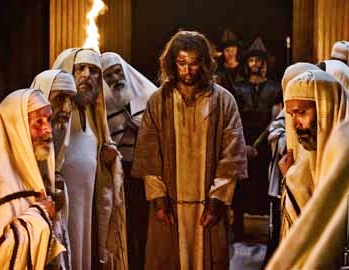
Matthew #95.  Matthew 26:57-66

We are continuing with the last night of Jesus life before the crucifixion.

None of this happened quite the way the enemies of Jesus had planned. Originally, they did not want to kill Jesus during the festival of unleavened bread, which started that very day, with the Passover (Matthew 26:5). Judas surprised them by delivering Jesus to them on Thursday night. It wasn’t ideal, but they decided to go with it. However, the timing forced them to have their trial that very night, because they wanted Jesus to be sentenced to death by the Romans before the Sabbath began, on Friday night. Otherwise, they would have violated the Sabbath by doing business with the Romans.

I want to pause and absorb this. In putting an innocent man to death, they were very concerned that they not break any of their man-made rules about the Sabbath. It gets even worse. It is almost fascinating to see how far the Jewish religious rulers were willing to go to keep pretending that what they did was righteous. It was wrong, by Jewish law, to hold a trial at night. But their desire to be done before the Sabbath forced them to do so. Even so, in order to maintain their sense of personal righteousness, they waited until after daybreak to pronounce the verdict, so they could claim that technically, it was not done at night (Mark 15:1).

Another rule of Jewish law was that everything had to be established by two or more witnesses:

15“One witness cannot establish any wrongdoing or sin against a person, whatever that person has done. A fact must be established by the testimony of two or three witnesses. (Deut 19:15, HCSB)

But the trial of Jesus was assembled so hastily that no one had time to brief the witnesses and coordinate their testimony. After several came forward with various accusations that did not match each other, finally two came forward who claimed that Jesus said something about tearing down the temple, and rebuilding it in three days. Mark records that even these two did not fully agree with one another (Mark 14:59). Jesus did, in fact, say something much like this, though the “temple” he was referring to was his body.

18So the Jews replied to Him, “What sign of authority will You show us for doing these things? ” 19Jesus answered, “Destroy this sanctuary, and I will raise it up in three days.”

20Therefore the Jews said, “This sanctuary took 46 years to build, and will You raise it up in three days? ” 21But He was speaking about the sanctuary of His body. 22So when He was raised from the dead, His disciples remembered that He had said this. And they believed the Scripture and the statement Jesus had made. (John 2:18-22, HCSB)

During his trial, his accusers took this to be a statement by Jesus that he was God, since only God could accomplish a feat like destroying the temple and rebuilding it in three days. In other words, they thought it was blasphemy.

In all of this, Jesus did not defend himself. This fulfilled Isaiah 53:7

7He was oppressed and afflicted, yet He did not open His mouth. Like a lamb led to the slaughter and like a sheep silent before her shearers, He did not open His mouth. 8He was taken away because of oppression and judgment; and who considered His fate? For He was cut off from the land of the living; He was struck because of my people’s rebellion. (Isa 53:7-8, HCSB)

Apparently there was still some question about whether or not the testimony of these two was good enough, therefore the High Priest asks Jesus directly if he is the Messiah. Jesus’ reply is quite clear:

64“You have said it,” Jesus told him. “But I tell you, in the future you will see the Son of Man seated at the right hand of the Power and coming on the clouds of heaven.”

 65Then the high priest tore his robes and said, “He has blasphemed! Why do we still need witnesses? Look, now you’ve heard the blasphemy! (Matt 26:64-65, HCSB)

You can see that up to this point, the High Priest was a bit concerned about the quality of the evidence. But now he says: “Why do we still need witnesses?” In other words, everyone present (which was certainly more than two or three) heard Jesus’ words, giving them the required number of witnesses that would agree.

Here’s an interesting thought though: Jesus’ words would have been blasphemy only if they were not true. It’s only blasphemy to claim to be the Messiah if you are not the Messiah. It’s only blasphemy to claim to be God if you are not God. There’s no doubt that Jesus’ words would have been shocking and offensive to the Jewish people of time. But neither the  High Priest, nor any of the Sanhedrin (religious ruling council), bothered to investigate whether or not the statement of Jesus was true. They didn’t review the evidence of his miracles, or consider the record of his teachings. They simply pronounced him guilty because he threatened their world view. Their self-righteousness blinded them to the truth.

When I seek application from this passage, it runs in two different directions. First, how often are we like these religious leaders? How often do we refuse to let Jesus threaten our world-view? How often are we so self-righteous that we are blinded to the truth right in front of us?

Whenever we begin to be more concerned with our way of doing things, or our particular rules, than we are about God himself, we are in danger of becoming like the Sanhedrin. For instance some religious people might be so against dancing that they forget that some kinds of dancing might honor the Lord (as David did, when he danced in worship). Some of us might get so wrapped up in “honoring the Sabbath,” that we make Sundays the most burdensome day of the week. We might hold such strong views about baptism or communion, or worship styles, that we forget the very purpose of those things. Sometimes we mix up cultural conservatism and Christianity. The two share some (but not all) values, however they aren’t the same thing. Don’t make the mistake of thinking that to be a Christian, you must vote a certain way, or belong to a certain political party. To be a Christian, Jesus alone commands all your allegiance.

By the way, blind self-righteousness is not the exclusive domain of those who go to church. Our culture is in the midst of a transition to a new set of values, and many who embrace the new values are just as self-righteous and blind as traditionally religious people; sometimes, maybe more so.

After the Presidential election of 2016, a friend of mine made an angry post on Facebook, accusing all Trump supporters of being racist, misogynistic, dishonest and greedy. She then said, in the very next sentence, that she wanted to live in a world where people respected and cared for each other, regardless of how different they were, completely missing the irony that she herself disrespected, made assumptions about, and judged, those who voted differently than her.

The point I’m making is that we are all capable of being very self-righteous and very blind – you aren’t safe from it just because all your friends tell you that you are open minded. A whole set of things that is called “open minded” is, in fact, just a new set of beliefs that is actually closed to alternative views. That leads me to the other application. This passage may be an encouragement to you when you are unfairly judged and insulted by our culture, and people who have bought into the new cultural values. Bible-believing Christians have been mocked for many years in most areas of popular culture. If you bring this up with non-Christians, however, you are likely to be insulted as a whiner, and told you are the one in power, and you are the one oppressing others.

The truth is, our culture has begun a radical shift away from Biblical values and morals. Christian thinking and Christian values are increasingly being pushed to the fringes of society. It is becoming more and more acceptable to mock and insult Christians. We are accused of being “haters” for simply believing what the Bible says about sexual morality. We are accused of being sexist and racist and homophobic and narrow minded. Examples of sexist and racist Christians can be found, of course, but in general, our culture is becoming inclined to believe those things of all of us, whether or not it is true.

I believe this will get only worse for some time to come in Western Culture. There is a vast temptation to join with this cultural shift so that the people around us don’t think badly of us. Many Christians have already given up the Bible as a significant source of truth, because they don’t want to look bad in our current culture.

It is helpful for us to remember Jesus, who was accused utterly unfairly. The accusations against him, and against first Century Christians, were exactly the reverse of the truth. But they came anyway. How will we handle such things when they come to us? I believe the example of Jesus should be a comfort to us. The accusations against him were unfair and unjust. They were lying. But Jesus did not fight back. As Peter writes:

21For you were called to this, because Christ also suffered for you, leaving you an example, so that you should follow in His steps. 22He did not commit sin, and no deceit was found in His mouth; 23when He was reviled, He did not revile in return; when He was suffering, He did not threaten but entrusted Himself to the One who judges justly. 24He Himself bore our sins in His body on the tree, so that, having died to sins, we might live for righteousness; you have been healed by His wounds. 25For you were like sheep going astray, but you have now returned to the Shepherd and Guardian of your souls. (1Pet 2:21-25, HCSB)

Peter encourages his fellow believers repeatedly as they face the ridicule and slander of those who reject Christian truth:

1Therefore, since Christ suffered in the flesh, equip yourselves also with the same resolve — because the one who suffered in the flesh has finished with sin — 2in order to live the remaining time in the flesh, no longer for human desires, but for God’s will. 3For there has already been enough time spent in doing what the pagans choose to do: carrying on in unrestrained behavior, evil desires, drunkenness, orgies, carousing, and lawless idolatry. 4So they are surprised that you don’t plunge with them into the same flood of wild living — and they slander you. 5They will give an account to the One who stands ready to judge the living and the dead. (1Pet 4:1-5, HCSB)

Once more:

12Dear friends, don’t be surprised when the fiery ordeal comes among you to test you as if something unusual were happening to you. 13Instead, rejoice as you share in the sufferings of the Messiah, so that you may also rejoice with great joy at the revelation of His glory. 14If you are ridiculed for the name of Christ, you are blessed, because the Spirit of glory and of God rests on you. (1Pet 4:12-14, HCSB)

Let the Holy Spirit apply his Word to your life today.

WE NEED RESOURCES TO DO GOD’S WORK…..RIGHT?

judas-betrays-jesus

We think we could do a lot for God’s kingdom with twelve legions of angels. Or twelve million dollars, or twelve thousand people in our congregation, or – you get the picture. We think big and powerful is always good. We think we could do so much for God if only we had ______. But Jesus didn’t have ______.  Alone, with no weapons, no money, no power, Jesus accomplished the greatest thing for God’s kingdom that has ever been done.

To listen to the sermon, click the play button:

To download, right click on the link (or do whatever you do on a Mac) and save it to your computer:
Download Matthew Part 94

Matthew #94.  Matthew 26:47-74

A lot of the so-called “contradictions” of the Bible take place in this section of the gospels. There are small details that differ between Matthew, Mark, Luke and John. Some are details about what time certain things happened, or where exactly Jesus was taken, and when. For instance, John records that they took Jesus first to the house of Annas, who was the former High-Priest, and father-in-law to the current High-Priest, Caiaphas. John says that after that, they took him also to the house of Caiaphas. The other gospels record only that Jesus was taken to the house of Caiaphas. This isn’t actually a contradiction, but merely an omission. Matthew doesn’t say that Jesus was not taken to Annas, but rather, he simply doesn’t mention it. John agrees with the others that Jesus was also taken to the house of Caiaphas.

I haven’t examined each so-called contradiction in that much detail, but I suspect that they could all be reconciled in similar ways. The truth is, all four gospels substantially agree about what was said and done during this twenty-four hour period. In a court of law, four eye-witnesses that agreed so thoroughly would be considered very powerful evidence. The fact that each gospel writer has his own unique perspective of those events is normal, and to be expected. In addition, the fact that there are small differences is powerful evidence that the gospels were not made up after the fact. If it really happened, you would expect everyone to have some slightly different memories of it. If it was made up, or edited later, all four gospels would say exactly the same thing. Once more, we find what we would expect to find if the Bible is what it claims to be.

As we examine the text, again I remind you that there might be dozens of worthwhile teachings from this passage, all of which would be good and useful for disciples of Jesus. I’m simply giving you what the Holy Spirit gives me about this text at this time.

The first thing that jumps out to me are Jesus’ words to Judas: “Friend, why have you come?” Jesus knew why Judas had come. He already knew that Judas would betray him – we saw that in 26:21-25. So, why ask the question?

I think it is one more final opportunity for Judas to repent. We saw how Jesus gave Judas the opportunity to repent during the last supper (see Matthew #91), but once more Jesus is opening the door for Judas. I think he is saying, “Why did you follow through? Why, after I warned you, did you still do this? You should have stayed away.” I think even at this point, Judas could have repented. Jesus still would have been captured, but Judas could have broken down, asked Jesus for forgiveness, and come back to him. As we will see, he did not.

Next, comes the swordplay. John tells us that it was Peter who struck the blow, and that the man who lost his ear was a man named Malchus, a servant of the high priest. Luke tells us that Jesus healed the man. They all four tell us that Jesus put a stop to the violence almost immediately.

52Then Jesus told him, “Put your sword back in its place because all who take up a sword will perish by a sword. 53Or do you think that I cannot call on My Father, and He will provide Me at once with more than 12 legions of angels? 54How, then, would the Scriptures be fulfilled that say it must happen this way? ”

 55At that time Jesus said to the crowds, “Have you come out with swords and clubs, as if I were a criminal, to capture Me? Every day I used to sit, teaching in the temple complex, and you didn’t arrest Me. 56But all this has happened so that the prophetic Scriptureswould be fulfilled.”

Then all the disciples deserted Him and ran away. (Matt 26:52-56, HCSB)

Verse 52, of course, is the source of the famous quote: “Those who live by the sword will die by the sword.” I think this is worth unpacking a little bit.

First, we see in the New Testament a change from the Old. During Old Testament times, the people of Israel were often used by God militarily to punish rebellious nations. God even used the armies of pagan nations to discipline Israel. But in the New Testament, we have a change. Jesus now says that those who live by the sword will die by the sword. In other words, the time for God’s people to use physical violence for God’s purposes is over.

In political and religious discussions, it is common for non-Christians to say: “The Bible teaches violence to God’s enemies. How can you be so critical of other religions like Islam, which teaches the same?” But the Christian Bible does not approve violence as a means for Christians to advance God’s Kingdom. In Christianity, the New Testament supersedes the Old Testament; that is, we interpret the Old Testament through the lens of the New. If there is a difference, the New Testament supersedes the Old. Therefore, we see that Jesus taught that now, since His own death and resurrection that redeemed us, violence is not an appropriate way to advance the kingdom of God. I can only say that though Christians have sometimes claimed the support of the Bible in using violence, they did so in ignorance of the teaching of Jesus, who, after all, also told us to turn the other cheek when we are struck, and to love our enemies.  In addition, the New Testament teaches us that the real battle is not physical, but spiritual. Paul writes:

10Finally, be strengthened by the Lord and by His vast strength. 11Put on the full armor of God so that you can stand against the tactics of the Devil. 12For our battle is not against flesh and blood, but against the rulers, against the authorities, against the world powers of this darkness, against the spiritual forces of evil in the heavens. (Eph 6:10-12, HCSB)

Christians, either in the past, or in the present, who interpret the Bible  to condone violence (except in self-defense) are using bad and invalid interpretation practices. They are out of step with the entire history of Christian theology. Though the crusades and the Spanish Inquisition used violence in the name of Jesus, it cannot be justified with consistent Bible interpretation; it can’t be justified with words of Jesus himself. Christian theology has always been consistent on this.

Jesus, in his words to Peter about the sword, is saying this: “That isn’t how it works, Peter. If it worked that way, I could call down legions of angels to force people to submit to me.” Instead, in the spiritual battle, Jesus chose the way of humility, submission and even suffering. God’s kingdom comes about through those sorts of things.  We see that Peter, later in life, learned this lesson well. He writes to Christians in Asia Minor:

19For it brings favor if, mindful of God’s will, someone endures grief from suffering unjustly. 20For what credit is there if you sin and are punished, and you endure it? But when you do what is good and suffer, if you endure it, this brings favor with God. 21For you were called to this, because Christ also suffered for you, leaving you an example, so that you should follow in His steps.

22He did not commit sin, and no deceit was found in His mouth; 23when He was reviled, He did not revile in return; when He was suffering, He did not threaten but entrusted Himself to the One who judges justly.

 24He Himself bore our sins in His body on the tree, so that, having died to sins, we might live for righteousness; you have been healed by His wounds. 25For you were like sheep going astray, but you have now returned to the Shepherd and Guardian of your souls. (1Pet 2:19-25, HCSB, some parts made bold by me for emphasis)

I think there is a related lesson here, also. The kingdom of God is not made real, or advanced, through human beings forcing it. James writes:

for man’s anger does not accomplish God’s righteousness. James 1:20  (HCSB)

Jesus himself says, “How would the scriptures be fulfilled if I used all of the tremendous force at my disposal? How could the Kingdom of God be accomplished?”

We don’t think this way. We think we could do a lot for God’s kingdom with twelve legions of angels. Or twelve million dollars, or twelve thousand people in our congregation, or – you get the picture. We think big and powerful is always good. We think we could do so much for God if only we had ______. But Jesus didn’t have ______.  Alone, with no weapons, no money, no power, Jesus accomplished the greatest thing for God’s kingdom that has ever been done.

The kingdom is advanced, as Peter says, when we follow in Christ’s footsteps of suffering and humility. Many times I have seen people seek to advance the kingdom, not through violence per se, but through what I would call “force.”

I think I may have done that myself. I fancy myself a pretty intelligent guy. I’ve read a few books in my time, and I remember a lot of what I read. Every so often I meet someone who claims to be an atheist. This used to get me very excited, because I have yet to meet someone who can out-argue me about the reality of God and the reliability of the Bible. But the truth is, my arguments – which have plenty of intellectual “force” – have never convinced anyone to become a Christian. I have helped to lead a number of people into God’s kingdom, but it never came about through any kind of “force” at all. The kingdom of God doesn’t happen through violence or force.

I’ll leave you with one additional thought. The kingdom of God comes through suffering and humility: and that is scary. As Jesus embraced this right before their very eyes, as he declared that the scriptures were being fulfilled in their presence, the disciples ran away. I can’t help but think that if they had really known the end of the story, they might have stuck around. But even though Jesus had told them it would all be OK in the end, they were so shocked and terrified by what was happening, they fled. It was a mistake they never made again afterwards.

Sometimes, the suffering and humility that goes along with following Jesus might be scary or unpleasant. But Jesus has already told us how it will end. There is no reason to fear. To run away would be silly. It sometimes feels horrible in the middle of it, but the ending is better than we can imagine.

Let the Holy Spirit continue to speak to you about these verses today.