2 SAMUEL #9: GOD’S HOUSE?

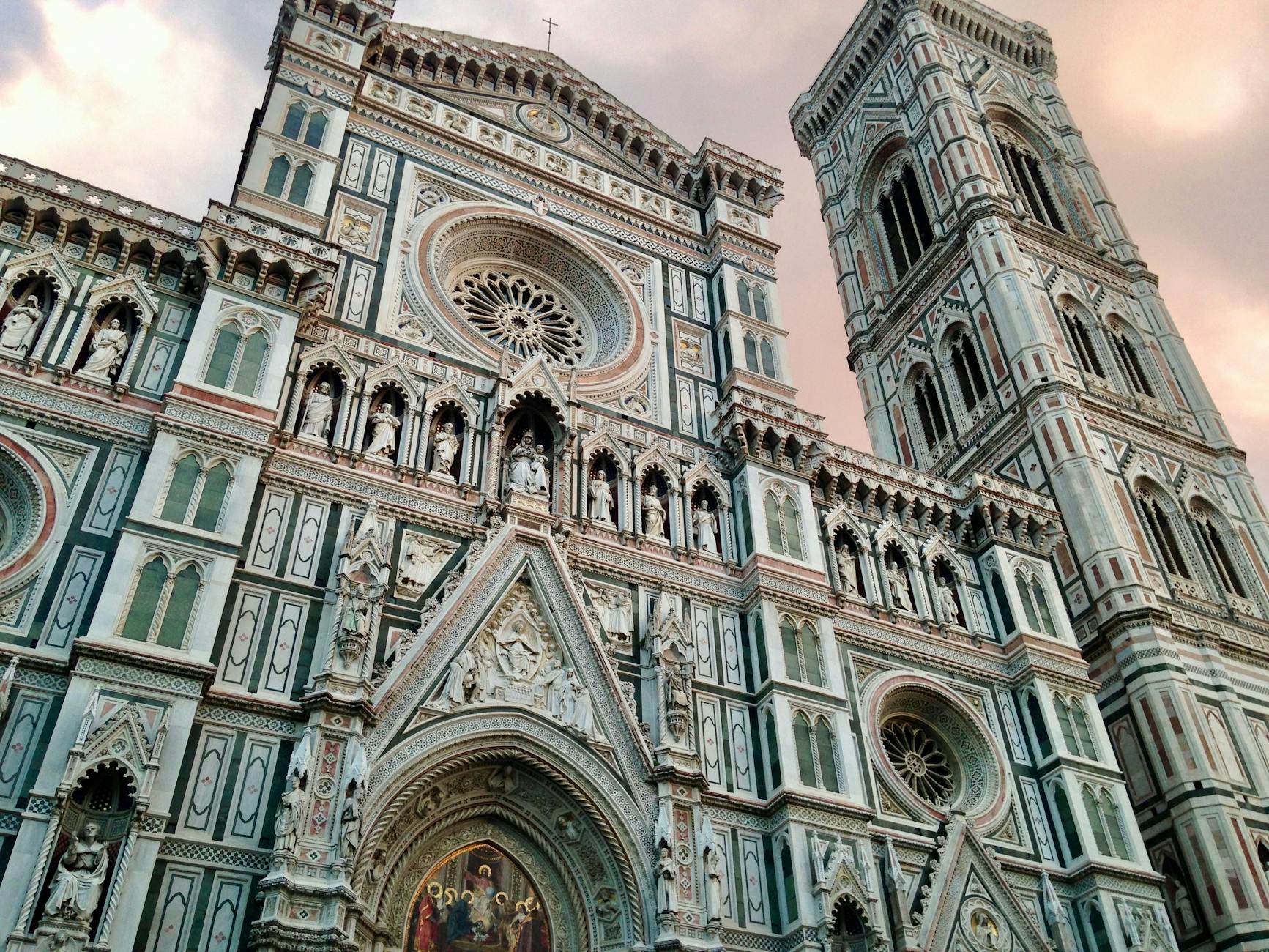
Photo by Filippo Bergamaschi on Pexels.com

God’s true presence is not found inside of special buildings, but rather, within the community of his people as they gather together to worship, learn and serve.

To listen to the sermon, click the play button:

For some people, the player above may not work. If that happens to you, use the link below to either download, or open a player in a new page to listen.

To download, right click on the link (or do whatever you do on a Mac) and save it to your computer: Download 2 Samuel Part 9

2 Samuel #9 .  2 Samuel Chapter 7:1-29 ; 1 Chronicles 17:1-26

Last time we examined the covenant the Lord established with David: to make one of his descendants the Messiah, the forever-King and savior of God’s people. We also considered God’s over the top grace offered to David and to us, and the security knowing that when we want to do God’s will, even if, by mistake, we try to do the wrong thing, the Lord will make sure to keep us from pursuing it. I think there is yet one more lesson to glean from this passage.

David set up various full-time ministries for the tent of meeting, and then he wanted to build the Lord a permanent temple in Jerusalem. The prophet Nathan agreed with David, and they were ready to start the project when the Lord spoke to Nathan, and told them to wait.

It wasn’t that David’s heart was in the wrong place, or Nathan’s instincts. They just didn’t fully understand the Lord (no one ever does, of course). The Lord wanted to show David and Nathan a few things. The first thing the Lord wanted to make sure they knew is this: He doesn’t need a house. He says this:

5 “Go and tell my servant David, ‘This is what the LORD has declared: Are you the one to build a house for me to live in? 6 I have never lived in a house, from the day I brought the Israelites out of Egypt until this very day. I have always moved from one place to another with a tent and a Tabernacle as my dwelling. 7 Yet no matter where I have gone with the Israelites, I have never once complained to Israel’s tribal leaders, the shepherds of my people Israel. I have never asked them, “Why haven’t you built me a beautiful cedar house?”’ (2 Samuel 7:5-7, NLT)

During the historical period in which David lived, most people believed that gods were attached to specific places and people-groups. This is important in understanding the Old Testament. The Philistines had a primary god named “Dagon.” They built a temple for him, and made an idol of him. The Canaanite peoples who lived nearby also believed in Dagon—but not as their god. He was the god of the Philistines, and no one needed to worry about him—unless you went into Philistine territory. If you did that, then you needed to respect Dagon, because that was where he lived. The Ammonites, who lived on the other side of the Jordan river, and to the south, worshipped a god named Moloch. For their part, the Philistines theoretically believed that Moloch was a deity, but they didn’t worship him because his territory was some distance from where they lived. There were various other gods in the region as well, including the one known as Baal. It is likely that all of the non-Israeli people around the area had some level of belief in Yahweh, the God of Israel. But they thought of him like every other ‘god.’ To them, he must be just the god of the Israelites, and only really powerful in Israelite territory.

The Israelites were continually tempted to believe in the Lord in the same way: as their personal god, one among many, generally most powerful only in their own territory. But the Lord had been continually trying to get them to see the truth: that there is only one real God, the Lord Himself, and that he is God over every people and place. That was one reason the Lord had never, before this, asked his people to build a temple for him. I think God was trying to stop the Israelites from getting the idea that he really was just like all the gods of the people who lived around and near the Israelites. They might tend to get stuck on that idea if there was a permanent temple in which he “lived.” The idea that the Lord traveled with Israel wherever they went was entirely new and unique in the ancient world. No one had ever heard of a God who went with his people, wandering anywhere he chose, even into the territory of other gods. No one had ever really conceived of the idea that there was only one true God. So, a temple might tempt the Israelites to think of God as only a local, Israelite deity.

By the way, the Canaanites worshipped a god they called “Baal.” In the ancient Canaanite legends, Baal demanded a bigger and better temple. So the Lord’s response also shows David how different he is from the supposed “god” of the people who lived nearby.

Now, eventually, of course, Solomon, David’s son, did build a temple to the Lord. Why would God do that? Did he change his mind? One way in which it was very different from the temples of the gods of the surrounding people is that there was no statue (idol) of God anywhere. But I think the main issue was this: During Solomon’s reign there was much more peace with surrounding cultures, because the Israelites had conquered them. Because they lived at peace, the Israelites started befriending their non-Israelite neighbors, and going with them to worship sites on top of high hills, where the heathen people worshipped their false gods. Therefore, one purpose of the temple in Solomon’s time was to bring the Israelites together to worship the Lord alone. Even though, as we know, a person can worship the Lord anywhere, the Israelites were being drawn to worship false gods when they went to other places. The temple, when Solomon finally built it, was intended to make sure they would worship the Lord only, and do so together as one people. Even so, in the end, that didn’t really work out. Solomon himself recognized the limits of a temple. After it was built, he prayed:

18 “But will God indeed dwell with man on the earth? Behold, heaven and the highest heaven cannot contain you, how much less this house that I have built! (2Chr 6:18, ESV)

So God wants us to understand that he lives everywhere. He doesn’t need a dwelling place on earth. I get a little crazy when I hear Christians calling their church buildings “the house of God.” No church building, not even the most magnificent cathedral, is a place where God “lives.” If you want to see “the house of God,” look around at your fellow believers, and look in the mirror.

19 Don’t you realize that your body is the temple of the Holy Spirit, who lives in you and was given to you by God? You do not belong to yourself, 20 for God bought you with a high price. So you must honor God with your body. (1 Corinthians 6:19-20, NLT)

We believers are individually temples of the Holy Spirit, but most especially, believers who live and worship together are the place where the Holy Spirit “lives.” The Lord lives “in his body,” and his body is made up of the people of the church (not the building).

27 Now you are the body of Christ and individually members of it. (1 Corinthians 12:27, ESV)

11 Now these are the gifts Christ gave to the church: the apostles, the prophets, the evangelists, and the pastors and teachers. 12 Their responsibility is to equip God’s people to do his work and build up the church, the body of Christ. 13 This will continue until we all come to such unity in our faith and knowledge of God’s Son that we will be mature in the Lord, measuring up to the full and complete standard of Christ.
14 Then we will no longer be immature like children. We won’t be tossed and blown about by every wind of new teaching. We will not be influenced when people try to trick us with lies so clever they sound like the truth. 15 Instead, we will speak the truth in love, growing in every way more and more like Christ, who is the head of his body, the church. 16 He makes the whole body fit together perfectly. As each part does its own special work, it helps the other parts grow, so that the whole body is healthy and growing and full of love. (Ephesians 4:11-16, NLT)

God “lives” in each of us individually, and also in a special way with all of us together. None of this has anything to do with physical buildings. So this was one reason God didn’t want David to build a temple.

This might sound a bit startling, but stay with me: a building accomplishes nothing spiritual.

A building is completely unnecessary to real church, and often has a negative impact on making disciples. History bears out what I am saying here. It was precisely at that point in time – during the time of Solomon and his temple – when the people of Israel began to go astray again and worship other things. The temple did not help in the least, and an argument might be made that it hurt. Solomon’s temple was destroyed four hundred years later, and about a century after that, another was made. Four hundred years after that, king Herod built a  third temple to please the Jewish people who were his subjects. It was even more magnificent than Solomon’s temple. Even with these amazing temples, the Jews utterly failed to walk with God. Let me make it very clear – the magnificent temple of the Jews did not help them when it came to actually receiving God’s salvation in Jesus Christ.

Jesus himself found the most receptive hearts far away from the temple – in the outlying areas of Palestine, not in Jerusalem. The temple, as God gave it to the people, was intended to help people recognize the Messiah when he came to earth. But most people missed the point entirely, and instead made the temple itself into a kind of idol.

Some people make church buildings into an idol as well. The closest thing in the New Testament that we have to modern church buildings is the synagogue. Jesus apparently was regular in going to the synagogues. But most of his real ministry and disciple-making took place outside of weekly worship services.

After the time of Jesus, the church worshipped in private homes, in small groups, for almost three hundred years. Even now, that period stands as one of the most effective disciple-making eras in history. After Christianity finally became legal in the Roman empire, Christians began creating buildings for their church meetings. The emergence of this trend of constructing dedicated physical church buildings coincides with the beginning of a long decline in Christianity. In fact, it wasn’t long after this that Europe entered what we call “the dark ages.” We can’t blame all of the problems of the dark ages on church buildings, but it was a period where Christianity was focused on buildings and institutions, and did very little real disciple-making that truly transformed lives.

A building dedicated to worship sometimes has practical value. However, a lot of church buildings are used for only a few hours each week – which doesn’t seem very practical after all. If the bible and history teach us anything about worship-buildings, it is that they often lead believers to live with the wrong focus, and sometimes to entirely miss the point.

I want to be honest here. I think one of the reasons New Joy Fellowship (our church here in Lebanon, TN) has not grown much numerically is because we have not built a church building. I think a lot of folks would be up for that – to build something we could look at and see and touch and say “We did that. That’s ours.” I deeply wish that people would be that committed to building a life that belongs entirely to Jesus and to living for his purposes. I think a lot of people who might otherwise come back to our worship after visiting just don’t feel like it is really “church” without a church building. I want to be blunt: when we have a building, we can divert our attention to religious activity that keeps God at arm’s length. But when there is no building, we are confronted with what it is really about: walking with God, walking in fellowship with each other, and working in God’s kingdom. If you have a building you can “have church” without those things. But if you don’t have a building, and you don’t have those things, you don’t have a church. It’s easier to have a building – you can pretend to be a church without really engaging with Jesus.

I’m not saying it is wrong for churches to build their own buildings to worship in. But I am saying it is unnecessary, and often it slows down spiritual growth and disciple-making.

Let’s see what Jesus said about worshipping in a particular building:

21 Jesus said to her, “Woman, believe me, the hour is coming when neither on this mountain nor in Jerusalem will you worship the Father. 22 You worship what you do not know; we worship what we know, for salvation is from the Jews. 23 But the hour is coming, and is now here, when the true worshipers will worship the Father in spirit and truth, for the Father is seeking such people to worship him. 24 God is spirit, and those who worship him must worship in spirit and truth.” (John 4:21-24)

Jesus essentially says here that worship is not about a place. It is about turning to God in spirit and truth. In fact, that is the kind of worship God is seeking, not people who just want to go to a certain place. God said to David, look, the place of worship for the past four-hundred years has been that moldy tent, wherever it happens to be parked. Why do you suddenly think that isn’t good enough?

So, what does all this do for your relationship with God today? First, I want to encourage you to hold on to the understanding that a real church is a community of people who trust Jesus and walk in fellowship with God, and in fellowship with one another, and allow God to use their lives for his kingdom purposes. It has nothing to do with where, when or in what building they worship.

There are people who take things too far the other way. They claim it is not important to have dedicated times of worship with other believers. They think “Hey, my body is a temple of the Holy Spirit. I don’t need to be part of a worshipping community.” But that picture is not Biblical either. Such a thing would not even have occurred to the apostles, or any Christians throughout history, until quite recently. Historically, all cultures were very communal, and the idea of an individual who doesn’t need a community was entirely unknown in Biblical times, and even for centuries afterwards. So, to be clear, though Christians don’t need a church building, they do need a church—that is, a community of people with whom they regularly worship and serve.

David and Nathan were both godly men who thought at first that a building for God was important. So don’t feel bad if you have thought that in the past. But understand, God told Nathan and David, “No, it isn’t important. I don’t want a building right now.”

The focus that God wanted was on his work to bring salvation into the world. He wanted his people to receive the Messiah and put their trust in him. That is the focus he wants for us also.  Jesus said:

19 Again, I assure you: If two of you on earth agree about any matter that you pray for, it will be done for you by My Father in heaven. 20 For where two or three are gathered together in My name, I am there among them.” (Matt 18:19-20, HCSB)

The word “where” means “whatever place you happen to be in.” The full presence of God, and full authority of heaven is found among God’s people gathered together, not in a building somewhere.

Now, I want to speak directly to New Joy Fellowship and to the people of Life Together Churches for a few moments. It’s easy to say “come help us build a building.” People understand that. It’s a helpful thing to motivate people. It is a simple vision to grasp and it is less threatening than real discipleship.

But I want to challenge you to present new people with a vision to “come help us build disciples.” Think about it this way. Not a single church building that now exists will be there in the New Creation. Not. One. But every single disciple that we make will be there with us. Let’s not waste time and money building what is after all, a fake church. I mean it. A building is not a church, no matter how many crosses and altars you slap on it. Let’s put our time into real church. We can present the vision clearly and simply. We want to make disciples. We do that by walking with God, walking with others and working in the kingdom. Let’s build a real house of God in that way!

SERENITY PRAYER #6: HARDSHIP AS A PATHWAY TO PEACE

Photo by Na~jeeb Qadmi on Pexels.com

Hardship is an important and often unrecognized pathway to peace in Jesus Christ. We tend to dodge hardship with denial, control, or escape. But Jesus walks with us in all things, including in difficulties.

To listen to the sermon, click the play button:

For some people, the player above may not work. If that happens to you, use the link below to either download, or open a player in a new page to listen.

To download, right click on the link (or do whatever you do on a Mac) and save it to your computer: Download Serenity Prayer Part 6

Accepting Hardship as a Pathway to Peace

Scriptures: John 16:33; James 1:2-4 2 Corinthians 4:4-10; Romans 8:15-19; Rom 5:3-5; 1 Peter 4:12-13

            Welcome, children of God! I’m Wade Jones from Priest Lake Christian Fellowship, and we are about halfway into our journey through the Serenity Prayer as a tool to encourage the work of the Holy Spirit in our lives. Let’s invite Him into this time together.

            This week we are looking at the line “Accepting hardship as a pathway to peace.” Now, I am not usually one to be pedantic about small words, but this week there is an important thing I want to note right off. You can find several different versions of this prayer, and they have slightly different wording. When we went through this study together at Priest Lake, one of the brothers pointed out the difference between praying “accepting hardship as a pathway to peace” and “accepting hardship as the pathway to peace.” Have you ever met someone who always assumed that God’s will would be to do the most difficult thing possible? I see how they get there; it’s way too easy to “hear” that God wants me to be as comfortable as possible, and never hear things the hard way. But the opposite of a wrong idea is usually also a wrong idea, and if we believe that God wants nothing but the most difficult choice for us, we may miss out on seasons of joy and Sabbath rest. So, while we are going to talk about the pathway of peace that leads through hardship, please understand right from the beginning that this is not the only road God will use in your life to bring you to a place of peace, of serenity. It is a really important one, and it’s often a neglected one, but it is not the only one.

            Why would I say it’s a neglected one? Well, we live in a time and place where many things that were hard historically or are hard in other parts of the world are relatively easy for us. I think we all live in homes with indoor plumbing, clean water, electricity to power all our devices, including a refrigerator and freezer so we always have food on hand. If we want to go on a long journey, we have cars or buses or planes that allow us to cover in hours or days what might be a journey of months or years in other settings. This is not to say that our lives are without difficulty and hardship. But I am saying that it is easy for us to come to believe that hardship is an aberration, a distortion of “normal life,” when most of humanity has experienced and continues to experience hardship as a normal part of daily existence. Many of our brothers and sisters around the world and throughout the centuries have prayed, “Give us this day our daily bread” out of basic necessity rather than just a phrase in the Lord’s Prayer.

            When we encounter hardship in our lives, whether it is with our health, our family, our finances, our employment, it is easy to miss the opportunity that God has for us along this path simply because we are so unfamiliar with it that we don’t even see it as an option to let God use difficulty in our lives. We see it as something to get out of as quickly as possible so that we can get “back to normal.” But is that a Biblical view?

            In Jesus’ long conversation with the apostles on the night before His execution, He talked to them a lot about the difficulties they were going to face. He says it plainly, “I have told you these things, so that in me you may have peace. In this world you will have trouble. But take heart! I have overcome the world.” (John 16:33) So much of His last conversation is letting them know how hard it’s going to be. They will be cut off from long-term relationships. They will face condemnation and shame from friends and family. The world is going to hate them. They will eventually, according to early church history, be killed for their commitment to trust Jesus (except for John – he lives in exile instead).

            Before you say, “But those were the apostles, so their suffering was special. My life is just as an ordinary Christian, so I shouldn’t expect that, right?” Well, James is writing to ordinary Jewish believers when he says, “Consider it pure joy, my brothers and sisters, whenever you face trials of many kinds, because you know that the testing of your faith produces perseverance. Let perseverance finish its work so that you may be mature and complete, not lacking anything.” (James 1:2-4) This is how he opens his letter to them! And he’s not just talking about persecution, he says trials of many kinds. Later in this letter he talks about wealth and poverty (and the challenges of being poor), conflict between brothers and the harm it brings, and physical sickness. This is a very practical, everyday letter, and James expects hardship to be a part of practical, everyday life for the believer. Almost at the end of the letter, he comes back to it. He talks about the need for patience like the prophets when we suffer. James expects Christians to experience hardship and gives us encouragement to deal with it well.

            Paul talks about the hardships of life as well, particularly in Second Corinthians. In chapter 4, he goes into a long list of things that show the value of his ministry to them and to others. Listen to verses 4-10: “Rather, as servants of God we commend ourselves in every way: in great endurance; in troubles, hardships and distresses; in beatings, imprisonments and riots; in hard work, sleepless nights and hunger; in purity, understanding, patience and kindness; in the Holy Spirit and in sincere love; in truthful speech and in the power of God; with weapons of righteousness in the right hand and in the left; through glory and dishonor, bad report and good report; genuine, yet regarded as impostors; known, yet regarded as unknown; dying, and yet we live on; beaten, and yet not killed; 10 sorrowful, yet always rejoicing; poor, yet making many rich; having nothing, and yet possessing everything.” Persecution is a part of that, absolutely – but so are normal life difficulties. And so are positive things that surely we all want to be part of our normal, Christian lives: purity, patience, the Holy Spirit, righteousness, truthfulness. For Paul, anything on this list should not come as a shock to any believer – this is part of life as a follower of Christ.

            There’s a lot more that can be said about the normalcy of hardship in our lives, but honestly, you can just listen to Tom’s podcast (Hope in Hard Times) and get a full and robust teaching from Tom and his sidekick (that’s me). And maybe I’m saying too much about this, but I think it is crucial for our growth as believers that we expect to encounter suffering in our life so that we can respond to it in a healthy and godly way.

            If we don’t expect hardship – if we believe it’s not a pathway we can walk toward peace in Christ – then we are likely to respond in unhealthy ways. That list could be long, but I’m going to talk about three unhealthy responses, and then three responses that I believe counter them. The unhealthy responses are denial, control, and escape. The healthy ones are acceptance, the presence of God, and the presence of community.

            Denial. It ain’t just a river in Egypt. One unhealthy way we sometimes respond to hardship in our lives is by pretending it isn’t there. This is already a problem, since, as we talked about last week, God lives in the Present and in Reality. When I am refusing to face Reality as it is, I am not living in the world where God can engage my life. Let me give you an example from my past week. As I write this, I am coming off a retreat weekend with about eighty men from at least fifteen different churches where we call each other and a group of younger men to come and stand by Jesus. (We call this retreat the Calling of Men – if you want to know more about it, please ask me, because it is absolutely incredible.) Anyway, the first time we did this retreat I was in my thirties. I could stay up until 2 am talking with guys and still be bright-eyed and bushy-tailed to serve the next day. I was proud of the fact that I could still easily get in and out of a top bunk and leave the ones below for the “older men” who needed it. Well, now I’m in my fifties. I can’t stay up all night talking anymore – at least not if I want to be conscious and helpful the next day. But this year I still took a top bunk. And on the last day, trying to get up, I fell out, and now my pinky toe is bright purple. Didn’t break anything, but it did hurt. Hmm…that makes me think about the reality that hardship will eventually make you notice it. Ignore something long enough (like getting older) and a bigger, more obvious problem may emerge. I didn’t break anything – but I definitely could have. I think next year I’ll take a bottom bunk instead of trying to deny the changes that come with age.

            Of course, there are more significant examples than a bruised toe. Many of us could tell a story of someone who ignored symptoms of an illness until it was far worse and harder to treat than it would have been in the first place. And the same can be true of financial difficulties (ever refuse to look at your bank balance because you don’t want to hear the bad news?), or our relationships (pretending that all is well in a marriage that is in crisis because we can’t face the fear of what may happen next?), or any other area of our lives. Denial doesn’t fix the problem. We can’t just ignore hardship and hope it goes away (at least, not healthily).

            For some of us, we can see the problem, and we are sure that we can fix it. If we can just figure out what caused it, we are sure that we can change our circumstances so that they won’t be as hard. We will work that extra job, have that difficult conversation, change our diet and exercise – whatever it takes to get control of this issue so that it doesn’t hurt me anymore. We try to beat hardship with control. And this is where, in our culture, there are so many things we can control that it can be hard for us to admit that there are things that we can’t. There are things that are beyond us. There are hardships that we can’t fix. And when we can’t fix it ourselves, sometimes we move into blame. I can’t fix it because I didn’t cause it. But if I can figure out whose fault it was, then I can get them to fix it. Sometimes things aren’t someone’s fault. Sometimes we have hardship because we live in a broken world. And trying to pin the blame for that brokenness on someone or something else (or even ourselves) is not going to bring us to that place of peace…serenity…shalom.

            When I can’t deny it, and I can’t control it, there’s only one bad option left. I can try to escape it. Escape takes so many different forms: alcohol, sweets, shopping, pizza, sex, video games, exercise, work, entertainment – the list could go on and on and on. Did I hit one of your favorite escape routes? I included a few of mine. These things are not bad in and of themselves, as long as they are used in line with God’s design for them. But when any of those good and Godly things are being used to numb me, to help me detach from a Reality that is too difficult or painful for me to engage, then they are an unhealthy response to hardship. God’s intention for us is to use that hardship to strengthen us and build us up. James said that; Paul says that. But I will not develop perseverance by distracting myself from the things that are hard for me.

            So, how do we respond healthily to hardship? How do we come nearer to God and allow Him to form us more into His image as we go through difficulties? This line of the prayer describes the first healthy response: acceptance. We talked about this some when we discussed serenity. Acceptance does not mean saying, “I’m glad that this happened,” or “I’m sure this is better than what I wanted,” or any other pretending that we are not hurting. It does mean saying, “Since my God, who I know is loving and good, has allowed this to happen, He must be at work in it somehow.” An important note here: just because God allows something doesn’t mean He caused it, or that it was what He most wanted. It means He permitted it. This is exactly what Paul is saying in Romans 8:28: “We know that all things work together for good for those who love God, who are called according to His purpose.” Please notice that Paul does not say that all things work together for his specific good – for Paul’s benefit. But for those who love God. We are part of a people, a kingdom-wide community that the Father is shaping and forming through the Holy Spirit into a spotless bride for His Son. The hardship in your life may well be for someone else’s benefit. Are we willing to patiently endure hardship so that someone else may come to know the love of the Father? Then can we trust that anything He allows is something He intends to use to benefit His people? Even exile, even cataclysmic loss, even death itself. Or as Paul says later in chapter 8: hardship, distress, persecution, famine, nakedness, peril, sword. Sometimes, as God works to reconcile all creation to Himself in Christ Jesus, He uses hardship in our lives as one of the paths to get there. And when we can accept that God knows what is happening, and trust that He knows what He is doing, it helps us respond to hardship well.

            So, remembering God’s sovereignty is part of a healthy response to hardship. So is remembering His immanence. That may be a new word for you. It comes from the Latin immanere, which means “to inhabit.” One definition of immanence is this: “the state of being present as a natural and permanent part of something.” In this case, the something is us. God always intended to be in deep ongoing relationship with people. The fall fractured that. The resurrection has restored it. Take seriously the language of the New Testament about the people of God being the body of Christ and the temple in which God’s Presence lives. God is present with us and in us, both corporately and individually. This means that when we are going through hardships, God Himself is choosing to go through those hardships with us. This is part of what the Incarnation of Jesus was about, and that incarnation continues in His body now. In First Corinthians 12, Paul is describing what it means for us to be the Body of Christ, and he says (verse 26), “If one member suffers, all suffer together with it; if one member is honored, all rejoice together with it.” We usually think about that in terms of our relationships with one another, and we will come to that in a minute, but it is also true of Christ. Jesus Christ is not just standing idly by watching when you are hurting. He has united you to Himself, and in that, He enters into your suffering and goes through it with you. You are not abandoned or alone. God Himself has lowered Himself so that He is able to enter into our suffering with us. That means that we have permission – even encouragement – to invite Him into a situation with us instead of only asking Him to take it away. We can do both. And He will respond to that invitation. In fact, He already has.

            And He has given us a Body to go through these things together. I often need someone to remind me of truths that I believe when I am in a hard place. I don’t mean the platitudes that may, in fact, be true, but that often sound trite and shallow in the middle of our pain. I mean the brothers and sisters who can stand alongside us and say, “I don’t have any answers for this. I can see how difficult it is. I don’t know how to solve your problem, but I will be with you here in it and bring the Presence of Christ in me to comfort you.” We need someone who is able to cry with us as we mourn. We need each other at all times; when we are going through hardship, we need each other even more. I can’t imagine walking through the hardships in my life (addiction, recovery, raising a profoundly disabled child, death) without having people next to me that I could lean on and depend on to hold me up when I could not do it for myself.

            That’s what brings me to peace when life is hard – and life is often hard. I accept that anything that happens is happening with God’s permission, I trust that He is walking through it with me, and I am grateful for the friends and companions He has provided to hold my hand in the middle of it all.

Let’s close again this week with the Serenity Prayer. I hope you’ll join with me as we pray.

God, grant me the serenity to accept the things I cannot change, the courage to change the things I can, and the wisdom to know the difference.

Living one day at a time, enjoying one moment at a time, accepting hardships as a pathway to peace.

Taking, as Jesus did, this sinful world as it is, not as I would have it to be.

Trusting that He will make all things right if I surrender to His will – that I may be reasonably happy in this life and supremely happy with Him forever.

That’s all for this week. Next week we will be on similar ground with the line “Taking, as Jesus did, this sinful world as it is, not as I would have it to be.” Until then, may God walk with you intimately in whatever hardships present themselves in your life this week, and may you trust Him even as it hurts. Amen.