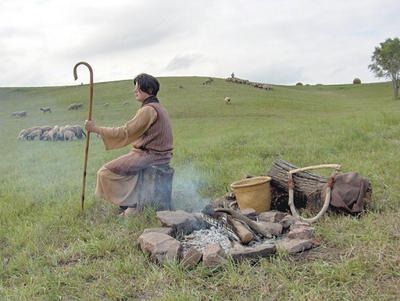
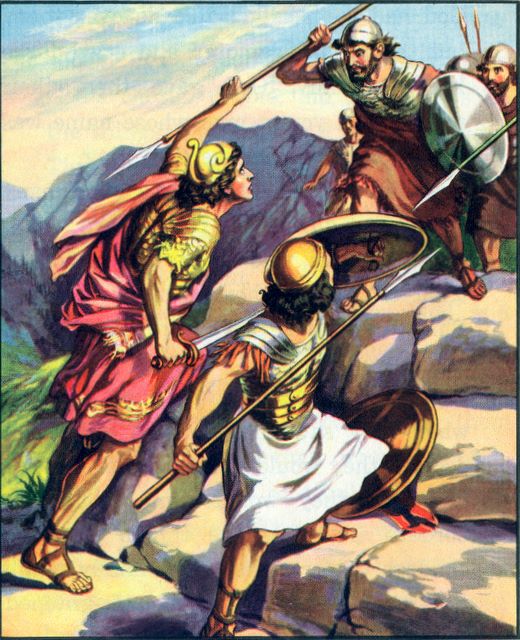
FACING THE GIANT

david_goliath-1


1 Samuel #16. David & Goliath. 1 Samuel Chapter 17

1 Samuel chapter 17 contains one of the most familiar incidents in the whole bible: the fight between David and Goliath. There is one puzzling thing about the text, and I want to deal with that first, so that we conclude by focusing on what the Lord is saying to us through it.

After the whole thing is over, Saul asks his military commander a strange question: “Whose son is this youth, Abner?”

The question is strange because at the end of chapter sixteen, prior to the fight with Goliath, David was brought to court to play the lyre and sing for Saul. The text even says that Saul loved him. And David’s father, Jesse, is mentioned by Saul’s courtiers in chapter 16. This is one of those places where some people claim that the Bible contradicts itself. I want to point out to begin with that there is no theological or spiritual significance to this “contradiction” even if it exists.

Some scholars speculate that chapter 16 and chapter 17 came from two different sources, and the source for chapter 17 was unaware of the account of how David came to court as a singer. The problem with this theory is that whoever put the sources together, right next to each other, must surely have seen the apparent contradictions – but they made no attempt to explain it. Therefore it is safe to assume that whoever wrote the history that we call “1 Samuel” saw no necessary contradiction between these two chapters, and in fact, assumed that readers would be able to understand the differences. And in fact, there are several possible explanations.

Chapter sixteen records how Saul was afflicted with an evil spirit. The manifestation of this was apparently some kind of mental illness. In fact, continuing on through 1 Samuel, Saul exhibits some of the classic symptoms of paranoid-schizophrenia. To put it simply, sometimes, he was a few sandwiches short of a picnic, and confusion went along with that. So his question may have been partly a result of that affliction.

Notice also that David’s brothers are verbally tearing him down. That shows that there is a kind of jealousy there. It hints at the idea that at some point David had been called back home, and the older brothers were concerned about him getting uppity because of his previous time in the court of the King. So it is also quite likely that Saul hasn’t seen David in a while. Since David was still a teenager, he had probably changed a great deal in a short amount of time.

In addition, Saul had promised a reward to the person who killed Goliath. He said the warrior who did it would be married to his daughter. He also said that the whole family of the victor would be exempt from taxes. In order to keep these promises, he needed to officially verify the identity of David’s father, since the father was the key figure in both the marriage arrangements and tax exemption. Remember, Saul doesn’t ask, “who is that young man?” – he asks, “who is his father?

The man Saul asked was Abner, who was commander of the Army. Saul may have been further confused, because he did not think of David as a warrior, but rather as a minstrel. So when he seems him accomplish a great feat of war, he thinks, “Is that David? Can’t be.” He is seeing him in a whole different context; he has never thought of David as a warrior. So he asks Abner, but he, as military commander, has had nothing to do with David up until now.

All this is to point out once more, that an apparent contradiction in the bible has no spiritual significance, and actually, does not have to be a contradiction at all.

Now, most of us know the story outline pretty well: a young man (almost certainly a teenager) defeats a hardened warrior twice his size. I want to point out a few things that we don’t always consider.

Goliath was about nine feet, six inches tall – almost three meters. He was huge. But Israel had a huge man on their side also – King Saul was likely around seven feet. Certainly, that was smaller than Goliath, but he was bigger than anyone else in the Israeli army. He would have been the natural choice to face Goliath. But Saul was afraid just like everyone else. By this point, he had already rejected his role as God’s chosen instrument.

The bible describes Goliath’s armor. Only two people in the Israeli army had equipment like it: Saul and Jonathan. The armor and weaponry was iron age technology. The rest of the Israelis were using bronze age weapons. The difference, and the advantage it gave the Philistines was a little bit like the difference between muskets and modern semi-automatic rifles. Both can kill you, in roughly the same way, but the more modern weapon is far more deadly.

Saul tried to get David to wear his armor, to even out the advantage. David ultimately rejected it for three reasons. First, it didn’t fit him. Saul was a much bigger man. Second, it was not David’s style. David had fought for his life before, and he didn’t use that sort of thing. God used him differently. Third, David did not believe he was at a disadvantage.

Everyone else looked at the external situation. Here was a man almost twice as big as anyone else. He was well armored, with potent modern weapons that others would have a hard time even lifting. It was like fighting an intelligent, well armored grizzly bear. To send a boy with a sling against a giant with armor was crazy. The odds were completely in favor of the giant.

But David saw it primarily as a spiritual battle. What it looked like on the outside made no difference to him. In David’s eyes, Goliath wasn’t challenging him, or Israel – he was challenging God. So it wasn’t a boy against a giant. It was an arrogant giant…against the Creator of the Universe. All David had to do was give God a chance to strike Goliath down. It didn’t matter what weapons or armor he had. Using the sling wasn’t a clever surprise tactic. It was just the tool that was most handy and familiar to David. The real weapon, in David’s eyes, was the power of God.

Then David said to the Philistine, “You come to me with a sword and with a spear and with a javelin, but I come to you in the name of the LORD of hosts, the God of the armies of Israel, whom you have defied. (1Sam 17:45, ESV)

The outcome, of course, made history. David killed Goliath with a stone slung into the skull. He completed the job for certain by cutting off the giant’s head with his own giant sword. David predicts what will happen, and why:

47 and this whole assembly will know that it is not by sword or by spear that the LORD saves, for the battle is the LORD’s. He will hand you over to us.” (1Sam 17:47, HCSB)

I invite you to pause for a moment to consider what the Lord might say to you through this. What are you facing in your life that seems like a giant threat? Is there any place where you feel that the odds are stacked against you doing what God wants you to do? I encourage you to see God’s battles from God’s perspective. Now, sometimes we are fighting battles that are not God’s – that is a whole separate issue. But if we are walking in faith, letting Jesus live his life through us, the battles we encounter in the course of doing what He wants to do in us and through us – those are battles that He will fight. All we need to do is grab whatever is most handy and comfortable, and let the Lord do the fighting.

There is a related truth here. God will use you – the unique person that he has made you to be. Others pressed David to take Saul’s armor, to fight the way everyone thought he should fight. David politely but firmly declined. He was just fine for the job, being who God made him to be. So when it comes time to rise to the challenge, I am not saying you should despise advice. But it is OK to approach your challenges as the person that God made you to be. You don’t have to pray in the fashion of “all good prayer warriors.” You don’t have to look or sound exactly like other good Christians as you face your giants. But do listen to the Lord, and do what he tells you.

Do you realize also, like David did, that our battle is not in the arena of flesh and blood, but is actually a spiritual conflict? David actually had to fight a flesh and blood conflict. Even so, he recognized that it was primarily about what was happening spiritually. So, we have to face trials and difficulties of various kinds – and yet it is good to remember the spiritual reality behind it all. Maybe we have to pay bills and it is hard to make ends meet. That is flesh and blood. But there is a battle that goes along with that – the battle of discouragement and hopelessness and the challenge to trust God as provider. Yes, we must deal with the flesh and blood, but the battle is spiritual.

Maybe you have to deal with someone in your life who is difficult, or troublesome or who causes you anguish. Obviously, you encounter that in flesh and blood situations. But the real battle is to trust God, to continually allow God’s power to forgive that person, to recognize that the devil wants you to hold on to rage and bitterness.

Right now, my wife and I both have health issues going on. Nothing life threatening, but they do affect our active lifestyle, and place a financial burden on us. Both of our issues are difficult, complicated and expensive to deal with. We have to deal with them in the realm of flesh and blood. But at the same time, there is a spiritual battle to make us discouraged and hopeless. That’s the real battle and that’s the battle that Lord will win for us every time we let him.

Let the Lord speak to you now about giants and battles!
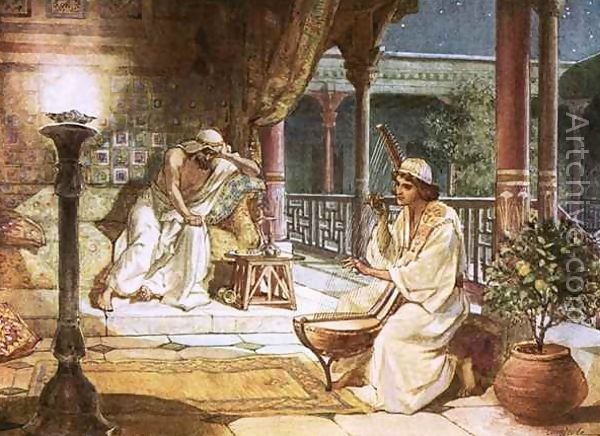
DOES GOD SEND EVIL SPIRITS?!

1 Samuel 16:14 says God sent an evil spirit to torment king Saul. What do we make of this?

davidharp

1 SAMUEL #15. 1 SAMUEL CHAPTER 16:14-23

To listen to the sermon, click the play button:

To download, right click on the link (or do whatever you do on a Mac) and save it to your computer: Download 1 Samuel Part 15

Now the Spirit of the LORD had left Saul, and an evil spirit sent from the LORD began to torment him… (1Sam 16:14)

When we first read this, it almost feels like one of the most troubling verses in the Bible. I believe, however, when we really understand what was going here, it becomes one more instance for us to thank God for his incredible grace to human beings.

First, let’s remember the context. Saul, since the very first record of him in the Bible, has either ignored God, or considered Him a tool to be manipulated and used. Time after time, Saul betrayed his own securities. Time after time, he refused to trust God, and sought instead to protect his own interests. When he did worship God, it was to get the people to remain in the army, or to try and manipulate God into helping him. Saul represents the very worst in religious leaders – he tries to use religion as a way to exercise power over others, all the while avoiding personal trust in the Living God.

Finally, the Lord told Samuel that he had rejected Saul as king. God simply could not use Saul as His chosen instrument in that generation – Saul wouldn’t let him. After this, God directed Samuel to David – a boy who had given his heart fully to God. David became God’s chosen instrument in that generation. (Remember in those days, Jesus had not come, and so the Lord worked usually only through one or two people at one time. Today, all believers are the given the Holy Spirit. We are all supposed to be his chosen instruments in this generation)

Now, to understand what happens next, to make sense of God sending an evil spirit to Saul, we need to understand this situation completely. God rejected Saul from being king. He rejected him as God’s chosen instrument for that generation. Samuel makes this quite clear (1 Samuel 15:23). But this does not mean that God has given up on Saul as a person.

When I was a child, I remember I desperately wanted a knife. A knife represented power and maturity. It was both weapon and a tool. It was the next logical step in my progression to responsible adulthood. After a lot of powerful legal maneuvering on my part, I got my parents to give me one. Looking back, I realize now that my wise parents gave me a tiny pen-knife, something I couldn’t do much damage with. But back then, after carrying it around for a while, I realized that I wasn’t really using it. Out in our yard we had a clothesline made of rope. I opened my knife and took a swing at it. To my delight the line parted like the waters of the red sea. Later on I examined the metal fly-screen on one of our windows. I wonder if this knife will cut metal? I thought. There was really only one way to find out. It did. I was awed by the power I held.

I don’t remember much about the discipline that followed these incidents. But I do know this: my parents continued to love me and teach me, while at the same time, they took away the knife until I was older. I wasn’t ready for that kind of power. Even so, they loved me, and didn’t reject me. They just rejected the idea of me with a knife.

I think that when they took the knife away, I was probably more upset about losing the knife than I was about the fact that I had done wrong. I don’t remember, but I probably had to be disciplined in other ways so that I could see that what I had done was wrong.

Saul is in this situation. When Samuel tells him that the Lord has rejected him as king, Saul is naturally upset. But to me, it reads like he is upset about losing his position as God’s chosen instrument, far more than he is upset about the fact that he hasn’t trusted God. As we continue through 1 Samuel, we will see that this is in fact the truth.

Now, even though God rejected Saul as king, as His chosen instrument, God does not force Saul to abdicate the crown. He remains king until the day he dies. He just isn’t God’s chosen king. What grace – that God allowed him to continue as king, even when he couldn’t use him.

Continue reading “DOES GOD SEND EVIL SPIRITS?!”

THE HEART OF THE MATTER

God is not concerned with your appearance or religious activities. He wants your heart.

1 SAMUEL #14


david1


To listen to the sermon, click the play button:

To download, right click on the link (or do whatever you do on a Mac) and save it to your computer: Download 1 Samuel Part 14


I mentioned last time how we need to understand the Old Testament in the light of the New Testament. It contains the first two acts of a three-act play. It won’t make sense until you also see the end. It is all about Jesus. If we just read the Old Testament alone, we get a message that seems to contain a lot about following rules and a mean, incomprehensible God. But every once in a while we get a hint that this is a set up for something more to come – the more that was fully explained and fulfilled in Jesus. In 1 Samuel 16, we get another of these hints.

Saul struggled with insecurity. In his fears he did not turn to God for mercy and grace – instead, he tried to control and manipulate God through religion. He did not want a relationship of trust in the Almighty – he just wanted an Almighty who would do what he (Saul) wanted him to. When it came right down to it, Saul wanted God to serve him, not the reverse. Ultimately, he rejected God, and so God let him go his own way.

The prophet Samuel grieved over this turn of events, and even over Saul personally. This shows us something of the man Samuel was. He knew it was wrong for the people to want a king. He knew that Saul was insecure and not a true follower of the Lord. But Samuel hated to see him fail, hated that he had turned away from God. He knew that because of Saul’s own choices, God could not do anything more with him, but even so, he was sad for Saul.

The Lord told Samuel to go anoint the one who would be the next king of Israel. It is interesting to note that Samuel, for all his care for Saul, had no illusions about what kind of man he was. He thought Saul would have him killed if he found out he was anointing another person to be king. Even so, he obeyed and went to the home of Jesse, a descendant of Judah who lived in Bethlehem.

He had Jesse bring his sons with him to a sacrifice that they offered to the Lord. When Samuel saw Jesse’s oldest son, he was impressed.

When they came, he looked on Eliab and thought, “Surely the LORD’s anointed is before him.” But the LORD said to Samuel, “Do not look on his appearance or on the height of his stature, because I have rejected him. For the LORD sees not as man sees: man looks on the outward appearance, but the LORD looks on the heart.” (1 Sam 16:6-7, ESV)

This one of those times when the curtain is drawn back, the Old Testament shows plainly what God is after. It may be one of the most important verses in the Old Testament. God looks at the heart. The word for “heart” is a form of the Hebrew word “leb.” This is a word with a rich meaning, just as “heart” is in English. In German leben – a very similar sounding word – means life. In Hebrew this word means innermost being, intellect, the center of a person or thing.

Writer Brent Curtis points out how important the heart is:

We describe a person without compassion as “heartless,” and we urge him or her to “have a heart.” Our deepest hurts we call “heartaches.” Jilted lovers are “brokenhearted.” Courageous soldiers are “bravehearted.” The truly evil are ‘black-hearted” and saints have “hearts of gold.” If we need to speak at the most intimate level we ask for a “heart-to-heart” talk. “Lighthearted” is how we feel on vacation. And when we love someone as truly as we may, we love “with all our heart.” But when we lose our passion for life, when a deadness sets in which we cannot seem to shake, we confess, “My heart’s just not in it.”

Curtis adds, “it is in our heart that we first hear the voice of God and it is in the heart that we come to know him and live in his love…For above all else, the Christian life is a love affair of the heart.”

Brent Curtis & John Eldredge, The Sacred Romance

Continue reading “THE HEART OF THE MATTER”

OBEDIENCE, OR TRUST (OR BOTH)?

What does it mean to obey God? Do we have to?

1 Samuel #13. The Obedience of Faith


defusebomb2

(and what the heck does this picture have to do with it?)

To listen to the sermon, click the play button:

To download, right click on the link (or do whatever you do on a Mac) and save it to your computer: Download 1 Samuel Part 13


The Old Testament has a lot of value for us in many ways. We can learn from examples, both positive and negative. We can see how God deals with people who live by faith, and with those who don’t. We can receive comfort in God’s promises to his people (and if we trust Jesus, we are his people, those promises are for us). We can learn about God’s standard for holiness.

But we must never forget that the Old Testament is first and foremost about Jesus. The Life, death and resurrection of Jesus are the central concern not only of the New Testament, but also of the Old Testament. Luke describes how Jesus helped his disciples to understand this.

25 He said to them, “How unwise and slow you are to believe in your hearts all that the prophets have spoken! 26 Didn’t the Messiah have to suffer these things and enter into His glory? ” 27 Then beginning with Moses and all the Prophets, He interpreted for them the things concerning Himself in all the Scriptures. Luke 24:44-45 (ESV)

44 Then he said to them, “These are my words that I spoke to you while I was still with you, that everything written about me in the Law of Moses and the Prophets and the Psalms must be fulfilled.” 45 Then he opened their minds to understand the Scriptures

The Jews divided the Old Testament into two parts: “the Law” or “the book of Moses” which are the first five books of Bible. The second part was called “the Prophets” and it included not only the books which we call “prophetic” but in fact, all of the other books of the Old Testament. So when the New Testament says “the Law and the Prophets” or “Moses and the Prophets” it means “the entire Old Testament.”

The purpose of the entire Bible is to help us to know Jesus better and walk with him in faith. So even as we read these Old Testament scriptures, we should be asking, “Lord, show us Jesus in this part of scripture.”

I think this is particularly important when we come to a section like 1 Samuel 15. We talked about the concerns of Holy War last time, but now we get to a part that is very easy to apply wrongly.

Saul disregarded the Lord’s command to utterly destroy the Amalekites. He spared the life of the Amalekite king. Quite possibly he did this because, out of fear for his own head, he wanted his followers as well as foreign armies, to differentiate between royalty and ordinary people. In any case, he disobeyed God’s command in this respect. He also allowed his followers to keep the best livestock alive. Once again, this may have been from insecurity. His warriors may have been grumbling about pointlessly killing good animals. Even if they weren’t, he may have wanted to appear gracious and become popular by rewarding those who fought with him. There may not be anything wrong with that, except that the Lord clearly commanded otherwise.

When Samuel confronts Saul about what he has done (or, failed to do) Saul claims that he has saved all the animals for sacrificing to the Lord. Frankly, I think he was lying. I think he got caught, and he decided in that moment to make up for his failure to obey by making a sacrifice with the captured animals.

Samuel says something very significant:

Then Samuel said: Does the LORD take pleasure in burnt offerings and sacrifices as much as in obeying the LORD? Look: to obey is better than sacrifice, to pay attention is better than the fat of rams. (1Sam 15:22)

This is theme repeated throughout both the Old and New Testaments. The Psalms reference this exact concept several times. So does Isaiah, and Hosea. Jesus mentioned the idea a few times in the New Testament. Even so, we need to be careful as we apply this to our own lives. It is very easy to say, “That’s right. I just need to obey God. We just need to do the right thing. What’s the point of saying we follow God if we don’t obey him?” I understand this attitude, but I think it tends to lead us away from the true meaning of this passage.

First, I think it comes back again to the fact that Saul was religious, but had no relationship with God. What he did seemed good. Saving the animals to sacrifice later was a religious thing. After all, sacrifices were part of Jewish religion. But Saul used his religion to keep from actually interacting with God, actually listening to him and responding in faith to what God said. Jesus said the Pharisees were religious like Saul too, and he hated it. Instead of listening to what the Lord actually said, they practiced religion. So this is a warning to us, to not let religion get in the way of faith. Religion keeps track of rules and regulations to follow, instead of living in a real, faith-relationship. In all sincerity, I try not to be religious. But living in faith is very important to me. Sometimes “sacrifice” is obedience. But we don’t live by rules, rather by relationship.

Second, we must understand that Jesus fulfilled this passage on our behalf. The writer of Hebrews quotes Psalm 40, and says that it is fulfilled in Jesus:

6 ​​​​​​​​In sacrifice and offering you have not delighted, ​​​​​​​but you have given me an open ear. ​​​​​​​Burnt offering and sin offering ​​​​​​​you have not required. ​​​ 7 ​​​​​​​​Then I said, “Behold, I have come; ​​​​​​​in the scroll of the book it is written of me: ​​​ 8 ​​​​​​​​I delight to do your will, O my God; ​​​​​​​your law is within my heart.” ​​​ Ps 40:6-8 (ESV)

Jesus delighted in God’s will. He didn’t live according to religious rules – the law of God was within his heart and during his time on earth he lived out that law through dependence upon the Father. He obeyed God perfectly. We cannot obey perfectly. So Jesus did it on our behalf. The obedience we owe God is complete and perfect in Jesus Christ, and only in Him. So when you think, “Oh, I have to obey God, because to obey is better than sacrifice” actually what you should hear is “I need to trust Jesus even more. Trusting him is my obedience, because has already done the obedience for me. Rather than act more religious, I need to trust more.” This is living by faith.

One reason we sometimes get confused is because obedience and trust can sometimes look the same. When you live by faith, it does result in certain actions. It does eliminate other actions. The bible does use the term “obedience.” But we must remember, it is the obedience of faith – not the self-effort of religion. Let me give you a little analogy to help us understand this.

I love spy/suspense shows like the Bourne Identity. Not everything in these shows is entirely righteous, but living in faith, we can find good things in them. Sometimes in shows like this, one of the characters may encounter a time-bomb. Picture a scene like this, where a lady has just a few seconds to defuse a bomb. She doesn’t know how to do it. But she gets on the phone with her friend who does. He tells her, “cut the blue wire, but be sure not to cut the red one.” So she carefully cuts the blue wire, but not the red one.

Now what is going on here? Is she obeying her friend, or trusting him?

Well, both, of course. But you see, her actions of obedience proceed from her trust of her friend. She trusts that he knows how to save her. She trusts that if she does what he says, she will be safe. And so, because of that trust, she acts according to what he says. She isn’t just doing what her bomb-expert friend says because it is the right thing to do. She isn’t doing it from a sense of moral obligation. She is “obeying” him because she trusts that he wants to save her life, and has the power (in this case knowledge) to do so.

You could call it obedience. But I would call it primarily trust. The obedience is a result of the trust.

I want to pursue this analogy a little bit further. In order to get this kind of trust-obedience, you need several factors. First, you have to believe that your life is really in danger. If the lady didn’t believe the bomb was real, chances are, she wouldn’t have called her friend anyway. She would not have been seeking the help she needed, because she wouldn’t have believed she needed it. Second, she had to believe that her friend had the knowledge that could save her. Third, she had to believe that her friend wanted to save her.

Peter expressed this attitude of faith. A lot of people had turned away from following God and Jesus was left with just the twelve apostles.

66 f After this many of his disciples turned back and no longer walked with him. 67 So Jesus said to g the Twelve, “Do you want to go away as well?” 68 Simon Peter answered him, “Lord, to whom shall we go? You have h the words of eternal life, 69 and i we have believed, and have come to know, that j you are k the Holy One of God.” (John 6:66)

When we encounter problems with obeying God in our own lives, I think it is usually a combination of these factors at play. Maybe we believe that the situation isn’t really very serious. Although we think obeying God is the right thing, when it comes down to it, we think we’ll be OK even if we don’t. We don’t see his words as life and salvation. So we don’t obey because we don’t believe our problem is that big.

Second, maybe we doubt whether God really has the answers we need. Perhaps we don’t obey him because we aren’t sure that what he is saying to us is relevant and helpful to us in our own situation. I think this was one of Saul’s major issues. He seemed to feel that God was fine for religious things, but in everyday life, you had to take care of yourself and use your common sense. Saul didn’t seem to think the command for Holy War was really right or had any value in his situation.

Third, we sometimes don’t obey because we aren’t sure we can trust God. Maybe we aren’t sure if he really has our best interests at heart.

Do you see the solution to the obedience problem – no matter what causes it? Faith. In each case, we need to change what we believe. We need to make a leap of trust. We need to trust that our situation is in fact serious, and we really do need the Lord to make it through life. We need to trust that the Lord really does have what it takes to save us, that his words are life; we need to trust that He is relevant in every moment of our lives. And we need to trust that he really has our best interests in his heart.

The devil likes to trick us into religion. Do the right thing because it is the right thing. And something in us responds to that. After all, it is the right thing. But is the wrong path, the wrong way to go about it. We can do the right thing with our own effort – for a while. But we fail eventually because it based upon our efforts, not the obedience that Jesus has already done on our behalf.

Then the devil likes to beat us up: You just aren’t obedient enough. You just don’t try hard enough. But the problem isn’t effort. The real solution lies in trusting more. Jesus has obeyed perfectly. His righteous obedience has become ours (2 Corinthians 5:21). Our part is to trust. If we do truly trust, then our lives will reflect the kind of actions the Lord desires. But it doesn’t start with our action, it starts with our trust.

So let me put it to you today. Do you trust that your situation is serious? Do you remember that no one gets out of this world without dying? Do you recognize that you are in a desperate place, the bomb is about to go off and you can only get help from one place?

Do you trust that the Lord has the right, relevant Word for you? Do you accept that he knows better than you, that he will save you if you trust him to?

And do you know that he wants to save you? Do you trust his goodness?

Take a moment right now to let the Lord into your thoughts and prayers as you consider these things.

Thank You, and Happy New Year!

Hey Y’all, I just wanted to give an informal shout out and thank you to all our new blog followers. A bunch of you have started following just in the past month or so.

It is tremendously encouraging for me to know that someone, somewhere is reading this and maybe even getting encouragement and ministry from it. I appreciate you all! If you are indeed, blessed by this blog, please bless others by sharing/liking and all those technical things I don’t know too much about.

Also, I love comments and discussion, so feel free to join that way too!

Thanks again. Have a blessed New Year,


Pastor Tom

Holy War! What is it Good For?

1 SAMUEL #12. (1 SAMUEL 15:1-3)

holywar


To listen to the sermon, click the play button:


To download, right click on the link (or do whatever you do on a Mac) and save it to your computer: Download 1 Samuel Part 12


There is one big and totally natural question when we read 1 Samuel chapter 15. Why did God want the Israelites to destroy every living Amalekite? Why the women and children too? How can we accept that God wanted this, and yet still believe that he is merciful, forgiving and loving? There are a handful of passages like this in the Old Testament, and for the modern mind, it seems inexplicable and even repulsive. I think we can get help sorting this out if we consider three things.

First, God does not answer to us. The questions are natural, but the truth is, God does not owe us an explanation. Our human nature wants God to justify himself toward us. But this is exactly the opposite of the situation the Bible describes. We are accountable for our actions before God, not the other way around. If God indeed made the universe, if he is infinite and we are not, then he has the right to do what he wants, and what he wants may be beyond the ability of our limited minds to comprehend.

This is true, but the Lord often chooses to reveal his reasons anyway. So the second thing to consider is that this is about holiness. Several weeks ago I shared what happens when pure sodium is exposed to water. The sodium explodes and burns up. Pure sodium simply cannot exist in the presence of water. The greatest scientist in the world cannot bring the two things into actual contact without creating spontaneous combustion. In the same way, sin simply cannot exist in the presence of God. So unless there is some kind of intervention, God’s presence will destroy sin. We live after the time of Jesus. Jesus and his sacrifice have eliminated the holiness problem for us, if we trust him. He has made us holy. He took the destruction of sin into himself so we could be spared. But we forget that without Jesus, God’s holiness is a huge problem for sinful people. Sin is so serious and God’s holiness is so pure, that if it wasn’t for Jesus, it requires the destruction of every living thing associated with sin.

The Israelites, however imperfectly, were living in faith that God’s promises to Abraham were true, and that God would redeem them from their sins. So the Lord included them in what he was going to do through Jesus. Their faith in God’s promises protected them from the effect of God upon sin. Paul writes to the Romans:

1 So what advantage does the Jew have? Or what is the benefit of circumcision? 2 Considerable in every way. First, they were entrusted with the spoken words of God. 3 What then? If some did not believe, will their unbelief cancel God’s faithfulness? 4 Absolutely not! God must be true, even if everyone is a liar, as it is written: That You may be justified in Your words and triumph when You judge. 5 But if our unrighteousness highlights God’s righteousness, what are we to say? I use a human argument: Is God unrighteous to inflict wrath? 6 Absolutely not! Otherwise, how will God judge the world? (Rom 3:1-6 )

Is God unrighteous to inflict wrath? Absolutely not. His presence destroys sin, whether or not you believe his words. The only salvation through Jesus Christ, by faith. This was true even for the generations who lived before Jesus came:

We are made right with God by placing our faith in Jesus Christ. And this is true for everyone who believes, no matter who we are. For everyone has sinned; we all fall short of God’s glorious standard. Yet God, with undeserved kindness, declares that we are righteous. He did this through Christ Jesus when he freed us from the penalty for our sins. For God presented Jesus as the sacrifice for sin. People are made right with God when they believe that Jesus sacrificed his life, shedding his blood. This sacrifice shows that God was being fair when he held back and did not punish those who sinned in times past, for he was looking ahead and including them in what he would do in this present time. God did this to demonstrate his righteousness, for he himself is fair and just, and he declares sinners to be right in his sight when they believe in Jesus. (Romans 3:22-26 NLT, emphasis mine)

Everyone in the past who believed God’s promises, was included in what God was going to do through Jesus. But in Old Testament times, before Jesus had come, those who rejected God became physical illustrations of how serious God’s holiness is, and how big a problem our sin is. God was showing the world their desperate need for a messiah who could bridge a gap between our sin and God’s holiness.

In the case of the Amalekites and the other Canaanite tribes that God commanded Israel to destroy, they were given both a witness to God’s holiness and grace, and an abundance of time to repent of sin. All the way back in the time of Abraham, the Lord said this:

13 Then the LORD said to Abram, “Know this for certain: Your offspring will be foreigners in a land that does not belong to them; they will be enslaved and oppressed 400 years. 14 However, I will judge the nation they serve, and afterward they will go out with many possessions. 15 But you will go to your fathers in peace and be buried at a ripe old age. 16 In the fourth generation they will return here, for the iniquity of the Amorites has not yet reached its full measure.” Gen 15:13-16 (emphasis mine)

Amorites were just one of the tribes that Israel was supposed to drive out or destroy. They had witnesses to the truth of God through Abraham, Lot, Isaac, and Jacob. They had four hundred years after Jacob to correct their ways – God was still giving them a chance to repent and live in faith. For forty years, after the Israelites left Egypt the nations in Canaan heard about what God did for them. They had the chance to repent during that time, and a few of them did (Joshua 2:9-15).

The Israelites invaded the Canaanite lands under Joshua. The Israelites in subsequent generations did not eradicate the Canaanites as they were supposed to. So the tribes of Canaan had four hundred more years through the time of the Judges to repent and follow the Lord. All told, these civilizations had roughly 800 years before the time of Saul to repent and follow God. During all of those centuries, they were witnesses to the truth about God through the Israelites. So it isn’t as if God suddenly woke up one day and said, “ You know, I hate the Amalekites.” Basically, the Canaanite civilizations had showed, over the course of about 800 years, that they would not live by faith, that they would not repent, that they were determined to continue in their sinful, rebellious ways. As such, there was no purpose in giving them more time, and until they were eradicated, they remained a spiritual and military threat to God’s people.

A third possible reason for this harsh command was that while the Canaanite peoples continued to live in the land next to the people of Israel, the people of God were often led astray. The Israelites were the only people in the whole world who understood about living in faith. They were the people entrusted with the word of God, as Paul points out in Romans. God could not allow them to be corrupted and lose the truth. If they lost it, the whole world lost it. So the Lord commanded his people to take extreme measures to make sure the world did not lose the truth about faith-relationship with God.

Fourth, God did not choose the promised land randomly. For thousands of years it has been both the cradle and the crossroads of civilization. Trade routes flowed through the land from Africa to Asia and Europe, back from Europe to Asia and Africa, and from Asia to Africa and Europe. It is the meeting place of three continents and two oceans. Whoever lived in this geographical location from the beginning of civilization until the fall of the Roman Empire was in a position to spread ideas, culture and religion to most of the people in the world. In fact, one reason Christianity spread so quickly and influentially is because it began in the Holy Land. In fact, the three most dominant religions in the world – Judaism, Christianity and Islam – all began in the Holy Land. The reasons these three are so widespread is due in part to geography. Even today, Jerusalem is a major epicenter of the world political situation. [click the link to keep reading]

Continue reading “Holy War! What is it Good For?”

Is it right to make rules for others?

1 SAMUEL#11. SAUL’S LEGALISM. Saul let’s his insecurity drive him to impose a vow upon the Israelites. How did that work out?

honey

To listen to the sermon, click the play button:

To download, right click on the link (or do whatever you do on a Mac) and save it to your computer: Download 1 Samuel Part 11

To read the sermon, read it! Smile

Last time we looked at how Jonathan single-handedly attacked the Philistines. He acted out of faith, not fear, and God used that to create a huge victory for the people of Israel. The Israelites pushed the Philistines back to the edge of the hill country. But nothing spoils God’s work like false religion and religious pretenses. Saul again showed his lack of real relationship with God. He was worried about the outcome of the battle, so he made an oath and imposed it upon all the army that no one should eat until the sun went down. It sounds very religious and impressive. It was supposed to motivate people. It was supposed to impress God, so that God would help them even more.

It backfired because it was a stupid idea that again came not from faith, but fear, selfishness and pride. By the way, I want to point out the fact that Saul was not content to make the vow for himself. Instead, he imposed his fake religion (which sounded holy) on everyone else. This is typical of people who do not live by relationship. Precisely because they do not have their own relationship with God, they feel that everything they experience must be a rule that everyone should follow. They don’t recognize the give and take and unique life experiences that go along with walking with God in faith. They can’t go it alone with God. They live only by rules.

Saul’s oath is actually much more like a curse. He says: “Cursed be the man who eats food until it is evening and I am avenged on my enemies.” This doesn’t sound like the voice of the Lord. It sounds more like the devil. There is an Old Testament tradition of making vows that are associated with curses. However, such vows are also associated with blessings and promises from the Lord. Saul does not include any blessings in his vow. Neither is it associated with any promises from the Lord. To put it simply, there is nothing positive about it.

Notice too, how Saul sees this as his own battle, with the Philistines as his own personal enemies. This is in contrast to Jonathan, who clearly saw the battle as the Lord’s fight, with himself simply a tool in God’s hands.

Three negative things came out of Saul’s religious pretenses.

First, the victory was not as great as it could have been. In other words, the vow had the opposite effect of the one he wanted. The men were weakened by hunger, so they could not sustain their offensive against the Philistines. Saul’s vow preceded not from faith, but from the flesh. It was all about self-effort. Because of that, it was as weak as the flesh. Flesh without food is weak. So the vow flopped. Jonathan’s act of faith energized and sustained the troops. Saul’s rash vow, based in self effort and the flesh, drained them, and robbed them of strength. Jonathan himself realized this. After he himself had eaten in ignorance of the vow, one of the soldiers told him of his father’s words. Jonathan said:

“My father has brought trouble to the land. Just look at how I have renewed energy because I tasted a little honey. 30 How much better if the troops had eaten freely today from the plunder they took from their enemies! Then the slaughter of the Philistines would have been much greater.”

Second, because they were so hungry, when sundown arrived, the troops began to slaughter the captured livestock of the Philistines and eat without regard to the laws of Moses. Specifically, they were eating meat that had not been properly drained of blood.

For the life of the flesh is in the blood, and I have given it for you on the altar to make atonement for your souls, for it is the blood that makes atonement by the life. Therefore I have said to the people of Israel, No person among you shall eat blood, neither shall any stranger who sojourns among you eat blood. (Leviticus 17:11-12)

The idea expressed in the Old Testament is that the life of an animal (or person) is carried in the blood. The life belongs to God, and so the blood must be given to him, not consumed by people. It is a way of saying, “Even as I take this food, I recognize that the life of this animal belongs to God, not to me. I receive it as a gift, and I give its life into God’s hands.” But Saul’s vow weakened the resolve of the people who had been running, fighting and marching all day long, and when sundown finally came, they were tempted to sin. They were in such a hurry to eat that they did not properly bleed out the animals. To look at it another way, Saul’s vow did not protect people from sin, but rather made them more vulnerable to it.

Third, Saul’s foolish vow led to strife when it came to Jonathan. Saul had bound everyone to his vow – even those who didn’t know about it. Jonathan, unaware of his father’s oath, ate some of the wild honey that was in the forest where they were passing through in pursuit of the Philistines. The Hebrew says that as a result his eyes became bright. This is one of those Hebrew expressions that is very obscure. The HCSB says, “he had renewed energy” which is probably pretty close to the meaning, though not the exact words. You might say, “brightened up” or “perked up.”

After the men have eaten and regained some strength, Saul decides to pursue the Philistines further – as he could have done, if he had not subjected his troops to hunger. Once again, Saul is simply doing something, moving ahead, without regard to what God may want to do. He is acting not out of faith or his relationship with God, but rather out of a rash desire to make up for the time lost that he himself had caused.

In the earlier part of chapter 14 we saw that Saul was indecisive. He wasn’t sure whether or not he was going to win the battle, and so he sent for the priest to inquire of the Lord. However, before the priest had finished asking God, Saul saw how things were going and told the priest to stop and charged ahead. In other words, he wasn’t asking God because he really wanted to hear from God, he just wanted to know whether or not he would win. Now, he makes a decision to continue the attack without even considering if it is God’s will or not.

The priest is the one who stops him and says, “Let’s ask God first.” Grudgingly, Saul agrees. But there is no clear answer from the Lord. We know that the Israelites cast lots, trusting that the Lord would determine the result. However, we don’t know exactly how this worked. Obviously, there was some possibility that the Lord would not answer at all. In this case that’s what happened.

Sometimes – not always, but certainly at times – we can’t hear God because we are separated from Him by our own sin. If your heart is turned away from God, if there is un-repented sin in you, it will be difficult for you to hear what he wants to say to you. This was a physical demonstration of that fact. Again, I’m not saying that every time you fail to hear from God, it is because of sin. However, if you are asking God to speak and you are not hearing, the very first thing to do is to ask Him to show you if there is any sin standing in the way. We can at least credit Saul for recognizing this.

Now, a straightforward reading shows that Jonathan was one who caused God not to answer. He was the one chosen by lot. And yet, we know that eating honey is not a sinful act. In addition, Jonathan was totally unaware of the curse Saul had called down on the army concerning food, so he did not deliberately or knowingly violate any oath. I don’t think the Lord chose Jonathan by lot to show that Jonathan was sinful. I think he did it to expose Saul – to impress upon Saul his own arrogance and foolishness and show him the results of it. Look at it this way. God did not withhold his answer because Jonathan ate honey. He withheld it because of Saul’s oath. Without the oath, Jonathan’s eating would have had no significance.

So Saul’s oath weakened the army both physically and spiritually, it prevented them from hearing the Lord, and now it led to the condemnation of their greatest warrior. Let’s say it plainly: the result of Saul’s rashness was to condemn his own son to death for simply eating when he was hungry, even after that very son had achieved a great victory.

Even when his arrogance and insecurity is so exposed, Saul will not repent. He doesn’t say, “I am so sorry, that was a foolish vow to make, let us ask the Lord for forgiveness and mercy.” No, he would rather kill his own son than admit that he was wrong. He continues his rashness and says, ““May God punish me and do so severely, if you do not die, Jonathan! ”

Remember those words. Nothing bad ever happened to Saul that he did not bring upon himself.

The people protest. Jonathan is the one that achieved the great victory that day. He was ignorant of the curse. He doesn’t deserve to die. Notice that Saul backs up. We can hope that he did so because he had a tender heart toward Jonathan, and really didn’t want him to die. But truthfully, that tender heart wasn’t enough. He didn’t back up until the people protested. What really changed his mind was popular opinion. Again he shows his insecurity.

It is quite likely that during all these proceedings, which probably took several hours, the Philistines made their escape. In other words, again, it is Saul’s rashness, harshness and foolishness that makes the victory less than it could have been.

Most people don’t make vows like Saul’s anymore. Maybe we’re too fond of our food. But the truth is, we do sometimes make internal promises to ourselves. Sometimes we let our negative emotions control us, and we act or speak rashly, or make quick, impulsive decisions that somehow bind us. We might say something like “I’ll never do something nice for that person again.” Or maybe we decide because of a certain incident, we hate and distrust all men or all Asians or something like that. We may not think of it like a harsh or rash vow, but it is basically the same thing that Saul did. I think we should expect the same types of results.

It seems obvious now what Saul should have done. He ought to have repented and asked the Lord for mercy and forgiveness. It would have involved humbling himself in front of his people. But everything might have been different for him if he had done those things. If there is some way in which we have taken Saul’s course, we can still correct that by doing what Saul was too proud to do. If we humble ourselves and ask for forgiveness and mercy, if we repent of our ungodly internal commitments, I am confident that the Lord will forgive us and help us.

A thousand years later, Saul’s namesake, who became known by his Roman name, Paul, wrote this:

Therefore let no one pass judgment on you in questions of food and drink, or with regard to a festival or a new moon or a Sabbath. These are a shadow of the things to come, but the substance belongs to Christ. Let no one disqualify you, insisting on asceticism and worship of angels, going on in detail about visions puffed up without reason by his sensuous mind, and not holding fast to the Head, from whom the whole body, nourished and knit together through its joints and ligaments, grows with a growth that is from God.

If with Christ you died to the elemental spirits of the world, why, as if you were still alive in the world, do you submit to regulations: “Do not handle, Do not taste, Do not touch” (referring to things that all perish as they are used)-according to human precepts and teachings? These have indeed an appearance of wisdom in promoting self-made religion and asceticism and severity to the body, but they are of no value in stopping the indulgence of the flesh.

King Saul’s oath, imposed on the entire army, did indeed have an appearance of wisdom. It promoted self-made religion and severity to the body. But it was of no value. Unfortunately, even today there are people try to impose their false sense of religion upon others. I’m not talking about people who speak the truth about what the bible says. I’m talking about people like Saul, who don’t really operate out of a faith-based relationship with the Lord. These are the folks who tell you, you cannot eat meat on Fridays, or wear blue jeans in church, or that you are not holy unless you pray like they do.

There are certain core things that all Christians believe and agree upon. I’m not talking about things like these. But apart from those core beliefs, when another Christian insists your faith must look and sound and feel exactly like her faith, she is operating out of a sense of law, not a sense of relationship.

I have fasted many times in my life. Often, fasting is a spiritually rewarding time for me. However, a few times, I’ve been in the middle of a fast and I realized it wasn’t doing me any good. At those times, I simply quit. This is because I’m walking in relationship, not by law. The whole point of fasting is to bless the relationship that I have with the Lord. When it doesn’t accomplish that, there is no point in doing it. Once or twice, I have fasted because others told me they wanted me to fast with them. Those times were counterproductive, spiritually speaking.

Let the Lord speak to you right now. Maybe you need to give up an internal commitment or vow that you have made. Maybe you need to realize that you are free from the expectations of others, so long as you continue to walk and true faith and in relationship with the Lord. Let him talk to you about this right now.

ANTICIPATE CHRISTMAS

This is a message I gave a couple years ago, but I think it is still timely and relevant at this time of year. The first two minutes of the audio are a little rough, but it gets much better fairly soon.


Boy with Advent wreath


To listen to the sermon, click the play button:


To download, right click on the link (or do whatever you do on a Mac) and save it to your computer: Download Advent Anticipation


Advent 2011 . Anticipation

There are just fifteen days until Christmas as I write this. Can you feel it? The shopping carts groan under the weight of food and presents. The Christmas carols are on the radio, and the mall loudspeakers. The food has steadily increased in amount and quality, since thanksgiving. The eggnog is out, and the Christmas trees, and the manger scenes.

Like it or not, the truth is, Christmas is cultural phenomenon. And it is coming. Sometimes, as Christians, we want to fight it. The commercialism can be disgusting. The whole holiday adds a great deal of stress to every December. And everyone seems to miss the point, anyway. We don’t want to get caught up in it all, because we know that when it is all over, we’ll just be left with new stuff that will eventually become old stuff, a ten-foot-high-pile of wrapping paper, a dead tree and maybe seven extra pounds.

But why not, this year, get into the whole Christmas thing again? Get caught up in the anticipation. Get excited, let the joy infect you – and use it to let Jesus draw you closer to himself.

Did you know that there is really only a 1 in 365 chance that December 25 is actually the Birthday of Jesus? That’s right. No one actually knows what the day was. The best guess that scholars have is that it was in the spring, because the shepherds outside of Bethlehem may have been watching the flocks of sheep that were used in nearby Jerusalem for the Passover Celebration (which is in spring). But even that is just a guess.

In the middle 300s (AD) the Roman Emperor Constantine became a Christian. At that time, the big Celebration of the year for the Romans, was Winter Solstice. They celebrated it on December 25, because that was the first day they could tell that the days were getting longer again. It was a big time holiday. It had nothing to do with Jesus.

But Constantine, after becoming a believer, decided to make use of the pagan holiday to help people think about Jesus. So he declared December 25 to be no longer Winter Solstice, but now the commemoration of the birth of Jesus. He used the joy and pageantry in the service of the one true God.

In some ways, in our culture, Christmas has returned once more to a pagan holiday. Christmas trees come from a pagan tradition. The way stores use Christmas to drive sales is disappointing. Probably a majority of the people who celebrate Christmas, don’t care much one way or the other about Jesus. Even so, like Constantine, we can make use of it.

Think of it this way: what is it that we like about Christmas? What gives us so much anticipation and excitement. What makes it “the most wonderful time of the year?” I think most people look forward to one or more of these things:

• Time spent with loved ones.

• Rest – very few people have to work on Christmas

• Receiving gifts (and, in some cases, people look forward to giving them too)

• Food and Celebration

• Connecting with something deeper and bigger than ourselves (often through traditions).

Each of these are worthwhile things in and of themselves. We can make them even more worthwhile by using them to provide a boost to our relationship with Jesus. Let’s look at how.

TIME SPENT WITH LOVED ONES. One the greatest joys of Christmas is spending it with someone we love. One of the greatest sorrows is the first Christmas you spend after a loved one is no longer with you. Either way, use your desire to be with those you love to remind you of the promise of Jesus’ resurrection. Because of his forgiveness, and his resurrection from death, our sorrow will be turned to Joy. One day, nothing will ever part us from those we love:

Then I saw a new heaven and a new earth, for the old heaven and the old earth had disappeared. And the sea was also gone. And I saw the holy city, the new Jerusalem, coming down from God out of heaven like a bride beautifully dressed for her husband.

I heard a loud shout from the throne, saying, “Look, God’s home is now among his people! He will live with them, and they will be his people. God himself will be with them. He will wipe every tear from their eyes, and there will be no more death or sorrow or crying or pain. All these things are gone forever.” (Rev 21:1-4)

Don’t let your hearts be troubled. Trust in God, and trust also in me. 2 There is more than enough room in my Father’s home. If this were not so, would I have told you that I am going to prepare a place for you? 3 When everything is ready, I will come and get you, so that you will always be with me where I am. 4 And you know the way to where I am going.” (John 14:1-4)

REST. We love the break of Christmas. Most people don’t do unnecessary chores at Christmas. We can relax and enjoy at least a single day. But God has promised us a rest that continues, not just for one, day, but forever:

God’s promise of entering his rest still stands, so we ought to tremble with fear that some of you might fail to experience it. For this good news—that God has prepared this rest—has been announced to us just as it was to them….So there is a special rest still waiting for the people of God. For all who have entered into God’s rest have rested from their labors, just as God did after creating the world. So let us do our best to enter that rest. But if we disobey God, as the people of Israel did, we will fall. (Heb 4:1-2 & 9-11)

Then Jesus said, “Come to me, all of you who are weary and carry heavy burdens, and I will give you rest. Take my yoke upon you. Let me teach you, because I am humble and gentle at heart, and you will find rest for your souls. For my yoke is easy to bear, and the burden I give you is light.” (Matt 11:28-30)

Turn the mood of this Christmas season into leverage for helping you rest in Jesus.

RECEIVING GIFTS. What did you get for Christmas last year? To be truthful, I cannot remember without putting some serious thought to it. What I do know is this: I am usually thrilled about new gifts, but it isn’t terribly long until the thrill wears off. But the Lord gives us gifts that never spoil or fade:

“Don’t store up treasures here on earth, where moths eat them and rust destroys them, and where thieves break in and steal. Store your treasures in heaven, where moths and rust cannot destroy, and thieves do not break in and steal. Wherever your treasure is, there the desires of your heart will also be. (Matt 6:19-21)

“You fathers—if your children ask for a fish, do you give them a snake instead? Or if they ask for an egg, do you give them a scorpion? Of course not! So if you sinful people know how to give good gifts to your children, how much more will your heavenly Father give the Holy Spirit to those who ask him.” (Luke 11:11-13)

Use the joy and anticipation of gifts to help you receive what the Lord is offering us – his Holy Spirit, and an unfading eternal future.

FOOD & CELEBRATION. Often in scripture, food is used as a metaphor for fellowship with God. As we anticipate eating, and actually eat, let’s consciously invite the Lord to be a part of our lives.

Yes, I am the bread of life! Your ancestors ate manna in the wilderness, but they all died. Anyone who eats the bread from heaven, however, will never die. I am the living bread that came down from heaven. Anyone who eats this bread will live forever; and this bread, which I will offer so the world may live, is my flesh.” (John 6:47-51)

Listen! I stand at the door and knock. If anyone hears My voice and opens the door, I will come in to him and have dinner with him, and he with Me. (Revelation 3:20)

So let’s feast! Enjoy the food. And as we do, worship, and receive Jesus’ invitation to close fellowship.

CONNECTING WITH DEEPER REALITY. I think it is during this season the greatest numbers of people are really open and willing to consider something bigger than themselves. At Christmas we seem more ready to acknowledge that we want more – not just more stuff, but more –something – in our lives. That something is a relationship with Jesus, empowered by the Holy Spirit.

So this season, get into it. Enjoy the anticipation. Look forward the presents. For crying out loud, have some eggnog for me. But use it all to let God draw you closer. Use it to feed a hunger and thirst for him.

MAKE A MOVE OR SIT STILL?

1 Samuel #10. Faith (1 Samuel Chapter 14:1-23)

To listen to the sermon, click the play button:


To download, right click on the link (or do whatever you do on a Mac) and save it to your computer: Download 1 Samuel Part 10

Please read 1 Samuel 14 in order to understand what we will talk about here.

Last time we saw what came out of Saul when he was pressured. In that particular situation, what the Lord wanted him to do was wait in faith. He did not want Saul to try and save himself. He did not want Saul to just do something to hold things together. But Saul tried to make something happen on his own.

In chapter 14, Saul and his son Jonathan and the rest of the army are still basically in the same situation. The Philistines have almost cut the nation of Israel in half. The ordinary people in the region of the invasion have gone into hiding. Saul started out with 3,000 professional soldiers, but now he is left with only 600. In other words the only difference between the situation recorded here in chapter 14, and that in chapter 13, is that now, Saul has lost two thirds of his men to desertion. All his efforts to do something on his own have achieved nothing. Some might have thought of Saul’s actions as bold leadership. He offered the sacrifice. He made a move. He didn’t just sit there. But that didn’t stop a large majority of people from deserting anyway.

Now, we might conclude from this that when great pressure is upon us, the Lord wants us to sit still and wait for him, and do nothing. That could indeed be true. But we can’t make a law out of it. Sometimes he may want us to wait, even when things seem to be falling apart. But at other times, in almost the exact same situation, he may want us to act. The key to understanding whether you should act, or whether you should sit still, is to cultivate your relationship with the Lord. The Bible is an indispensable tool in doing that. If we treated it as only a rule-book, we wouldn’t need God at all. We could just follow the book. But actually, “the book” is all about helping us follow God, not a pre-determined set of rules covering all possible eventualities.

Saul’s son Jonathan, is NOT a chip off the old block. He appears to be a man of great faith. Even though he saw that his father had made a mistake, Jonathan did not, from that, assume that it meant things were the same for him and he should sit still and do nothing. He seems to have had a genuine faith relationship with God. He is willing to act, but he is also willing to not act. He knew the point was to ask this question: “Lord, what do you want to do in this situation?”

We see Jonathan’s faith first in his remarks to his armor bearer, his assistant in battle.

Jonathan said to his armor bearer, “Come on, let’s go over to the garrison of these uncircumcised men. Perhaps the LORD will intervene for us. Nothing can prevent the LORD from delivering, whether by many or by a few.” (1 Samuel 14:6)

He has it on his heart to do something. He assumes that the Lord is working through that. In addition, see how he is motivated not by fear, but by faith. In chapter 13, Saul acted out of fear. He thought, “I am outnumbered already, and now I am losing men. I just need to do something.” Jonathan thinks the opposite: “It doesn’t matter how many men we have. What matters is whether or not God wants us to do something. If he does, the two of us are enough.” Jonathan’s action is prompted not by fear, but by faith. It proceeds from the relationship he has with God.

Notice that Jonathan doesn’t leave it there. He is prompted by faith. He trusts that God doesn’t need 3,000 or even 600 men to defeat the Philistines. But he does want God to confirm that he is leading Jonathan to do this. So when they get closer, Jonathan gives the Lord a chance to show him, one way or another, what He wants him to do.

8 Jonathan replied, “All right! We’ll go over to these men and fight them. 9 If they say to us, ‘Stay put until we approach you,’ we will stay right there and not go up to them. 10 But if they say, ‘Come up against us,’ we will go up. For in that case the LORD has given them into our hand – it will be a sign to us.”

Jonathan is not following a rule book. He is following the living God. And so he opens up to letting the Lord interact with him, and show him what to do. As it happens, what the Lord wants Jonathan to do is opposite of what he wanted Saul to do just a short time earlier. The Philistines taunt him. Basically, they say, “Hey, c’mere. We want to show you something.” It’s a sadistic joke. If he climbs up to their position, they’ll kill him. But this is the sign that Jonathan asked for, so he and his armor-bearer climb up to them.

The Philistines had assumed they were just trading taunts. They didn’t really expect two people to be crazy enough to attack uphill against overwhelming numerical superiority. They didn’t count on a warrior like Jonathan, and they didn’t count on God. Jonathan and his assistant killed twenty Philistines in a short span of time and within a pretty small area.

This threw the garrison into panic and confusion. Perhaps they sensed something supernatural in the ferocity and deadliness of Jonathan’s attack. Their panic spread to the other Philistine soldiers as they fled. Apparently, God timed an earthquake to coincide with the assault, only increasing the confusion and fear.

Soldiers talk about the “fog of war.” In the midst of battle things are very hectic and often happen very fast and confusion develops in a hurry. The Philistines had no radios, no overhead airplanes or other modern conveniences to offset the fog of war. Things got worse for them and soon there was a general panic.

Saul, encamped some distance away with his army noticed the stir in the Philistine positions. Just a few days (at the most, weeks) earlier, Saul had been ready to do something – anything – to try and make something happen and show himself a leader. If he had listened to God, he would have heard that at that point in time, that was the wrong course. But Saul still hasn’t learned his lesson. Now is the time to act. If he would just pray and listen for God’s response, he would know it. But Saul does not have that kind of relationship with God. Samuel told him that it was wrong to act, last time. So now, when he should be following up on Jonathan’s bold blow, Saul hesitates.

He sends for the priest and the Ark of the Covenant. Saul doesn’t have the confidence that Jonathan has, the confidence that God will lead him. So Saul needs to have the priest perform a religious ceremony to tell him what to do. Even so, as the ceremony begins, the confusion among the Philistines increases even more, and Saul basically says to the priest, “forget it. Let’s just go.”

So you see he wasn’t really serious about hearing from God. He just wasn’t sure at first if the battle would go his way. When things got to a point where it was obvious that the Philistines could be defeated, he dropped his attempt to hear from God, and joined in. As before in his life, Saul just looks at God as a means to an end. He only wants to connect with God in situations where God can do something for him.

The battle became a rout. Remember, the Philistines were led by five kings, from five different Philistine cities. So, many of the professional warriors on the battlefield did not know each other. It is highly unlikely that there were any kind of regular Philistine uniforms. There would have been many different war banners, designating different leaders and army units. Now, during the initial assault, the first garrison of Philistines were faced with only two warriors. They lost a lot of men, and quickly fled. It is likely that they ran headlong toward other Philistine positions to get away. But the other Philistine units may not have recognized them. They may have looked for enemies, and seen no one other than the mob running toward them. After all, there were only two real enemies on the field. So scripture records that they began fighting each other. They weren’t crazy, they were just unfamiliar with their own allies, and confused. The retreat of the unit that Jonathan attacked was probably considered an attack by the unit that they fled toward. This kind of confusion spread rapidly. By the time Saul and the rest of his 600 men joined in it was easy. The Israelites who had been hiding realized the Philistines were fleeing, and they came out to help also. Apparently some Israelites had joined the Philistines, or been conscripted by them. They turned on their Philistine masters. Now the victory was really on.

When I was at Oregon State University, I took a course in botany. I was given a “key” to the flora of Western Oregon. It was a book, about as thick as a bible, that could help me figure out the species of virtually any plant I was likely to see in that area. The way it worked was to present with me with a possible choice, and, depending on what I chose, send me to another page with another set of choices, until my choices narrowed down to the correct answer. So I might start by deciding if I was dealing with an evergreen or deciduous plant. Say I chose deciduous. Then it would ask me to choose whether the leaves were lobed or not. Say I chose lobed. Next I might choose whether the leaves were directly opposite each other, or if they were staggered, or if they were in clumps. And so in one case I proceeded through each step, covering every possible plant I might encounter, until I narrowed it down to find out I was holding poison oak, which I could have found out just by waiting a few days for the rash to appear.

Sometimes, we are tempted to treat the Bible or religion like a “key” to life. We expect that we should find specific instructions for every possible scenario. And we assume that if the answer was “X” one time, than the next time we encounter a similar scenario, the answer will still be “X.” But that isn’t really what the Bible is for. The Bible is to help us to get to know God. The answer is always in relationship with the Lord. And if we start treating the Bible or religion as an answer key instead of as a means to get close to God, we will miss the point. The idea is this: The Bible helps us get to know the Lord – and then the Lord tells us what he wants us to know or do. It won’t contradict the Bible. But if you have the Bible and not a faith based relationship with the Lord through Jesus Christ, you don’t have the right answer, no matter how well you know the Bible.

The lesson here is not, “you should wait when you are pressured.” Nor is it, “you should move forward decisively when you are pressured.” No. The message is that you should cultivate your relationship with God. Then when you are under pressure and need to know what to do, you won’t be like Saul, hesitating and unsure. You can simply check with the Lord, and move forward – or not – as he leads you.

Maybe there is something else here for you. Perhaps you needed to hear God speak through Jonathan – “nothing can stop the Lord from saving, whether by many, or by few.” Maybe you are tempted, like Saul, to believe deliverance cannot come until you have more – more people, more resources, more time, more money…whatever. But maybe the Lord is saying to you, “what you have is plenty. The point is not your resources, but mine.”

Let Him speak to you right now.