WHY DID JESUS SAY THE WAY WAS NARROW?

narrow way

Sometimes it feels hard to be a real Jesus-follower when so many others seem to get by just fine ignoring most of what he said, and even call themselves Christians while doing it. But Jesus told us right here that that is how it would be. If we claim to be followers of Jesus, it seems only right that we don’t dispute what he said.


To listen to the sermon, click the play button:

To download, right click on the link (or do whatever you do on a Mac) and save it to your computer: Download Matthew Part 23


Matthew #23 . 7:12-29

Matthew 7:12 deserves honorable mention, but it isn’t my intention to preach an entire sermon on it. Jesus said:

In everything, treat others as you would want them to treat you, for this fulfills the law and the prophets. (Matt 7:12, NET)

We call this “the golden rule.” It isn’t complicated to understand, so just do it. If you have trouble doing it, ask the Holy Spirit to empower you – ask him to do it through you. There.

Now, let’s move on to verses 11-29. Jesus begins with this statement:

“Enter through the narrow gate. For the gate is wide and the road is broad that leads to destruction, and there are many who go through it. How narrow is the gate and difficult the road that leads to life, and few find it. (Matt 7:13-14, HCSB)

I think many Christians often forget that Jesus said this. I know I do. I get to feeling uncomfortable that I am so out of step with the culture around me, that my values are so different, or that so few people seem to have the same outlook on life. Sometimes it feels hard to be a real Jesus-follower when so many others seem to get by just fine ignoring most of what he said, and even call themselves Christians while doing it. But Jesus told us right here that that is how it would be.

John records some other words of Jesus that explain this a little bit:

So Jesus said again, “I assure you: I am the door of the sheep. All who came before Me are thieves and robbers, but the sheep didn’t listen to them. I am the door. If anyone enters by Me, he will be saved and will come in and go out and find pasture. (John 10:7-9, HCSB)

Jesus told him, “I am the way, the truth, and the life. No one comes to the Father except through Me. (John 14:6, HCSB)

And this is the testimony: God has given us eternal life, and this life is in His Son. The one who has the Son has life. The one who doesn’t have the Son of God does not have life. I have written these things to you who believe in the name of the Son of God, so that you may know that you have eternal life. (1John 5:11-13, HCSB)

The gate, the door, the narrow way, the life – is Jesus. If we have Jesus, we have life. If we trust Jesus alone, we are on the narrow way. If we do not have Jesus, we do not have life, and we are on the road to destruction. This is the exclusive claim that Jesus himself makes. This is what makes Christianity different from all other religions. It isn’t about earning points with God. It isn’t about bettering yourself, or peace, or making the world a better place. It is all about Jesus Christ. Some of those other things happen, but they are side effects of trusting Jesus and letting him be our king.

Claiming that Jesus Christ is the exclusive road or gate to heaven may make some people uncomfortable. But it is what Jesus himself teaches, as evidenced right here. If we claim to be followers of Jesus, it seems only right that we don’t dispute what he said.

He also said “few find the narrow road.” This is an uncomfortable statement, but obviously, Jesus said it. We should not expect the majority of people to be on the narrow road, the road to life through Jesus. On the positive side, it should not discourage us when we don’t encounter many people who have surrendered their lives to Jesus. It should also not discourage us when many other people do not understand what we believe or how we are living. As Jesus said earlier in the sermon on the mount, we are supposed to be different.

On the other hand, it should encourage us to tell others about Jesus. If He claims to be the only way (and He does), we shouldn’t be apathetic about Him, or about how others feel about Him. If we really love someone, and we really believe that Jesus is the one narrow way, the loving thing to do is to tell other people about Him,

Jesus goes on, with a related topic:

“Beware of false prophets who come to you in sheep’s clothing but inwardly are ravaging wolves. You’ll recognize them by their fruit. Are grapes gathered from thornbushes or figs from thistles? In the same way, every good tree produces good fruit, but a bad tree produces bad fruit. A good tree can’t produce bad fruit; neither can a bad tree produce good fruit. Every tree that doesn’t produce good fruit is cut down and thrown into the fire. So you’ll recognize them by their fruit. (Matt 7:15-20, HCSB)

First Jesus says the way is narrow. Now he adds that false prophets will come. To put it another way, not every preacher or leader who claims to speak the truth is actually doing so. Jesus gives us a way to know who is “false” and who is not. He says we should know them by their fruit.

Now, I’m afraid sometimes we Christians forget what the Bible actually calls fruit. Spiritual fruit does not mean “outwardly successful.” Sometimes following Jesus brings outward success, sometimes it does not. Fruit does not mean “something that works.” We can’t say, “Hey I did what this preacher said, and it works for me, so he must be from God.” The bible is actually quite clear about spiritual fruit. First, good spiritual fruit comes only from staying connected to Jesus:

Remain in Me, and I in you. Just as a branch is unable to produce fruit by itself unless it remains on the vine, so neither can you unless you remain in Me. (John 15:4, HCSB)

There are many verses talking variously about the fruit of righteousness or of peace or good works. There are many other verses talking about “fruitless” behavior. Galatians 5:22-23 pulls it all together for us:

Now the works of the flesh are obvious: sexual immorality, moral impurity, promiscuity, idolatry, sorcery, hatreds, strife, jealousy, outbursts of anger, selfish ambitions, dissensions, factions, envy, drunkenness, carousing, and anything similar. I tell you about these things in advance — as I told you before — that those who practice such things will not inherit the kingdom of God. But the fruit of the Spirit is love, joy, peace, patience, kindness, goodness, faith, gentleness, self-control. Against such things there is no law. (Gal 5:19-23, HCSB)

Fruit is found in these spiritual qualities, manifested in connection with Jesus Christ: love, joy, peace patience kindness, goodness, faithfulness, gentleness and self-control. The Galatians passage also lists “the works of the flesh.” We can discern if someone is a false teacher or not by examining whether or not the fruit of the spirit is present and growing, or whether or not the works of the flesh are present and increasing. We can also know them by their attitude toward Jesus Christ. Jesus said we can’t produce fruit apart from him, so if someone appears to be loving and peaceful on the outside, but denies Jesus or His words, we know that person is also not from God.

But then, Jesus adds this sobering thought:

“Not everyone who says to Me, ‘Lord, Lord! ’ will enter the kingdom of heaven, but only the one who does the will of My Father in heaven. On that day many will say to Me, ‘Lord, Lord, didn’t we prophesy in Your name, drive out demons in Your name, and do many miracles in Your name? ’ Then I will announce to them, ‘I never knew you! Depart from Me, you lawbreakers!’ (Matt 7:21-23, HCSB)

First, this confirms what we said above – true spiritual fruit does not consist in the achievement of great deeds, or outward success. Prophesying in Jesus’ names and even exorcisms and miracles do not mean that a person is from God.

I once met a woman on a plane who worked a conference for a famous Christian healer. I know people who have been healed and delivered at his events. Even so, I have heard him preach on television, and it didn’t sound right to me. What this woman told me, along with the preaching I had heard, suggests to me that this man may be a false teacher, a wolf in sheep’s clothing. Yes, he has healed people and performed miracles in Jesus name. But according to this passage, that does not necessarily mean that he actually knows Jesus and has surrendered his life to Him.

You may wonder, how can this be? Actually, there are a number of places where the bible teaches that miracles can be done by false prophets and those who would lead people astray. The magicians of Pharaoh’s court duplicated Moses’ first few miracles, in Exodus chapters seven and eight. A slave-girl at Philippi prophesied through the power of a demon (Acts 16:16). Jesus himself reiterated this later on, as recorded by Matthew:

False messiahs and false prophets will arise and perform great signs and wonders to lead astray, if possible, even the elect. Take note: I have told you in advance. (Matt 24:24-25, HCSB)

Paul, led by the Holy Spirit, also taught this same thing:

The coming of the lawless one is based on Satan’s working, with all kinds of false miracles, signs, and wonders, and with every unrighteous deception among those who are perishing. They perish because they did not accept the love of the truth in order to be saved. (2Thess 2:9-10, HCSB)

In some ways, it is in the book of Deuteronomy that we hear mostly clearly how to evaluate false miracles:

“If a prophet or someone who has dreams arises among you and proclaims a sign or wonder to you, and that sign or wonder he has promised you comes about, but he says, ‘Let us follow other gods,’ which you have not known, ‘and let us worship them,’ do not listen to that prophet’s words or to that dreamer. For the LORD your God is testing you to know whether you love the LORD your God with all your heart and all your soul. You must follow the LORD your God and fear Him. You must keep His commands and listen to His voice; you must worship Him and remain faithful to Him. (Deut 13:1-4, HCSB)

The fruit of the Spirit is important in evaluating false prophets. So is the truth. No matter what kind of miracles someone works, if what they are teaching goes against the truth of God’s Word (the Bible) then we consider them to be false teachers who work miracles either through trickery or demonic power.

I have a friend who really doesn’t like this verse about people who said they did all kinds of things in Jesus’ name. He worries that maybe he’s one of the people doing that. You may have the same fear. I have a few responses. First, I hope you can see now that this is connected to the business of false prophets and wolves in sheep’s clothing. In other words, it is partially about understanding the things I have just laid out in the previous few paragraphs. Second, I think the whole passage is all about knowing Jesus. The gate is Jesus. The road is Jesus. The way is Jesus. The life is Jesus. And Jesus is a person. So the way to have the life, the gate, the road etc is to “have” Jesus.

I’ve used this analogy before, but it’s like marriage. I’m married. That means I “have” a spouse. What “having” a husband or wife means is that you have a certain kind of relationship with that other person, a relationship that is not like any of your other relationships. In the same way “having” Jesus means you have a relationship with him. It is unlike any of your other relationships. It requires a lot of trust on your part, because you can’t see him or feel him physically.

Suppose I get married. I go through the ceremony with my wife, consummate the relationship, and then leave her. Maybe every few years I find my wife again, and spend a long weekend with her. But on a regular basis, I don’t live with her. I don’t interact her. In fact, I almost never act like a real husband. If that were the case, would our wedding really mean anything? Could you really say I am a husband?

Now, imagine that after a lifetime like this, when we are old, I find out that she has inherited a huge amount of money. I find her in a big, beautiful new house, and say, “OK honey, I’m ready to share my life with you. Let’s take a trip around the world, and maybe buy a private island.”

Wouldn’t such a husband be thoroughly despicable? Wouldn’t the woman have every right to say: “Forget it. You’ve never been a true husband. You’ve had nothing to do with me for years. You come back and use me when it suits you, but you’ve never wanted to even live with me. You think you can just waltz in her, now that I am wealthy, and have whatever you want? No way.”

Too many people treat Jesus like that despicable husband. Doing things “in his name” is not the same thing as having a relationship with the Person, Jesus Christ. The relationship starts with trusting Him and letting Him be the King of our lives. In other words, how you live and what you do should be directed by Jesus, starting with what He says through the Bible. That’s what Jesus is saying here. If you get baptized as a baby, and later confirmed in the church, but have nothing to do with Jesus afterwards, you are not in a relationship with Jesus. You are not his follower. If you “get saved” in church, and baptized, and then afterwards have nothing to do with Jesus, you are not his follower. You are in danger of being someone who says “But Lord, I got baptized in your name. I got saved, and said a prayer in your name!” And Jesus might reply: “But you never knew me. You never trusted me, you never obeyed what I said.”

You see, we are not called to be just converts, or church-goers. We are called to be disciples – people who trust Jesus and increasingly seek to let him work in and through us. Jesus makes it clear that we should also be people who seek to trust and obey what he says. The whole bible was inspired by the Holy Spirit. So when we seek to trust and obey, it isn’t just the “words in red,” the words of Jesus. It is the whole bible.

“Therefore, everyone who hears these words of Mine and acts on them will be like a sensible man who built his house on the rock. The rain fell, the rivers rose, and the winds blew and pounded that house. Yet it didn’t collapse, because its foundation was on the rock. But everyone who hears these words of Mine and doesn’t act on them will be like a foolish man who built his house on the sand. The rain fell, the rivers rose, the winds blew and pounded that house, and it collapsed. And its collapse was great! ” (Matt 7:24-27, HCSB)

Thanks again for making use of Clear Bible.

I want to remind you again that we are a listener-supported ministry, and that means, first and foremost, that we are supported by your prayers. We need and value your prayers for us.

Please pray that this ministry will continue to be a blessing to those who hear it. Ask God, if it is his will, to touch even more lives with these messages. Ask him to use this ministry in making disciples of Jesus Christ.

Please also pray for our finances. Pray for us to receive what we need. Please pray for us in this way before you give anything. And then, as you pray, if the Lord leads you to give us a gift, please go ahead and do that. But if he doesn’t want you to give to us, that is absolutely fine. We don’t want you to feel bad about it. We want you to follow Jesus in this matter. But do continue to pray for our finances.

If the Lord does lead you to give, just use the Paypal Donate button on the right hand side of the page. You don’t have to have a Paypal account – you can use a credit card, if you prefer. You can also set up a recurring donation through Paypal.

You could also send a check to:

New Joy Fellowship

625 Spring Creek Road

Lebanon, TN 37087

Just “Clear Bible” in the memo. Your check will be tax-deductible. Unfortunately, we cannot do the tax deductible option with the paypal donate button, however the money does go directly to support this ministry.


Thank for your prayers, and your support!

DO YOU REALLY RECEIVE WHEN YOU ASK?

knock

The reasons for not receiving what we have asked for in prayer are real and legitimate. Sometimes we become discouraged because we aren’t able to see the entire picture, just as our children are sometimes disappointed with our answers to their requests, even when our answer is good for them. But Jesus does promise a good response from our heavenly Father, and we can rely on that!


To listen to the sermon, click the play button:

To download, right click on the link (or do whatever you do on a Mac) and save it to your computer: Download Matthew Part


Matthew #22 . Chapter 7:7-11

There are many parts of the Sermon on the Mount that are challenging in many ways. Jesus’ standards for morality are challenging. Words like “Blessed are you when men cast insults at you and persecute you,” are not easy to digest. But the words of Matthew 7:7-11 are difficult in another way. They are wonderful words, gracious words. The difficulty is they seem almost too good to be true. Let’s take a look.

“Keep asking, and it will be given to you. Keep searching, and you will find. Keep knocking, and the door will be opened to you. For everyone who asks receives, and the one who searches finds, and to the one who knocks, the door will be opened. What man among you, if his son asks him for bread, will give him a stone? Or if he asks for a fish, will give him a snake? If you then, who are evil, know how to give good gifts to your children, how much more will your Father in heaven give good things to those who ask Him! (Matt 7:7-11, HCSB)

The truth is, brothers and sisters, this is just plain good news. We have a Father in heaven who loves us. He is the Creator of the universe, the one true Supreme Being, and he cares about you. He loves you more perfectly than you love your own children. And he wants to give you good gifts. He wants to answer your prayers.

There isn’t much that this particular passage needs by way of explanation. It says exactly what it seems to say – that God loves you, and he will answer your prayers in accordance with his love for you.

But I (and I assume others) sometimes have a difficult time with this passage, because so often it appears that God is not answering our prayers. Sometimes the gift doesn’t seem to come, that which is sought is never found and the door is not opened. Why does this happen at times? Can we really rely on Jesus’ words?

The answer is yes. The reasons for our experience of what we call “unanswered prayer” are several, but I believe is starts with God’s desire to answer us by giving us “good gifts” (NIV), or “that which is good” (NAS).

Jesus makes the comparison to earthly parents, so let’s start there. Sometimes my children ask me for things that are not good, or things that are good only in small measure. Candy is a great example. It sure feels good going down, and a little bit of it is fine, but too much of it is bad. When my kids were young, and they asked for candy when they had already had as much as was good for them, I said no. Now, even though my answer to their request is negative, that “no” is a good gift to my children – it protects them, and keep them healthy. I am giving them something good in response to their request, even though it wasn’t what they wanted. God deals with us the same way. So we need to understand that sometimes the good gift God gives is the answer of “no” to our prayers.

Sometimes the problem with candy is the timing. Maybe my kids haven’t had any sweets all day, and they ask for candy right before supper. Even though they haven’t had any candy yet, I will say no, because to give it to them now would prevent them from receiving the healthy nutrients I’m going to give them for supper in just a few minutes. Again, it is this way with the Lord. At times we may not see that he is withholding one request in order to grant another, after which he can also give us the first request.

Another issue that sometimes comes up is capacity. When they were little, and we lived in the city with a yard about the size of a pickup truck, the kids wanted a Saint Bernard dog. I knew, however, that neither they nor our yard had the capacity to deal with that gift at that time. There was simply not enough space for dog like that and our kids were not yet responsible enough to take care of it by themselves; I also had serious questions about how much it would cost to feed a Saint Bernard. So the answer was “no” for that time. I felt that as their capacity to handle the gift increased, hopefully the answer could become “yes.” In the same way, we often pray for good things that are beyond our capacity to handle. Perhaps we want fame or fortune when our character is not yet equipped to deal with it. Fame and fortune have destroyed many a soul. Maybe we want to be married, but we aren’t emotionally or spiritually ready for it; perhaps we want to own a business or get a promotion that would end up sucking up so much time and energy that we would drift away from God. Maybe we want a job that we would only end up losing because we aren’t really capable yet of doing it.

Think of God as an all-wise bartender. One person asks for a drink, and the Bartender gladly serves her. Another asks, and the Bartender won’t serve him, because even one drink would make him drunk. Another can handle one drink, but once she starts, she won’t quit until she’s feeling the buzz, and she has no one to give her a ride home; the Bartender refuses her also. Another has already had a drink or two, and Bartender won’t serve him, because he’s had enough already. People drinking in a bar are rarely good judges of their own capacity for alcohol. Sometimes we are also poor judges of what we really need from God, and whether we can really handle what we are asking for.

Not even Jesus’ first disciples always knew what they were asking for:

Then James and John, the sons of Zebedee, approached Him and said, “Teacher, we want You to do something for us if we ask You.” “What do you want Me to do for you? ” He asked them. They answered Him, “Allow us to sit at Your right and at Your left in Your glory.” But Jesus said to them, “You don’t know what you’re asking. Are you able to drink the cup I drink or to be baptized with the baptism I am baptized with? ” (Mark 10:35-38, HCSB)

They thought they were asking for glory; Jesus knew that what they were asking for meant incredible suffering for them. Sometimes the greatest good God can give us is to answer us with a “no” or a “not yet.”

Another possibility with unanswered prayer is that what you are asking God for is not good at all. Believe it or not, there are people who ask God to aid or support their sinful lifestyles, and then become bitter when he doesn’t. A classic example of this is the Indigo Girls song Hey Jesus. In the song, a woman is praying to Jesus that her unmarried live-in lover doesn’t leave her. She becomes bitter toward God when the prayer is not answered the way she wants it to be. But you might as well not pray if you are asking God to help you sin. This goes along with what James says in James 4:3

“When you ask you do not receive, because you ask with wrong motives, that you may spend what you get on your pleasures.”

Also, the apostle John writes:

“This is the confidence we have in approaching God: that if we ask anything according to his will, he hears us. And if we know that he hears us – whatever we ask – we know that we have what we asked of him.” (I John 5:14-15)

Obviously, if we want God to help us sin, that is not according his will. On the other side, John is saying, “If your prayer falls within Biblical guidelines of what God desires, you can be sure that he pays attention to it.” Prayers which are within God’s general will, as revealed in the Bible, will be answered with something good (remember, “no” or “not now” can be as much of a good answer as “yes.”)

One more reason we may not receive the good thing we have asked for is because it involves another person’s choice to reject God. When our prayers involve the decisions of other people (for example, suppose you are praying for someone to come to know Jesus) we ought to remember that the Lord still gives people the option to say “no” to him. God chooses not to force people to do what he wants; he wants our love to be real, and so we all have the freedom to choose. In other words, sometimes you cannot find what you seek because someone else has chosen to ignore God.

There is a final issue that is part of the difficulty of Matthew 7:7-11. James identifies it when he writes:

If any of you lacks wisdom, he should ask God, who gives generously to all without finding fault, and it will be given to him. But when he asks, he must believe and not doubt, because he who doubts is like a wave of the sea, blown and tossed by the wind. That man should not think he will receive anything from the Lord; he is a double-minded man, unstable in all he does.” (James 1:5-8)

The truth is, “ask and you shall receive” is very simple, direct and gracious. But often we have a hard time believing it. The very fact that we don’t believe it prevents us from taking advantage of this promise. We don’t believe it, so we don’t really ask in faith or expectation, if we even ask at all. And since we don’t ask in faith and expectation, we don’t receive what we ask for. And since we don’t receive what we ask for, we feel that our lack of faith has been justified, so we have even less faith next time we ask. It is a vicious cycle of unbelief. Often we enter into this cycle because our starting point is skepticism. We read Matthew 7:7-11 and our first response is: “I’m not so sure about that. Prove it God!” And because that is our starting point, we don’t give God a chance to really prove it, because we aren’t really praying with the faith that he is good and that he answers prayers to our benefit. It comes down simply to faith. God said it, do we believe it?

These reasons for not receiving what we have asked for in prayer are real and legitimate. Sometimes we become discouraged because we aren’t able to see the entire picture, just as our children are sometimes disappointed with our answers to their requests, even when our answer is good for them. But I think that the Holman Christian Standard Bible (HCSB) captures an important part of what Jesus says. The Greek verbs “ask, seek and knock” are each in the present tense, active voice and imperative mood. That’s why I think the HCSB has it best, because it translates it: “keep asking, keep searching, keep knocking.” To capture the imperative mood, we might even put an exclamation point after each phrase: Keep on asking! Keep on searching! Keep on knocking!

Yes, there are times, when because God is a good Father, his answer will be “no” or “wait.” But clearly, Jesus wants us to understand that many times God will answer “Yes!” or “Of course! I’d love to!” God really does want us to come to Him with our requests. And He delights to respond to them with good things even more than we delight to give our children good things. The Father wants us to keep on coming to Him, keep on searching, keeping on knocking.

Thanks again for making use of Clear Bible.

I want to remind you again that we are a listener-supported ministry, and that means, first and foremost, that we are supported by your prayers. We need and value your prayers for us.

Please pray that this ministry will continue to be a blessing to those who hear it. Ask God, if it is his will, to touch even more lives with these messages. Ask him to use this ministry in making disciples of Jesus Christ.

Please also pray for our finances. Pray for us to receive what we need. Please pray for us in this way before you give anything. And then, as you pray, if the Lord leads you to give us a gift, please go ahead and do that. But if he doesn’t want you to give to us, that is absolutely fine. We don’t want you to feel bad about it. We want you to follow Jesus in this matter. But do continue to pray for our finances.

If the Lord does lead you to give, just use the Paypal Donate button on the right hand side of the page. You don’t have to have a Paypal account – you can use a credit card, if you prefer. You can also set up a recurring donation through Paypal.

You could also send a check to:

New Joy Fellowship

625 Spring Creek Road

Lebanon, TN 37087

Just “Clear Bible” in the memo. Your check will be tax-deductible. Unfortunately, we cannot do the tax deductible option with the paypal donate button, however the money does go directly to support this ministry.


Thank for your prayers, and your support!

TREASURING WHAT IS MOST VALUABLE

treasure

When we store treasure for ourselves in this life, we are setting ourselves up for major disappointment. The relationships we cherish so much won’t ever be all that we want them to be. We are very unlikely to achieve the success and accolades we desire. Financial security escapes all but a few. Death takes every single person. We can’t count on our dreams here. Even those dreams which are fulfilled are still missing some indefinable thing that leaves us with lingering doubt and emptiness.

I think sometimes one reason we get so angry and disappointed with God is that we want to have it all in this life. But the Lord never promises we will have it all (or, necessarily any of “it”) here in this life.

The answer is not in this life. Our mistake is to seek it here. But the call for Christians is to keep our focus on real treasure.

To listen to the sermon, click the play button:

To download, right click on the link (or do whatever you do on a Mac) and save it to your computer: Download Matthew Part 20.5

Matthew #20.5 Matthew 6:19-21

In our church last week, someone suggested that it would be a good idea to dwell a little bit more on what our treasure in Heaven will be. It’s hard to focus on something, to aim your life at something, when you only have a vague idea of what it is. So, I’m going to go back from where we are in the text, and re-visit Matthew 6:19-21. Jesus said:

“Don’t collect for yourselves treasures on earth, where moth and rust destroy and where thieves break in and steal. But collect for yourselves treasures in heaven, where neither moth nor rust destroys, and where thieves don’t break in and steal. For where your treasure is, there your heart will be also. (Matt 6:19-21, HCSB)

Prior to this, Jesus was talking about how our Heavenly Father will reward us, and we should seek that reward, rather than the praise of other people. So, what is heavenly treasure? What is heavenly reward?

So often, we don’t really believe that our real treasure is in Heaven. We are still looking for it on earth. So our eternal future does not figure very much in our day to day plans and decisions.

For Most Christians, heaven is a backup plan. Our primary work is finding a life we can at least get a little pleasure from here. Heaven is an investment we’ve made, like Treasury bonds, or a retirement account, which we we’re hoping will take care of us in the future sometime, but which we do not give much thought to at present. (John Eldredge, Desire, chapter 6).

Part of the difficulty about heaven is that we’ve never been there. Even those Christians who have had death-experiences and returned, have not really been to heaven, but only to the entrance of the afterlife, so to speak, and we cannot give their experiences the same kind of authority that we give to the Bible; and yet the Bible doesn’t seem to have very many specifics. However, the Bible does give us some big-picture ideas about eternity for those who are in Jesus.

First, when the bible talks about “eternal life” the Greek word for life is a special one: zoe. Jesus said that whoever trusts in Him will have zoe (John 3:15). It means much more than just “live forever.” Zoe means not only life that is indestructible, that lasts forever, but also a certain higher quality of life, better life. John says we have zoe when we trust Jesus:

The one who has the Son has zoe. The one who doesn’t have the Son of God does not have zoe. I have written these things to you who believe in the name of the Son of God, so that you may know that you have eternal zoe. (1John 5:12-13, HCSB I have substituted the Greek word for the English, where it occurs)

This is important. If by eternal life we meant just a long life exactly as we have known it, that sounds a little daunting. This life leaves a lot to be desired, and extending it forever would not fix most of the problems we have. If eternal life was just more of this life, we would continue to struggle with broken relationships. We would still face unfulfilled desires (only now, for eternity). We would go on being disappointed by others, and ourselves, and not finding as much joy as we think we should from getting what we think we want. We might go on struggling with finances, and with worry, and with feeling insecure, and unattractive. Continuing to live this life forever sounds more like a punishment than a blessing.

Thankfully, the Bible promises not more of the same, but rather, something different; eternal zoe. Our eternal life will be of a different, better quality. In the first place, we will have new bodies. Many Christians don’t realize this. The promise of eternal life is not some ghost-existence where we float around like disembodied spirits. 1 Corinthians 15 tells us that we will have bodies, but that they will be different in important ways from our present bodies.

But someone will say, “How are the dead raised? What kind of body will they have when they come? ” Foolish one! What you sow does not come to life unless it dies. And as for what you sow — you are not sowing the future body, but only a seed, perhaps of wheat or another grain. But God gives it a body as He wants, and to each of the seeds its own body. (1Cor 15:35-38, HCSB)

We are like seeds, sitting in a seed packet, wondering what happens after we are planted, but having no point of reference. Back when I thought I could grow a garden, I planted some zucchini squash. The seeds are smooth and flat, roughly the size of a fingernail, but oval shaped. There is kind of beveled border all around the edge of the seed. The seed is cream colored. Now, that seed is pure zucchini. There is nothing in the seed that is anything other than zucchini. It contains every part of the DNA of a full zucchini plant. And yet, the seed is nothing at all like the whole plant – in fact it isn’t even very much like the zucchini squash. The plant is green. It grows to over two feet tall, and more than four feet around of spreading green stalks and leaves. The flowers are long and yellow or orange. The zucchini “fruit” is a foot long or more, with white flesh and dark green skin.

The seeds do not change their essential nature, and yet they are destroyed in order for the plant to grow. The DNA of the grown plant is the same as the DNA of the seed that dies to produce the plant. Yet the plant is so much more than the seed. And no matter how long you took, you would never be able to imagine the plant merely from examining the seed.

So it will be with our new bodies. They will be fully us, and yet very different from how we are at the moment. They will not experience disease or pain or death.

Our new bodies will have a new creation to inhabit. Paul writes that all of creation was “subjected to futility.” That creation will be redeemed when we ourselves are finally resurrected into eternal zoe with our new bodies:

For I consider that the sufferings of this present time are not worth comparing with the glory that is going to be revealed to us. For the creation eagerly waits with anticipation for God’s sons to be revealed. For the creation was subjected to futility — not willingly, but because of Him who subjected it — in the hope that the creation itself will also be set free from the bondage of corruption into the glorious freedom of God’s children. For we know that the whole creation has been groaning together with labor pains until now. And not only that, but we ourselves who have the Spirit as the firstfruits — we also groan within ourselves, eagerly waiting for adoption, the redemption of our bodies. Now in this hope we were saved, yet hope that is seen is not hope, because who hopes for what he sees? But if we hope for what we do not see, we eagerly wait for it with patience. (Rom 8:18-25, HCSB)

John writes about his vision of the end of the universe as we know it:

Then I saw a new heaven and a new earth, for the first heaven and the first earth had passed away. (Rev 21:1, HCSB)

This world is a beautiful place still. As I type this, I can see three pictures on my wall, all of them taken by me while traveling. One is a sunset scene on the Gulf of Mexico.

100_3901

Another is from a mountainside in Northern California, overlooking meadows, forests and the ocean. The third is a majestic and stunning view of Mount Hood in Oregon, clad in winter white, draped with dark green fir forests. I love these MtnViewplaces, and many more equally beautiful, but different parts of the world. And yet, the beach on the Gulf was only recently threatened by a massive oil spill. Just a few miles from my Northern California scene, the city of San Francisco spreads asphalt over the beautiful land, and belches smog above the bay. The north side of Mount Hood has been artificially protected from fire, and the forests there are now filled with dead wood, and primed to go up in smoke across half the mountain. Even if they don’t, Hood is a volcano that could someday erupt, and turn the beautiful scenery into smoking slag rock.

And let’s be honest. In Gulf lurk bull sharks and stingrays that threaten our enjoyments, and at times even our lives. The mountainsides are gorgeous, but a fall, or an avalanche, or a falling tree, or a snake, or a cougar, or a bear, or just getting lost could kill us easily. Even if we don’t die, we can experience discomfort from insect-bites, illness from drinking untreated water and hunger if we can find no food. Our world is beautiful, but it is also still very imperfect and unsafe.

As beautiful as our world is, it is subject to futility. It is not eternal. It is not perfect. It is fragile, and even often unsafe for us. But the promise of the Bible is that we will get a new world, even more beautiful, one that is redeemed and perfected along with us. We can swim in beautiful waters with no fear of sharks. We can wander in the wilderness with no discomfort from mosquitoes, no fear of hunger or wildlife. This is indeed a treasure to look forward to.

John also says this about the new creation to come:

Then I heard a loud voice from the throne: Look! God’s dwelling is with humanity, and He will live with them. They will be His people, and God Himself will be with them and be their God. He will wipe away every tear from their eyes. Death will no longer exist; grief, crying, and pain will exist no longer, because the previous things have passed away. Then the One seated on the throne said, “Look! I am making everything new.” He also said, “Write, because these words are faithful and true.” And He said to me, “It is done! I am the Alpha and the Omega, the Beginning and the End. I will give water as a gift to the thirsty from the spring of life. (Rev 21:3-6, HCSB)

Our eternal zoe-life will be free from death, grief, and pain. Every time you experience grief, or emotional pain, or physical pain, or sorrow, use it to remind yourself of the treasure that awaits you in the New Creation.

In eternal life, we will be reunited with everyone else who has trusted in Jesus and died with faith in Him. A day will come when we see those who have gone before us. Death does not have to be forever. Pause for a minute, and think of those you have lost in this life who are waiting for you now in eternal life. These loved ones are a very great treasure for us. In Jesus, all goodbyes are temporary.

I think one of the clues to our treasure in heaven is the Garden of Eden, before Adam and Eve sinned. They lived in perfect health in a beautiful place, at harmony with nature. Most especially, Adam and Eve lived in complete vulnerability and intimacy with God and with each other. In their intimacy and vulnerability, there was no shame, no danger, no hurt or disappointment. In many ways, the Bible hints that the New Creation will be like the Garden of Eden – only better, and without the snake. Our relationships with God and with each other will be healed and whole and open and joyful and fun.

Sometimes we might think heaven will be boring. Isn’t it just one long worship service? I don’t think so. I think the worship takes place in many ways. In the Garden of Eden, Adam and Eve had work to do. It wasn’t toilsome – it was joyful. They found fulfillment in doing what they loved to do, and they found that it all came together as they lived according to their purpose. Here on earth, when you try to live for your purpose, it is usually a struggle. Others don’t care about your purpose. It’s hard to make a living doing what you were created to do. Many don’t appreciate the gifts and unique person that God made you to be. But in heaven, our yearning to be significant and our drive to do certain things we love will be fulfilled, not removed. Jesus, in the parable of the talents, describes the Master giving the faithful servants responsibilities and goals that are suited to them. You won’t be bored. You will finally get to do what you were created to do, with no hindrance or frustration.

John Eldredge writes about the eternal life to come for those who trust Jesus. He suggests that maybe one reason we don’t put our treasure in heaven is because we have incorrect expectations of it.

How can the church service that never ends be more desirable than the richest experiences of life here? It would be no small difference if you knew in your heart that the life you prize is just around the corner, that your deepest desires have been whispering to you all along about what’s coming. (John Eldredge, Desire, chapter 7 emphasis mine).

I think Eldredge is on to something. It is true, we can have sinful desires, and these will not find fulfillment in heaven. But our longing for closeness with God and with other people, our desire to be significant and to accomplish something worthwhile, our yearning for beauty and refreshment – all these are little signposts here on earth, pointing toward the eternal treasure that is waiting for us when God renews the heavens and the earth.

Let me give you one surprising example. Many people love the experience of sexual intimacy. At times, it feels almost necessary. That desire is really much more than physical. It is a desire to be close to another person, to be almost “immersed” in the one you love. Sexual desire is a pull to experience the beauty of another person fully, and to be known yourself fully. Of course, on earth, it gets distorted and twisted into all sorts of lesser things, sometimes very ugly and sinful things. But the desire itself is not wrong, and I believe that desire for intimacy and beauty and safe vulnerability will be fulfilled in heaven in a far greater way than it ever can be on earth. If you died without ever having sex in this life, you have not missed out – the real thing, the thing that sex is merely a shadow of – that is waiting for us in heaven, and it is better than what we call sex.

All of the things we love here on earth, and the things that desire most deeply are mere copies and shadows of the reality that is to come.

Therefore, don’t let anyone judge you in regard to food and drink or in the matter of a festival or a new moon or a Sabbath day. These are a shadow of what was to come; the substance is the Messiah. (Col 2:16-17, HCSB)

These serve as a copy and shadow of the heavenly things, as Moses was warned when he was about to complete the tabernacle. (Heb 8:5, HCSB)

Even our sinful desires are often just a distortion and deception of something that began as a righteous desire for the heavenly reality. The point is this: one of the great treasures of heaven is that the true deep desires of our soul will be fulfilled. God created us with yearning for heaven. Sin and the devil have distorted and confused the yearning, but they haven’t eliminated it. To put it another way, in heaven is what you truly want. Heaven contains what you’ve been trying to find, trying to achieve all these years, and even more. If that is not something to treasure, I don’t know what is.

When I was in High School, some of the kids acted as if High School was all there was. They immersed themselves in becoming sports stars and prom queens and part of the “in” clique. These folks didn’t want to be “losers,” but they were quite free in calling others by that name. Many of them achieved their High School dreams. But when they graduated, and High School was over, it was almost as if they were surprised. They were lost, and it took some of them a long time to realize that High School is only one very short part of life, and not the most important part, either. Some of these “popular” ended up as “losers” in real life.

Brothers and sisters, this is High School. This isn’t real life. What we have here, what we treasure, is just a shadow of the real thing. What everyone seems to chase after is shallow and it doesn’t last – it isn’t real treasure. You’ve heard the saying “there are no dress-rehearsals; this is real life.” I beg to differ. This is the dress rehearsal. Real life hasn’t even started yet.

So many of us don’t want to acknowledge this. We keep pursuing things that don’t last, things that don’t matter. We keep storing up treasure that we can’t take with us and focusing on what is meaningless. Isaiah wrote about such people:

You were wearied by all your ways, but you would not say ‘it is hopeless.’ You found renewal of your strength, so that you would not faint. (Isaiah 57:10).

He was talking to people who would not give up trying to get what they wanted in this life, people who wouldn’t trust that God had something better for them in eternity.

When we store treasure for ourselves in this life, we are setting ourselves up for major disappointment. The relationships we cherish so much won’t ever be all that we want them to be. We are very unlikely to achieve the success and accolades we desire. Financial security escapes all but a few. Death takes every single person. Some die too young, and others wish they could die sooner, but it comes to every single human being. We can’t count on our dreams here. Even those dreams which are fulfilled are still missing some indefinable thing that leaves us with lingering doubt and emptiness.

I think sometimes one reason we get so angry and disappointed with God is that we want to have it all in this life. But the Lord never promises we will have it all (or, necessarily any of “it”) here in this life. What Jesus said about this life was this:

I have said these things to you, that in me you may have peace. In the world you will have tribulation. But take heart; I have overcome the world.” (John 16:33, ESV2011)

David writes it like this:

Our lives last seventy years or, if we are strong, eighty years. Even the best of them are struggle and sorrow; indeed, they pass quickly and we fly away. (Ps 90:10, HCSB)

The answer is not in this life. Our mistake is to seek it here. But the call for Christians is to keep our focus on real treasure, real zoe-life:

Therefore, with your minds ready for action, be serious and set your hope completely on the grace to be brought to you at the revelation of Jesus Christ. (1Pet 1:13, HCSB)

So if you have been raised with the Messiah, seek what is above, where the Messiah is, seated at the right hand of God. Set your minds on what is above, not on what is on the earth. For you have died, and your life is hidden with the Messiah in God. When the Messiah, who is your life, is revealed, then you also will be revealed with Him in glory. (Col 3:1-4, HCSB)

Set your minds on what is above, not on what is on the earth. Put your treasure in heaven. Keep your life aimed toward real life, eternal life, not this temporary thing. Let your hope be not for this life, but for heaven. Don’t seek just for a comfortable eighty years passing the time on earth, but for an eternity of abundant better life. Store up your hope and treasure for heaven.

Thanks again for making use of Clear Bible.

I want to remind you again that we are a listener-supported ministry, and that means, first and foremost, that we are supported by your prayers. We need and value your prayers for us.

Please pray that this ministry will continue to be a blessing to those who hear it. Ask God, if it is his will, to touch even more lives with these messages. Ask him to use this ministry in making disciples of Jesus Christ.

Please also pray for our finances. Pray for us to receive what we need. Please pray for us in this way before you give anything. And then, as you pray, if the Lord leads you to give us a gift, please go ahead and do that. But if he doesn’t want you to give to us, that is absolutely fine. We don’t want you to feel bad about it. We want you to follow Jesus in this matter. But do continue to pray for our finances.

If the Lord does lead you to give, just use the Paypal Donate button on the right hand side of the page. You don’t have to have a Paypal account – you can use a credit card, if you prefer. You can also set up a recurring donation through Paypal.

You could also send a check to:

New Joy Fellowship

625 Spring Creek Road

Lebanon, TN 37087

Just “Clear Bible” in the memo. Your check will be tax-deductible. Unfortunately, we cannot do the tax deductible option with the paypal donate button, however the money does go directly to support this ministry.


Thank for your prayers, and your support!

MONEY & GOD: WHERE IS YOUR HEART FOCUSED?


money2

The world is full of Christians who are trying precisely to serve both God and money. So many of us think we can have it both ways. We have deceived ourselves in this area.

If you are going to stop serving money, you have to stop worrying about it, and instead, start trusting God to give you and your family what you need.


To listen to the sermon, click the play button:

To download, right click on the link (or do whatever you do on a Mac) and save it to your computer: Download Matthew Part 20


Matthew #20 . Chapter 6:21-34

Jesus has just finished instructing his disciples – that includes us, today – to avoid acting religious in order to win praise and admiration from other people. We should, give, pray and fast in order to grow closer to God. He concludes this section, and transitions to the next one with these words:

“Don’t collect for yourselves treasures on earth, where moth and rust destroy and where thieves break in and steal. But collect for yourselves treasures in heaven, where neither moth nor rust destroys, and where thieves don’t break in and steal. For where your treasure is, there your heart will be also.

If we seek after the praise of other people, we are seeking an earthly “treasure.” Praise and admiration from others does not last. It’s almost like a drug. You are never satisfied – you keep needing more. People can forget about you. They can change their opinions about you. People who admire you can even die, without being replaced by new admirers. The praise of others is a quickly decaying treasure.

Now, let’s talk about the word “treasure.” The Greek word for treasure, or treasury is “thesauros” which instantly brings a smile and a nod to any writer; we know that words are a treasure. But actually, this word does not mean anything like “dictionary of words with similar meanings.” It refers to storing things up by keeping them someplace that is supposed to be safe. You put what you most want to preserve and protect and own in a thesauros. Jesus says, your treasury, your fire-proof safe, should be in heaven. If you are working to acquire, save and protect things here on earth, then your focus will be here, not heaven. Not only that, but your efforts will be ultimately completely useless, since what is on earth does not last.

Jesus adds to this metaphor with this thought:

“The eye is the lamp of the body. If your eye is good, your whole body will be full of light. But if your eye is bad, your whole body will be full of darkness. So if the light within you is darkness — how deep is that darkness!

I’ve often felt that this comment seems out of place right here. But I think what Jesus was saying is something like this:

“Your eyes show your body where to go and what to do. If they are no good, your whole body is in trouble. In the same way, your hopes, goals and ambitions, what you value, where you place your treasure – these things show your soul where to go and what to do. They are like your ‘spiritual eyes.’ And if your ‘spiritual eyes’ are dark or blinded, your whole soul, your very being, is in deep trouble!”

Jesus then applies these two thoughts to money, which, according to Him, is another worthless, quickly-decaying treasure. Pursuing it reveals that we have problems in our “spiritual eyes.”

“No one can be a slave of two masters, since either he will hate one and love the other, or be devoted to one and despise the other. You cannot be slaves of God and of money.

The word “slave” here (repeated twice) is the Greek word “douleuein.” It can mean “be in devoted service” or “yield to.”

Let me be blunt. The world is full of Christians who are trying precisely to serve both God and money. So many of us think we can have it both ways. So many of us deceive ourselves in this area. We convince ourselves that we aren’t really serving money – we certainly aren’t slaves to it (we think, indignantly). And we think, why can’t we have both? Sure, we’re here to serve God. Sure, we trust Jesus to give us eternal life. But what is wrong with the goal of having a little extra money to spare while we wait for heaven? I mean, it isn’t really even to spare, when you think about it. What if I have an emergency? I’m just being responsible.

But it’s funny how “responsibility” grows and grows. Particularly in America, we tend to get involved in all sorts of financial things like swimming pools, boats, unnecessarily large and fancy houses, expensive vacations, vacation homes, beautiful cars, fancy phones and computers. Then, we justify our service to money by saying we are only being responsible.

I don’t think it is wrong in all circumstances for a Christian to own any such thing. But I think we often deceive ourselves about how much we truly are serving money, and about how much of that service is entirely unnecessary.

Here are some helpful questions for determining where you are storing up treasure: Will spending this money make it harder to walk away from what you have invested in? For example, suppose you decide to buy a big beautiful house. Will spending that money, investing in the house, tend to keep you more tied to earthly things? Will it tend to be storing up treasure on earth? Will it strengthen your connection to heaven, or emphasize your connection to this life?

And let’s be honest. If you really don’t care if you have a beautiful house or not, then you probably won’t be particularly motivated to try and acquire it. It may happen that you get one. It may not. You can be grateful and enjoy it, and you can walk away from, knowing that your true treasure never needs a new roof.

We spend a lot of time working for money. Now, the bible is overwhelmingly positive about work, and it clearly teaches that if at all possible, we should take care of the material needs of our families, and to try to help the material needs of those who can’t make it on their own. Here are a few such verses:

But we encourage you, brothers, to do so even more, to seek to lead a quiet life, to mind your own business, and to work with your own hands, as we commanded you, so that you may walk properly in the presence of outsiders and not be dependent on anyone. (1Thess 4:10-12, HCSB)

Support widows who are genuinely widows. But if any widow has children or grandchildren, they must learn to practice godliness toward their own family first and to repay their parents, for this pleases God. (1Tim 5:3-4, HCSB) [MY NOTE:In this circumstance, widows and orphans without family were the most vulnerable people in society, with no means to provide for themselves.]

But if anyone does not provide for his own, that is his own household, he has denied the faith and is worse than an unbeliever. (1Tim 5:8, HCSB)

Jesus expects families will work to take care of themselves, along with donating money to support ministers (1 Corinthians 9:14), and also helping to take care of the most needy in society. So obviously, most of us will be involved in earning money for much of our lives. Even so, he does not want us to pursue money, or desire it for anything other than the above mentioned purposes. The Holy Spirit inspired Paul to write to Timothy:

But godliness with contentment is a great gain. For we brought nothing into the world, and we can take nothing out. But if we have food and clothing, we will be content with these. But those who want to be rich fall into temptation, a trap, and many foolish and harmful desires, which plunge people into ruin and destruction. For the love of money is a root of all kinds of evil, and by craving it, some have wandered away from the faith and pierced themselves with many pains. But you, man of God, run from these things, and pursue righteousness, godliness, faith, love, endurance, and gentleness. (1Tim 6:5-11, HCSB)

So let’s reiterate this: you cannot pursue both God and money. Those who want to get rich fall into temptations and traps and often wander from the faith. You cannot make it your ambition to truly follow Jesus, and at the same time, maintain an ambition to be wealthy.

You may get wealthy as you follow Jesus. If you happen to become wealthy while you live your life as Jesus’ disciple, committing yourself fully to Him and His purposes, it’s probably not a problem. If your goal is never money, but always Jesus, then you might be able to handle wealth in a spiritually appropriate way.

But I have to be honest with you. Most people don’t get wealthy by following Jesus. It could happen, but following Jesus is not a reliable means to financial prosperity. Jesus himself was never wealthy. It didn’t work out for wealth for Peter, Andrew, James, John, Nathaniel, Simon, Philip, Matthew, Thomas, James son of Alphaeus, or Thaddaeus – the eleven faithful apostles. The other close disciples of Jesus who failed to become wealthy include: Paul, Barnabas, Timothy, Silas, James (the half-brother of Jesus). In fact, we know for sure that there were very few wealthy Christians during the time of the New Testament.

If what you really want is wealth, or even really good financial security, I think you need to make a choice between that and Jesus. That is, after all, what Jesus Himself is saying here: you can’t serve both God and money. So decide which one it is, and if it is money, you might as well stop pretending it is God. It’s not like He doesn’t know. Now, I’m not saying that this can never be a struggle. Of course it is a struggle. But you will wear yourself out, and never win any part of the struggle if you going on deceiving yourself by thinking that you can have both the ambition to follow Jesus, and also the ambition to be wealthy. He isn’t saying that it is easy. But I think he is saying that it is easier if you give up one or other.

Read Jesus’ words yourself, and see if there’s any other way to interpret them without twisting them around.

Now, we get to the good stuff. I like the way the Holman Christian Standard Bible (HCSB) puts it:

“No one can be a slave of two masters, since either he will hate one and love the other, or be devoted to one and despise the other. You cannot be slaves of God and of money. This is why I tell you: Don’t worry about your life, what you will eat or what you will drink; or about your body, what you will wear. Isn’t life more than food and the body more than clothing? (Matt 6:24-25, HCSB)

No one can serve both God and money. This is why Jesus says, “don’t worry about material things.” If you are going to stop serving money, you have to stop worrying about it, and instead, start trusting God to give you and your family what you need. On the flip side, if you want to stop worrying about money, you have stop making it your ambition to be wealthy. You have to stop serving money.

If you want to get wealthy, you will worry about money. If your spiritual eye is focused on something other than Jesus, then you are letting yourself in for worry. There is no way to stop worrying about money as long as money is one of your goals. Even if money is only part of your ambition, simply a means to an end, you will end up worrying about it. [By the way, if there is anyone out there who has a real goal that can be achieved with money, and yet is not anxious about money, I want to hear from you. I mean it. I really want to know.]

I know a lot of people who are much wealthier than me (which isn’t hard to be). I even know some folks who make several hundred thousand dollars each year. I know others who could liquidate their assets and have a million dollars cash within a few weeks. One thing that surprised me the first few times I met such people, is that they are very concerned about money. I tend to think that if I had that much, I wouldn’t be worried. But as a matter of fact, these people appear to worry about money even more than I do. Can I say it this way? Money will not bring you peace.

So Jesus says (I repeat) “this is why I tell you not to worry about money.” He wants us to make the Kingdom of God the goal. He wants us to value and treasure things that cannot be destroyed, to rely on eternal plans that cannot fall apart. The way to peace is to give up money as a goal, and even as a means to a goal. Instead, make it our only goal to be his true disciples.

He spends the rest of chapter six painting this in a positive light, encouraging us to trust. He is like a parent, standing in the water, calling to his little child: “Come on jump! It will be fun and refreshing, and I’m right here to catch you. You’ll be safe, and you’ll even have fun!”

He points the birds and the grass, how they are fed and clothed, and says that God cares for us much more than he does for them.  The birds don’t have banks, or investments. God simply feeds them day by day. Jesus closes with this statement:

So don’t worry, saying, ‘What will we eat? ’ or ‘What will we drink? ’ or ‘What will we wear? ’ For the idolaters eagerly seek all these things, and your heavenly Father knows that you need them. But seek first the kingdom of God and His righteousness, and all these things will be provided for you.

Therefore don’t worry about tomorrow, because tomorrow will worry about itself. Each day has enough trouble of its own. (Matt 6:18-34, HCSB)

Notice the attitude toward the future. He says “don’t worry, saying, what shall we eat…?” That “shall” indicates a concern for the future. Up until now, I have been provided for every day. What I worry about is the future. And Jesus expressly tells us not to do that, right here.

Brothers and sisters, Jesus is calling you today to believe this. Give up your other goals, and make Jesus and His plan for you your only ambition. As you do that, trust Him. Your heavenly Father knows what you need. He cares for you and loves you. Give up worry, and embrace trust.

Thanks again for making use of Clear Bible.

I want to remind you again that we are a listener-supported ministry, and that means, first and foremost, that we are supported by your prayers. After all, we’ve just learned that money is the not the important thing. We need and value your prayers for us.

Please pray that this ministry will continue to be a blessing to those who hear it. Ask God, if it is his will, to touch even more lives with these messages. Ask him to use this ministry in making disciples of Jesus Christ.

Please also pray for our finances. Pray for us to receive what we need. Please pray for us in this way before you give anything. And then, as you pray, if the Lord leads you to give us a gift, please go ahead and do that. But if he doesn’t want you to give to us, that is absolutely fine. We don’t want you to feel bad about it. We want you to follow Jesus in this matter. But do continue to pray for our finances.

If the Lord does lead you to give, just use the Paypal Donate button on the right hand side of the page. You don’t have to have a Paypal account – you can use a credit card, if you prefer. You can also set up a recurring donation through Paypal.

You could also send a check to:

New Joy Fellowship

625 Spring Creek Road

Lebanon, TN 37087

Just “Clear Bible” in the memo. Your check will be tax-deductible. Unfortunately, we cannot do the tax deductible option with the paypal donate button, however the money does go directly to support this ministry.


Thank for your prayers, and your support!

MODEST RIGHTEOUSNESS

jesus-loves-us

People are supposed to glorify God for the character of Jesus they see in us. They are not supposed to glorify us for the spiritual things they see us doing.


To listen to the sermon, click the play button:

To download, right click on the link (or do whatever you do on a Mac) and save it to your computer: Download Matthew Part 19


Matthew #19 . Matthew 6:1-20

Matthew 6:1 records Jesus moving on to a new subject. He has given us examples of Christian character in action. Now he begins to speak about the practice of religion. He introduces the topic like this:

“Be careful not to practice your righteousness in front of people, to be seen by them. Otherwise, you will have no reward from your Father in heaven. (Matt 6:1, HCSB)

At first, this sounds a little odd, coming from Jesus, because as part of the very same sermon, he has just said, in Matthew 5:14-16

“You are the light of the world. A city situated on a hill cannot be hidden. No one lights a lamp and puts it under a basket, but rather on a lampstand, and it gives light for all who are in the house. In the same way, let your light shine in front of people, so that they may see your good works and give glory to your Father in heaven. (Matt 5:14-16, HCSB)

So which is it? Should we be careful not to practice our righteousness in front of people, to be seen by them? Or should we let our light shine in front of people so that they see our good works and give glory to God? Although it sounds like Jesus is contradicting himself, let’s give him the benefit of the doubt. I think, obviously, he is referring to two different situations.

In Matthew 5:14-16, He has just finished describing the character traits of someone who trusts and follows Himself. When we studied those verses we saw that, in fact, disciples are supposed are supposed to let Jesus manifest His own character through our lives. It is immediately after that where he says, “You are the salt of the earth, you are the light of the world…” and then, “Let your light shine. Let people see it.” What it amounts to is this: we are supposed to let people see Jesus in us. We are supposed to let him live in us and through us in such a way that other people see it, and are drawn, not to us, but to God.

Now, in 6:1, Jesus is talking about something else entirely. We have to understand the culture of the Jewish people during the time of Jesus. In some ways, it was very different from many places today. Religion was a big deal to them. If you were religious, you were respected and admired. Practicing your religion in a very public way was one means to get people to think well of you. Jesus says, your faith should not be about what other people think. You should be concerned only what God thinks. We could summarize the two different situations like this: People are supposed to glorify God for the character of Jesus they see in us. They are not supposed to glorify us for the spiritual things they see us doing.

The end result is supposed to be that people “give glory to your Father in heaven.” If they are giving honor or glory to you, that is when you should be hiding your good works, or at least directing people to look away from you, toward God who is working in and through you.

In fact Jesus says that if you act religious in order to get the reward of praise from other people, that is exactly what you get – and nothing more.

So, we should be public with our faith in our faith in ways that show off the character of Jesus and point people toward him. And we should be private in our practices with things that would tend to call attention to ourselves and our own activities. As one bible commentator put it succinctly: “Show when tempted to hide, and hide when tempted to show.”

Jesus gives three examples of when we should “hide” rather than “show.” These are things we should do because we want to do them for God, to please him and get closer to him. No one else needs to know about them. If we are serious about helping those who are poor, it shouldn’t matter whether or not we get credit for it. The main point is that we do what are led by God to do to help. If we are sincere about praying and fasting to get closer to God, then it doesn’t matter that no one else sees you doing it. The point is, you are trying to be closer to God, and He sees that.

Basically Jesus says, “You can do it to be praised by other people, or you can do for God. If you do it for the praise of other people, you have not done it for God.”

Jesus starts with the subject of giving to the poor. He makes the main point about doing this for God, not others. He then says, “But when you give to the poor, don’t let your left hand know what your right hand is doing, (Matt 6:3, HCSB).” I think the idea here is that we shouldn’t even be doing this to feel good about ourselves. Don’t let your left hand be proud that your right hand gave to the poor. Do it only for God, and for the poor. Now, of course, when you give to a ministry through your local church, someone will know about it. When your local church engages in ministry to the poor, people will need to talk about it, to help make others aware of the opportunity to be involved. We can’t help these things, and I don’t think we should worry about it too much. But we should give for the sake of God and for the sake of the poor, not for the sake of our reputation. God sees your heart, and he’ll know what your goal is.

Jesus uses a second example: prayer. He starts with the example of the Pharisees, who often prayed in public, not because they were moved to turn to the Lord, but because they wanted people to see them doing it. We shouldn’t be legalistic about this. After all, Paul says we should pray without ceasing (1 Thessolonians 5:17), so you ought to be praying while you are out and about. I pray in public sometimes, because I’m always talking to God. But I try to do so in a way that no one notices me doing it. My favorite method is to pretend I’m talking into a cell-phone ear-piece :-). At many other times, I just pray with my “mental voice.”

Now, Jesus is not trying to ban all instances of people praying out loud in the presence of others. In fact, the New Testament records many times when Christians gathered together specifically to pray together. Since some of those prayers have been recorded in the Bible, it is obvious that people often prayed out loud in those situations. Some examples come from: Acts 1:13-14; Acts 2:46; Acts 3:1; Acts 12:12; Acts 16:25; Acts 20:36; and Acts 21:5. In Matthew 18:19, Jesus says that he pays special attention when two or more Christians gather to pray. The rest of the New Testament commands Christians to come together and pray: Ephesians 6:18-19; Colossians 4:2-3; 1 Timothy 2:8; James 5:16, among many other places. The point is, when we do come together and pray, we do it to be in the Lord’s presence together. We don’t do it to impress each other, or show each other how spiritual we can sound. We are simply having a conversation with God together.

I myself am often greatly encouraged when other Christians pray out loud with me. Their concern for what we pray about, and their quiet faith, often provides much-needed support for me.

I do, however, sometimes find myself among people who don’t seem to know what Jesus said about this subject. Unfortunately you don’t have to go very far to find people who pray in ways that seem calculated to whip up energy and enthusiasm among the people who are present. When you step back and listen, it sounds much more like a performance for others than a real conversation with God.

Jesus adds another thought into the mix. The pagan worshippers in ancient times used to babble on and on and use many words in an attempt to get their deities to hear them. He tells his disciples not to do that.

I suppose I am about to hurt some feelings, but I want us to take this seriously. Suppose I was to ask my Dad if I could borrow his truck. While I’m asking, I might think of a few other things I want to say to him. I would probably proceed like this: “Hi Dad. I was wondering if you could loan me the truck on Thursday. I’d really appreciate it. Thanks for all the times you’ve helped in the past. Oh, and the kids would really like it if you could play a card game with them on Thursday. Thanks! Love you!”

Suppose instead, I approached this conversation the way a lot of Christians approach prayer. It might sound like this:

“Oh Dad, dearest Dad, I just come to you today, Dad, I just come to you and praise you, because you are the owner of the truck, the RED truck, the DODGE truck, the truck that has done so much, and meant so much for us over the years. Dad, I really just want to ask you, Dad, if, Dad, you might find it in your plan to let me borrow the truck once more, Dad. And Dad, I just want you to know that I know the truck belongs to you, Dad. It is your truck, Dad. The truck doesn’t belong to me, Dad, it is yours. I just want to use it, Dad, if that that’s OK with you.

Dad, let your BOAT be hauled with that truck, Dad! Yes, Dad, let your BOAT be hauled, Dad! I say, Dad, let your BOAT be hauled your TRAILER used! Yes Dad! Your boat be hauled, your trailer used.

I just want you to know that I love you, Dad. I love you Dad. Oh, I really just love you, Dad. And Dad, I just want to say, Dad… I just want to say that my children…I just want to say that my children, Dad, they just want to play cards with you, Dad. They just want to play cards. Just with you, Dad. Oh, Dad. Oh Dad. Oh Dad, oh Dad, oh Dad.”

I am not trying to offend anybody. But if you are offended by this, think of what God feels! If it is offensive for me to portray a conversation like this, think how offensive it might be to God that we call this sort of thing “prayer!”

I’m serious. Jesus said it, not me. Don’t pray to impress others. Don’t babble on and use many words; your Heavenly Father already knows what you need. How offensive to think that you have the power to convince him to listen by using that sort of blather!

Jesus goes on by giving us a method of praying. We call it’s the Lord’s prayer. I think it is fine to use a prayer in and of itself, because that helps us to remember it well. But more importantly, it is a format for praying. Let me break it down briefly:

1. Our Father in Heaven…Start by recognizing that through Jesus Christ, God has become your loving Father. He cares for you and loves you.

2. Let Your name be honored as holy…Continue by praising God for who He is, for his holiness. Ask him to keep making you holy, and keep helping others to know and grow in His holiness

3. Your kingdom come, your will be done, on earth as it is in heaven…Pray for God’s purposes and ruler-ship to extend in your own life, and in the world. Invite him to be your king. Invite him to be king in specific ways in your life, in the lives of those you know, and in the world. Ask for him to do his work (to fulfill his purposes or “will”).

4. Give us today our daily bread…Pray for what you need for today: spiritually, physically and emotionally.

5. And forgive us our debts, as we also have forgiven our debtors… Confess your sins and receive his forgiveness. If you need to, make a decision to forgive others, and offer them that forgiveness.

6. And do not bring us into temptation, but deliver us from the evil one…Pray for protection from the devil, sin and temptation.

Hopefully as we pray this way, we will do so in simple faith, and not with an attempt to try to impress others or God by self-conscious, spiritual-sounding phrases, repetition, or many unnecessary words.

Jesus gives one more example of righteousness that should be different from the Pharisees: fasting. It seems clear that Jesus expects that his disciples will give to the poor, pray and fast. He doesn’t say, “Don’t do these things.” Instead, he says, “When you do these things, do it like this…” So fasting should be something that Jesus-followers do, at least occasionally.

What is fasting? The basic activity in fasting is going without. The most common form of fasting is going without food for a period of time. Others ways of fasting include going without meat, or without coffee, or without TV or just about anything else you can think of. I myself prefer to abstain from food when I fast, since going without other things does not seem to affect me as profoundly as not eating. Some people fast by going without food during the day and eating only an evening meal for a specific length of time. Some drink only water; others drink diluted fruit juices. Since I want to encourage you to try fasting, I suggest you try a method that is challenging for you, and yet still sounds “do-able.”

My own experience of fasting has not reflected what I might have thought before I tried it. I used to think that fasting was about having the strength and self-discipline to “do without” for God. I thought it was about commitment and dedication and “getting serious” about God and prayer. The more I fast, however, the more I realize that it is just the opposite. In my experience anyway, fasting is more about weakness and surrender before God than it is about the strength to do without food. Fasting is humbling – it puts me in a place of need. Without food, I feel in a physical way my spiritual helplessness and dependence upon God. Fasting is not a way of demonstrating my strength – it is a way of acknowledging my weakness and my utter need for Jesus. It seems to me that fasting is like holding a door open for Jesus to come in and work in a special way.

Every time I feel a hunger pang, I am reminded of my need for Jesus, of my helplessness without him. I remember that I need him even more than I need food. And when I feel those hunger pains, I am also reminded to pray, to talk to him in the middle of whatever else I’m doing.

One thing Jesus obviously knew is that when you fast without showing others you are doing it, it is like your little secret, between Jesus and you. This makes you feel closer, somehow.

My best experiences of fasting are when I do it in the middle of my everyday routine. When I take a day away from everything, and make the whole day about fasting, it usually doesn’t go so well. My very worst experience of fasting was when a group of us tried to fast together; in other words, we weren’t doing it as Jesus tells to, in secret. I wonder if that’s why it was such a bad experience for me.

Jesus concludes the entire section with these thoughts:

“Don’t collect for yourselves treasures on earth, where moth and rust destroy and where thieves break in and steal. But collect for yourselves treasures in heaven, where neither moth nor rust destroys, and where thieves don’t break in and steal. For where your treasure is, there your heart will be also. (Matt 6:19-21, HCSB)

The Pharisees had an eye on what they would get here and now from giving, prayer and fasting. Jesus reiterates three times that if we do these things to be admired by people, that is all the reward we get. But if we do them for God, then God himself stores up treasure for us where it can never fade or be taken away. Jesus says, invest in heaven by pleasing God; don’t invest in getting approval from human beings. These things: giving to the poor in secret, praying simply, and often alone and fasting in secret are all ways of investing our lives in the future-life we will have with God in heaven. It keeps our hearts and minds from being focused on the pathetic, temporary things we might get out of this life, and instead, pulls our hearts to the glorious, unfading joy we have waiting for us.

~

Thanks again for making use of Clear Bible.

I want to remind you again that we are a listener-supported ministry, and that means, first and foremost, that we are supported by your prayers. We need and value your prayers for us.

Please pray that this ministry will continue to be a blessing to those who hear it. Ask God, if it is his will, to touch even more lives with these messages. Ask him to use this ministry in making disciples of Jesus Christ.

Please also pray for our finances. Pray for us to receive what we need. Please pray for us in this way before you give anything. And then, as you pray, if the Lord leads you to give us a gift, please go ahead and do that. But if he doesn’t want you to give to us, that is absolutely fine. We don’t want you to feel bad about it. We want you to follow Jesus in this matter. But do continue to pray for our finances.

If the Lord does lead you to give, just use the Paypal Donate button on the right hand side of the page. You don’t have to have a Paypal account – you can use a credit card, if you prefer. You can also set up a recurring donation through Paypal.

You could also send a check to:

New Joy Fellowship

625 Spring Creek Road

Lebanon, TN 37087

Just “Clear Bible” in the memo. Your check will be tax-deductible. Unfortunately, we cannot do the tax deductible option with the paypal donate button, however the money does go directly to support this ministry.


Thank for your prayers, and your support!

YOU DON’T HAVE TO ATTEND EVERY ARGUMENT TO WHICH YOU ARE INVITED

religion-botox-forgiving-forgive-christian_values-vicars-rmon1997l

Jesus wants to live his life in us and through us, and His life is not ordinary. It is very different from the lives people choose live for themselves. He is showing us what it looks when we let him have control of our lives.


To listen to the sermon, click the play button:

To download, right click on the link (or do whatever you do on a Mac) and save it to your computer: Download Matthew Part 18


Matthew #18. Matthew 5:33-47

Oaths and Revenge

I have mentioned previously that many of the Jewish teachers in Jesus’ day were often teaching from commentary on the Old Testament, rather than from the Old Testament itself. By doing this, they were able to claim that they were following the bible when they really weren’t. This is one reason why in the sermon on the mount Jesus used the formula: “You have heard it said…but I say to you…”

There is another way which the Jews of Jesus’ time used to avoid actually following the Bible. They would twist the actual words of text while ignoring the Spirit behind it. In many cases, the result was that they would greatly distort the intention of a particular command or passage of Scripture. Basically, they played word-games to get around the plain meaning of the Bible.

I think this is one reason Jesus brought up the subject of taking oaths. This is an area where the Pharisees were not only teaching bad doctrine, they were also teaching people how to get around what the bible clearly says.

Many places in the Old Testament, particularly in the Torah (the first five books), it says that when anyone swears an oath to the Lord, that person must be very careful to do exactly what they have sworn to do (Numbers 30:2, Deuteronomy 23:21). Elsewhere it says that an oath sworn in the name of the Lord must be fulfilled, and if not, that is the same as taking His Name in vain (Exodus 20:7; Leviticus 19:12).

So what the Pharisees said was essentially this: “If you swear by heaven, you are not swearing by God’s name, so it is okay if you break your word. The same is true if you swear by the earth, or Jerusalem or your own head.” If someone swore “by heaven” many people would think this was implying God, and would therefore believe the person. If they swore by Jerusalem, they might think the temple was implied, again implying God. But the Pharisees were saying this kind of trickery is just fine. After all, the Bible says “You must not swear falsely by My name, profaning the name of your God; I am Yahweh” (Deut 19:12). It does not say: “You must not swear falsely by heaven, or by Jerusalem,” (at least, it didn’t say that until Jesus came along). In other words, the Pharisees had found a way to obey the letter of the law and completely violate the intent of it.

So, according to the Pharisees, dishonesty among God’s people is okay, as long as you don’t do it in God’s name, or take His name in vain. This is clearly not the original intention of the command telling people to fulfill their oaths taken in connection with God’s name.

Sometimes we don’t recognize this, but this is a form of legalism. The idea behind it is, as long as you do the right thing externally, your heart and your intentions don’t matter. And if you parse your words just right, you can figure out ways so that your external behavior doesn’t even have to be that great. Many people deceive themselves with legalisms like these.

In modern times, former-president Bill Clinton is one of the most famous people who used a legalism like the Pharisees. When asked – under oath, in a court of law – if he had had a sexual relationship with Monica Lewinski he said “there is nothing going on between us” The question was relevant background material for a sexual harassment case against him. When his lie was discovered later he said, basically, “Well, it depends upon what the meaning of ‘is’ is.” There is a case to be made that in a very technical, narrow way, perhaps Clinton was not precisely lying. However, it is clear that he deceived the court and in so doing, denied justice to a woman whom he had harassed. Even if he was technically correct, his heart was wrong.

The heart is the central issue for Jesus. His concern is this: what is in your heart? Are you looking for a way around God’s Word? Are you trying to justify yourself, or get out of trouble by playing word-games?

Let’s not play word games ourselves. One of the plain meanings of this text is that we should honor our promises and commitments, and speak truthfully. When I was young, my mother would never say “I promise.” It was because of this passage. She said, “If I say yes, then that means yes. You don’t need my promise on top of that.” And I learned I could rely on it when my mother said she would do something, or when she told me something was true.

That is one reasonable application of what Jesus says here. Ephesians 4:25, Colossians 3:9 and James 5;12 all affirm that Christians should be honest people, and that we should be people who stand by what we say.

Do not lie to one another, since you have put off the old self with its practices and have put on the new self. You are being renewed in knowledge according to the image of your Creator. (Col 3:9-10, HCSB)

You are being renewed in the spirit of your minds; you put on the new self, the one created according to God’s likeness in righteousness and purity of the truth. Since you put away lying, Speak the truth, each one to his neighbor, because we are members of one another. (Eph 4:23-25, HCSB)

Another thing is the very common practice of saying “I swear to God,” or “For God’s sake.” For a lot of people, this is just a habit of speech, and it can be hard to break, because it is barely even conscious. But I think this text teaches that it would be better if we could break such habits. To say those things implies, first of all, that if you weren’t swearing to God, or appealing to “His sake,” you wouldn’t really mean what you say. Second, they kind of cheapen God, implying that “swearing to God” or appealing to something for His sake is not a big deal at all.

Now, Jesus says something that is slightly troubling, if we stop to think about it. He says, “Don’t take an oath at all.” There are two times in my life I have taken oaths: in my wedding ceremony, and in my ordination, to uphold the office of pastor. If you join the military or hold public office, you have probably taken vows to fulfill the duties and requirements of the position you have. Doctors and Lawyers may have similar oaths, as well. In addition, if you are called to testify in a court matter, you generally have to swear to your testimony.

Now thankfully, for most of us we can count the number of times we have taken an oath or a vow on one hand, but even so, what about what Jesus says?

I think we have already looked at Jesus’ main concern, which is the heart. And Jesus was speaking to people who regularly made vows when it was not required of them by law or profession. Personally, my conscience is clear about my wedding vows and ordination vows. But in my ordinary dealings, “yes” means “yes” and “no” means “no.”

What is the purpose of an oath, other than to convince someone you really mean what you say? Isn’t it better to just always really mean what you say? Eventually, your reputation will be such that an oath would be entirely unnecessary, because others know that your word can be trusted.

I want us to briefly cover Jesus’ next statement also. He says:

“You have heard that it was said, An eye for an eye and a tooth for a tooth. But I tell you, don’t resist an evildoer. On the contrary, if anyone slaps you on your right cheek, turn the other to him also. (Matt 5:38-39, HCSB)

We need to clarify a few things about this passage in order to understand it properly. First, this is still in the section of the Sermon where Jesus is criticizing the way the Jewish people (particularly teachers of the Law and Pharisees) have interpreted and changed the teachings of the Old Testament. The scriptures do in fact say:

“But if there is any further injury you shall appoint as a penalty, life for life, eye for eye, tooth for tooth, hand for hand, foot for foot, burn for burn, bruise for bruise.” (Exodus 21:23-25).

The original context of these Old Testament verses is the civic law of ancient Israel. In other words, these penalties were given as legal sentences for breaking the law. In our society today, there are maximum sentences allowed to be given, according to the nature of the crime. A judge cannot sentence someone to life in prison without parole for disturbing the peace. In the same way, “an eye for an eye” etc. describes the maximum sentences allowed by Hebrew law during Old Testament times. Thus if you killed someone, you yourself could be executed (capital punishment). If you broke someone’s arm in a fight, you wouldn’t go to jail, instead, your arm would be broken by civil officials. The nation of Israel had no prisons until the time of the kings, therefore, specific punishments were given for specific crimes. In other words, “an eye for an eye, a tooth for a tooth” was intended directly and only for enforcement of the civil law.

But by Jesus’ day, Jewish Rabbis had twisted these verses out of context and used them instead to justify personal revenge and retaliation. In fact, the original intent of these laws was to hold revenge in check, placing punishment in the hands of law. But this got obscured through years of rabbinical interpretation.

What we need to understand from this, is that Jesus is not advocating anarchy. I don’t believe he is telling us to give criminals free reign in society. Instead, he is speaking against personal revenge and retaliation. In fact the New Testament speaks very highly of the concept of government and law, and we are bound, as citizens of any nation, to try and uphold any laws that do not cause us to disobey God. This means that this verse may create tension at times; for as Christians we should not only refrain from retaliating, but even offer more to the one who would hurt us or take from us. And yet at the same time, as citizens, we ought to uphold law and order. John Stott writes:

“For example if my house is burgled one night and I catch the thief, it may well be my duty to sit him down and give him something to eat and drink, while at the same time telephoning the police.”[1]

Jesus is not trying to stop the administration of justice with his comments; instead, he forbids us to take the law into our own hands.

So what does it mean, understanding this context, to “turn the other cheek?” Jesus very deliberately chose the phrase “slaps you on the cheek” (verse 39). The blow described is an insulting blow, not a dangerous, life-threatening blow. Jesus was slapped by the soldiers as they taunted him before his crucifixion (Mark 14:65). He was slapped by a servant of the high priest at his trial (John 18:22). This is a different Greek word, and a different kind of blow, from the beating/flogging he also received at that time. A slap is the sort of thing which might ordinarily start a fight. In other words, rather than be goaded into a fight for your honor, let the one who is inciting you to fight slap you on the other cheek. Another way to put it might be this: respond to provocation with peace-making.

I think however, that there is a definite distinction between brawling, and defending one’s life. It is one thing to be drawn into a verbal war, or a physical fight; defending yourself from harm is something quite different. Even someone slapping you on the cheek is not going to do you great damage unless you start fighting back.

A threat to life, or a threat of great bodily harm can be defended with clear conscience. Rape also falls into a category where self-defense is appropriate and good. In such circumstances we are not talking about retaliation, revenge or responding to insult, but rather, the defense of body and life. Jesus is also not talking about combat on the battlefield. What we do as soldiers of a nation is not the same as what we do as individual Christian persons. It would seem difficult to argue that fighting in a war as a soldier of your country is a matter of personal revenge or retaliation.

Second, I think Christians are excluded from verbal and legal brawling. I have a problem with a computer company that has both “slapped me in the face” and “taken my shirt” (figuratively of course). I don’t think it is appropriate for me as a Christian to sue them for what they owe me, or even to report them to the Attorney General. For me personally, the only thing that would motivate me to do such things would be revenge. I refuse to call them names or insult them in return for the insults given me (I can’t say I haven’t been tempted).

In this day and age, posts and comments on social media can start “verbal brawling” and campaigns of gossip and slander. So can spoken words. Jesus is telling us to stay out of such things, and to refuse to be drawn into quarrels and arguments, as well as brawls.

The example of Jesus is primary in all of this. Isaiah, prophesying about Jesus, said:

“He was oppressed and He was afflicted, yet He did not open his mouth; like a lamb that is led to slaughter and like a sheep that is silent before its shearers, so he did not open his mouth.” (Isaiah 53:7)

People misunderstood Jesus. They mocked him, made fun of him and insulted him. At the end they arrested him unjustly and beat him and spat on him. And he turned the other cheek. And he made the ultimate sacrifice of love for those who abused him.

The Jewish people of Jesus’ day had another saying “You shall love your neighbor and hate your enemy.” The first part, “love your neighbor” of course comes from the ten commandments, found in Exodus chapter 20. The second part was fabricated by Jewish rabbis. The “hate your enemy” part is not actually found with “love your neighbor” in the Old Testament. Instead, the rabbis made a case out of various commands to holy war and certain Psalms that highlighted the justice of God. But Jesus is quick to point out that this is an unbiblical, unworthy addition.

“Love your enemies and pray for those who persecute you,” isn’t a complicated statement: it is just hard to do. But Jesus points out that God loves his enemies, and yours; even when they do evil, even when they are evil.

Jesus concludes with some startling words:

And if you greet only your brothers, what are you doing out of the ordinary? Don’t even the Gentiles do the same? Be perfect, therefore, as your heavenly Father is perfect. (Matt 5:47-48, HCSB)

This is the summary for all of chapter five. Jesus wants to live his life in us and through us, and His life is not ordinary. It is very different from the lives people choose live for themselves. He is showing us what it looks when we let him be in control of our lives.

The standard is his perfection. The very great news is that he covers us in his perfection, so that we meet the standard, not by our efforts, but by trusting him. Instead of striving very hard to do all these things that Jesus has said, he invites simply to say “yes” to him. So, for example we might say, “Jesus, I can’t avoid anger on my own. But I give you my life, and give you permission to deal with it.” And then when he leads or reminds you, let him do what he wants to do with your life. We might say: “Jesus, I can’t love these people who have harmed me. But I know you want to love them through me. You have permission to do that. If you loving them through me means I have to talk with them, I will do that. You can change me and use me as you wish. Thank you for meeting the standard of perfection in my life.”

Let’s let Jesus come and form his own character in us and through us right now.

Thanks again for making use of Clear Bible.

I want to remind you again that we are a listener-supported ministry, and that means, first and foremost, that we are supported by your prayers. We need and value your prayers for us.

Please pray that this ministry will continue to be a blessing to those who hear it. Ask God, if it is his will, to touch even more lives with these messages. Ask him to use this ministry in making disciples of Jesus Christ.

Please also pray for our finances. Pray for us to receive what we need. Please pray for us in this way before you give anything. And then, as you pray, if the Lord leads you to give us a gift, please go ahead and do that. But if he doesn’t want you to give to us, that is absolutely fine. We don’t want you to feel bad about it. We want you to follow Jesus in this matter. But do continue to pray for our finances.

If the Lord does lead you to give, just use the Paypal Donate button on the right hand side of the page. You don’t have to have a Paypal account – you can use a credit card, if you prefer. You can also set up a recurring donation through Paypal.

You could also send a check to:

New Joy Fellowship

625 Spring Creek Road

Lebanon, TN 37087

Just “Clear Bible” in the memo. Your check will be tax-deductible. Unfortunately, we cannot do the tax deductible option with the paypal donate button, however the money does go directly to support this ministry.


Thank for your prayers, and your support!
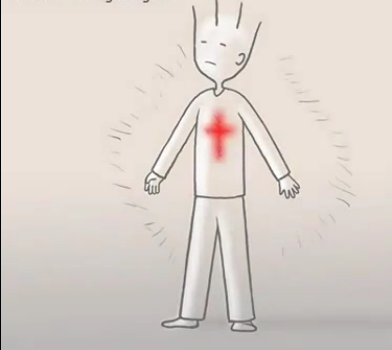

[1] John R.W. Stott The Message of the Sermon on the Mount

MARRIAGE = GOD’S FOUNDATION FOR CIVILIZATION

divorce

God offers grace to divorcees, like he does to each and every person. In the meantime, his plan is for those who are married to stay married.

To listen to the sermon, click the play button:

To download, right click on the link (or do whatever you do on a Mac) and save it to your computer: Download Matthew Part 17


Matthew #17. Matthew 5:31-32

Let’s get some things out in the open right away: It’s an awkward thing to teach on the topic of divorce. To put it bluntly, the reason it is awkward is that the Bible quite clearly condemns it, and yet literally half the people who have been married in this country have also been divorced – Christians included. So I realize that what scripture teaches on this subject may offend some people, hurt others, and even tempt some people to feel condemned. I want to strongly encourage you to resist all those feelings (which are often understandable), and instead listen today to the voice of the Holy Spirit.

Frankly, however, the divorce rate is what it is, in part because churches stopped teaching what the Bible really says about divorce. James 3:1 says that those of us who teach the scriptures will be judged more strictly, and so I believe I have a responsibility to teach clearly on this subject, even if I risk offending some people.

If you have been divorced, I want to plead with you to seriously consider what God says about it. I also want to assure you, on the basis of the Bible, that God certainly offers forgiveness to divorcees, exactly the same way he offers forgiveness to those who gossip and slander, to those who steal, lie, cheat, envy, lust, are selfish, or commit any other sin. Divorce has huge consequences on individuals and societies, but it is neither less nor more of a sin than any other sin. We have all sinned in various ways – not one of us is perfect, and we all deserve eternal punishment as a consequence. But the good news is, Jesus died to take the punishment for what we have done wrong, divorce included.

So please understand, when I teach on divorce, I am not singling anyone out, and I do not somehow think it is the most terrible thing anyone can do. But I have a serious responsibility to clearly explain what scripture says about it, just as I had to do with anger, and lust, and will have to do with everything else that Jesus said in the book of Matthew.

Let’s start with Jesus’ own words:

“It has been said, ‘Anyone who divorces his wife must give her a certificate of divorce.’ But I tell you that anyone who divorces his wife, except for marital unfaithfulness, causes her to become an adulteress, and anyone who marries the divorced woman commits adultery.” (Matthew 5:31-32).

This is not the only place where Jesus talks about divorce. In Matthew 19:4, the Pharisees asked him if divorce was “ok.” He replied:

“Haven’t you read…that at the beginning the Creator made them male and female, and said ‘For this reason a man shall leave his father and mother and be united to his wife and the two will become one flesh’? So they are no longer two, but one. Therefore, what God has joined together, let man not separate.”

In other words, he is saying that human beings ought not to tamper with marriage, which is a union God has created and blessed. When the Pharisees asked him specifically why Moses allowed divorce, Jesus had this shocking reply:

“Moses permitted you to divorce your wives because your hearts were hard. But it was not this way from the beginning. I tell you that anyone who divorces his wife, except for marital unfaithfulness, and marries another woman commits adultery.” (Matthew 19:8-9)

Just in case there was any question about how God feels about this topic, read Malachi 2:16

“I hate divorce, says the Lord God of Israel.”

Please be very clear on this – God does not hate divorced people – he hates the practice of divorce, the sin. If you are divorced and you have any doubt about whether God still loves you, please consider the cross that Jesus died on. Whipped raw with blows that had killed many lesser men, Jesus hung on the cross and drowned in his own body fluid in slow, barbaric, tortuous death. He did it for you. He had the power to avoid that terrible death – the thing that kept him there all the way to death was his love for you. When you consider that, there should be no doubt in your mind that he loves you.

Let’s think about this topic a little bit differently. Smoking cigarettes is bad for your health. There are many, wide-ranging and long-term health consequences to smoking. If you are presently a smoker, there’s no point beating yourself up because you got yourself hooked. Suppose you are suffering from the effects of smoking. The important thing is to figure out what to do now, and how to manage those health problems, now that you have them. Even if you recently got hooked, condemning yourself for the past won’t help you in the present.

On the other hand, it is vitally important to make sure that people who are not yet smokers understand that it is a really bad idea to start. Telling non-smokers to stay away from cigarettes is not the same thing as condemning those who smoke. And it is worthwhile to risk offending a few smokers in order to save others from the damage that smoking causes.

Teaching on divorce is kind of the same way. Divorce is a bad idea, most of the time. There are many, wide-ranging and long-term consequences to divorce. But if you’ve already done it, there’s no point in condemning yourself, or letting others condemn you. Acknowledge your mistake, receive the forgiveness of Jesus, and focus on what he wants to do in your life right now. And I think it is worthwhile to get the message out to others before they also experience some of the long-term problems caused by divorce.

Now that I have made people who both smoke and are divorced feel doubly bad, let’s move on. First, God views marriage as a permanent union. That’s why divorce is a sin. No matter what the laws of the government are, once two people are married, in God’s eyes they remain so until one of them dies. So if a couple divorces, and they remarry other people, in the eyes of God they are simply committing adultery. Now, I am aware that many of you reading this have already divorced and remarried. Please don’t compound the problem by divorcing again. That would only be to sin again. Do ask for forgiveness for your sinful action of divorce, and do thank the Lord for that forgiveness, and live in your new marriage as a forgiven person. The good news about Jesus is, he gives us a clean slate to work with. Jesus’ forgiveness is the answer; multiple divorces are not.

I think divorce breaks God’s heart. He created human beings to be in permanent community with each other. The means he gave to do this, is the family. And the foundation of family is marriage. When a marriage is torn apart, it destroys something God was creating. It does violence to our human need for permanent community based on love and relationship (in fact the Hebrew word for divorce is very closely related to the word for violence). It has now been proven that divorce usually has significant negative consequences on children of divorcees. In the early seventies, some ridiculous studies came out, claiming that divorce really doesn’t faze kids. Some kooky people claimed (and some still do) that divorce is actually better for the kids than a rocky marriage. But the longest most respectable study of the effect of divorce on children came out in the mid 1990s, and it showed that children of divorce struggle much more with long term depression, and they exhibit a whole host of emotional problems that stay with them well into adulthood. I think God weeps whenever divorce papers are signed. If you have had a part in putting your children in this situation, remember that God is available to them to bring them healing and wholeness. His grace and forgiveness covers this also. Commit your kids to him.

Now, many of you will have noticed that Jesus makes a sort of “exception.” He implies that when there has been “marital unfaithfulness,” it is not a sin for the partner who has not been unfaithful to divorce the other. Let’s make it clear that “marital unfaithfulness” in these passages, means simply and only, sexual activity outside the marriage. It doesn’t mean that Bob can divorce Sally because she hasn’t been “faithful” in meeting his needs for beer and backrubs. In fact the Greek word for “marital unfaithfulness” is porneia, and it means simply any sort of sexual activity with someone you are not married to. So when one partner commits adultery, the other is free to divorce. Even so, there is nothing in these passages to suggest that this person has to divorce his or her spouse, or even that he or she should – only that the spouse in this situation may do so without committing a sin. There are, of course many important factors in this sort of decision, and if there are children, they should be high on the list of considerations.

For those of you who are single, these teachings of Jesus ought to create very strong motivation for you to choose carefully when seeking a spouse. If God sees marriage as permanent, you had better start seeing it that way too. Divorce should never be “an option” for a Christian couple. This might also motivate you to do everything you can to help support the marriages of your married friends.

For those of you who are currently married, it is vital, if you haven’t already, to train yourself to see your marriage like God sees it – a permanent union until one of you passes away. When you have that viewpoint, it is possible to work through any difficulties, because you know that no one is going anywhere, that you have time a commitment on your side.

God doesn’t like divorce. It is a sin, and it breaks his heart. It violates the very way he created people to be. There is one instance where God allows it, though even then, reconciliation is God’s first choice. If you have committed the sin of divorce, be assured, it is not an unforgivable offense. But if you have never admitted to yourself and to God and to another person that it is a sin, I highly recommend that you do so right now, and ask God for forgiveness. And if you are married right now, please learn to view your marriage as absolutely permanent – the way God designed it to be.

Invite the Holy Spirit to speak to you right now, and lead you.

Thanks again for making use of Clear Bible.

I want to remind you again that we are a listener-supported ministry, and that means, first and foremost, that we are supported by your prayers. We need and value your prayers for us.

Please pray that this ministry will continue to be a blessing to those who hear it. Ask God, if it is his will, to touch even more lives with these messages. Ask him to use this ministry in making disciples of Jesus Christ.

Please also pray for our finances. Pray for us to receive what we need. Please pray for us in this way before you give anything. And then, as you pray, if the Lord leads you to give us a gift, please go ahead and do that. But if he doesn’t want you to give to us, that is absolutely fine. We don’t want you to feel bad about it. We want you to follow Jesus in this matter. But do continue to pray for our finances.

If the Lord does lead you to give, just use the Paypal Donate button on the right hand side of the page. You don’t have to have a Paypal account – you can use a credit card, if you prefer. You can also set up a recurring donation through Paypal.

You could also send a check to:

New Joy Fellowship

625 Spring Creek Road

Lebanon, TN 37087

Just “Clear Bible” in the memo. Your check will be tax-deductible. Unfortunately, we cannot do the tax deductible option with the paypal donate button, however the money does go directly to support this ministry.


Thank for your prayers, and your support!

IS IT WRONG TO LOOK? THE ANSWER MAY SURPRISE YOU.

IT JUST DOESN’T SEEM LIKE A PICTURE IS A GOOD IDEA FOR THIS ONE… Smile

One thing to consider about lust, is that not everything sexual is lustful or wrong. Certainly, God made sex, and called it good. He designed it to be something to strengthen the bonds between wives and husbands. That means that God also made our sexual desires. It is the temptation to think about or act on these desires outside of of marriage that is the problem

To listen to the sermon, click the play button:

To download, right click on the link (or do whatever you do on a Mac) and save it to your computer: Download Matthew Part 16


MATTHEW #16. Matthew 5:27-30

In college I had a friend who was a Muslim. During my Senior year the church I belonged to sponsored an evangelistic crusade in town. I took the training to be a prayer counselor. Afterwards I went to Anup (not his real name) and told him I wanted to ‘practice’ for the crusade. I asked him if he would pretend to be someone I was sharing the gospel with. The result was a number of extended conversations about God, Christianity and Islam that lasted until we graduated. In a weird sort of way, he began to see me as some sort of spiritual authority, and he would come to me for guidance in his practice of Islam. The strangest situation was when he came to me during Ramandan, a period of special holiness for Islam, lasting forty days. Anup had been fasting during this time (he didn’t eat while the sun was up). He pulled me aside at dinner (the sun had gone down) and told me he had recently gone to a strip-club. He asked me if I thought that was OK during Ramandan.

My friend’s question really helped open up the nature of Islam (and most other religions) to me. You see, he was fasting and keeping external regulations, staying outwardly faithful to his fiancée in Indonesia, but he genuinely didn’t know whether it was right or wrong to watch women strip in front of him. And frankly, he seemed mostly concerned that it might be wrong during Ramandan – he didn’t seem concerned about the rest of the year.

This, in some ways, was the attitude of Jews in Jesus’ day about sexual morality. Under the auspices of this law, people were walking around with their hearts consumed by lust, and yet they believed themselves righteous because they never actually committed the act. Jesus turns all this on its head when he says, “But I tell you that anyone who looks at a woman lustfully has already committed adultery with her in his heart,” (Matt 5:28). What Jesus is saying is that God is concerned both with external actions, and with the state of our hearts. Avoiding adultery is a good thing – and committing adultery is a sin. But sin begins in the heart, and often we allow “heart-sin” to exist happily within us if it doesn’t lead to external sinful actions. Jesus affirms, however, that God sees what is in our hearts as well (see 1 Samuel 16:7).

Let’s consider an example. In our house, there are consequences when one of our children strikes another person. One day a number of years ago, I noticed my oldest child arguing with her younger sibling. The argument grew heated; reason failed to convince. Finally, in anger, she took a swing at her brother. My oldest daughter is many wonderful things, but at five years old, she wasn’t very coordinated. It was a clear miss – no part of her body even touched her brother. However, clearly she intended to strike him and hurt him. I gave her exactly the same discipline I would have given her if the blow had connected. The reason for this is that the real problem was in her heart – deep inside, she wanted to hurt her brother. Whether or not she actually did hit him, she certainly wanted to, and that constitutes a problem in her heart. Outwardly, she was righteous. She had not hit her brother. But inwardly she had given in (in that instance) to sin.

In the same way, that is the problem with lust in the heart. Outwardly, the lustful person may be righteous, but inwardly, he or she has given in to sin. Now obviously, the external consequences of inward lust are far less than actual adultery. Inward lust does not usually wreak such destruction on relationships as outward acts like adultery and fornication. However, spiritually speaking – that is, in the eyes of God, a sin is a sin, whether it is committed only in the mind, or committed outwardly as well.

And there are consequences even to inward lust that is not acted upon. It can corrupt us into accepting standards other than God’s. It can interfere in the physical relationship between spouses – both as a result of guilt, and as a result of desiring physical intimacy with people other than one’s spouse. And there is always the danger that it will lead to the outward actions of physical adultery.

One thing to consider about lust, is that not everything sexual is lustful or wrong. Certainly, God made sex, and called it good. He designed it to be something to strengthen the bonds between wives and husbands. That means that God also made our sexual desires. Just as it is isn’t wrong to be angry, and yet anger creates all sorts of temptations, so it isn’t wrong to feel physically attracted to someone – even if you aren’t married to them. But those attractions do create all sorts of temptations. Focusing on that attraction, thinking about it, nurturing it, imagining what it would be like to be with that person – that is where the problem comes in. That is lust. Following up on those temptations – either in reality, or even just in the mind, says Jesus, is a sin.

So, like with anger, we need to deal with it before it becomes sin.

So how do we avoid lust in the heart? I will confess that for many years, I believed this to be practically impossible. Lust was one of my biggest struggles. I am still not immune to it, however, God has changed both my mind and my heart concerning the possibility of conquering lust. He can keep us from giving in to the temptation to lust. We can help him to do so when we do the following things:

First, surrender your heart completely to Jesus. If there is any corner of your heart where you still “hold out” against God, then that corner can easily become a foothold for the devil. Ted Bundy, the famous serial killer who raped and killed at least 28 women and girls, granted an interview to psychologist James Dobson, just one day before Bundy’s execution. Bundy offered some chilling insights:

I wasn’t some guy hanging out in bars, or a bum. I wasn’t a pervert in the sense that people look at somebody and say, “I know there’s something wrong with him.” I was a normal person. I had good friends. I led a normal life, except for this one, small but very potent and destructive segment that I kept very secret and close to myself.

There was an area of his life that was out of God’s control, and ultimately it led to the destruction of dozens of lives, including his own. If we have some area of life that we withhold from God, it gives Satan a stronghold – that is, a limited area where he still has power to control. It is almost impossible to resist temptation when there is a stronghold related to that temptation. For instance, suppose I have made some sort of inner commitment that I will never allow my emotional or physical needs to go unmet. That means that if God desires to meet those needs in a way that I don’t understand, I will say no to God – and by doing so, I have given the devil an opportunity. It’s very hard to say “yes” to God, when deep down, you are still saying “no” to him. So we need to surrender everything to God. If the Holy Spirit brings to your attention something that you have not surrendered to God, then take a moment to confess it as a sin, and receive God’s forgiveness, and then surrender that area.

Second, control your eyes. Jesus said “If your right eye causes you to sin, gouge it out and throw it away. It is better for you to lose one part of your body than for your whole body to be thrown into hell,” (Matt 5:29). Lust is fueled by the imagination, and the imagination is fueled by what we see, hear and read. So if you want to conquer lust, you need to control what you look at, listen to and read. I recommend EXTREME caution in choosing which TV programs and movies you watch. Perhaps this sounds a bit overly cautious, but I would be in good company if I said “It is better for you to lose the choice to see an ‘R’ movie than for your whole body to be thrown into hell.” TV and movies will be a problem for some people and not for others. Please don’t try to deceive yourself if you suspect that what you are watching might contribute to your struggle with lust. Be careful of the magazines you read, and the web sites you visit. Certainly there is no other purpose for pornography than to feed lustful desires. Even publications which are not overtly pornographic often use sexually stimulating images and stories to sell the magazines. This is not something to “play around” with. Far better for you to go through life not seeing the movies and TV programs that others see, not reading what others read, not going to the places they go, than for you to end up trapped by lust, and going to hell.

It seems to me that when it comes to lust, men tend to be more susceptible to visual stimulus than women. Women are tempted to lust also, of course, but the visual part of it is more likely to be a problem for men. Part of that is simply biology. I think it is normal and natural for most men to notice attractive women. One look at an attractive woman is simply a biological reaction for men – not necessarily lust. The second look, and the other looks and imaginations that follow it, are what constitute lust.

With this in mind, I strongly encourage women to think carefully about how to dress. It is certainly OK to look nice. However, sometimes it is easy for women to cross the line between looking nice and becoming sexually provocative. I personally think many women don’t realize how much men are affected by what they see. If you aren’t sure if you are crossing the line with what you are wearing, ask your husband, or brother or father if he would be comfortable having other men see you in what you are wearing. Men, be honest in your answers to this, and women, please believe what your men tell you about it.

Third, become accountable to another person. Because it is a sin of the heart, lust is usually a “secret sin.” Of course, no sin is secret from God, but it is often secret from others. The problem is, secrecy gives sins power. The apostle John writes:

“But if we walk in the light, as he is in the light, we have fellowship with one another and the blood of Jesus, his Son, purifies us from all sin,” (1 John 1:7).

“Walking in the light” includes confessing our sins to each other (see 1 John 1:8-10, James 5:16). When someone else really knows your sins (i.e., you have confessed them to someone) and has given you assurance of God’s forgiveness, those sins lose their power to hold you. You don’t need to be like a politician, afraid that some thing from your past might be dug up to ruin you. Instead, if you have a friend whom you regularly confess to, everything is already “dug up” and there’s no secret sin that no one knows about. You’re free! Not only that, but it is always helpful to have someone praying for you, and to know that he or she is going to ask you about your struggles. Please use common sense in finding someone to confess to, and to be accountable to. In this situation, men should be with men, and women with women. It is often good to confess things to your spouse, but it is almost always beneficial to have someone else, of your same gender, to talk to as well.

Fourth, limit where and when and how much you drink alcohol. Alcohol is not your friend when it comes to lust. Alcohol loosens inhibitions, and resistance to temptation. People do things under the influence of alcohol that they would never do sober, and many people regret it very much afterwards. Scripture is very clear that you should never drink enough to let alcohol affect your judgment. It is a really bad idea, and a sin, to get drunk at all (in case you didn’t know, you kill approximately 10,000 brain cells every time you get drunk). It is even worse if you are having a few drinks with friends of the opposite sex to whom you are not married. It’s true, perhaps nothing bad will happen, but certainly, nothing good comes from it. At best, you might manage to avoid a worse situation. But the “worse” possibilities are almost endless. A little booze with friends could end up with you contracting a disease, or destroying your marriage, or having a baby with someone you don’t even love.

No one ever looks back on their life and says, “Gee, I wish I had spent more time getting drunk with people – maybe I could have had more meaningless drunk-sex that I hardly even remember, with people I really don’t care about, and maybe even picked up a disease or two.”

Now, as with all sins, there is grace. Remember, Jesus said he came to fulfill the law. On the one hand, that means that the standard does not change. But it also means that he has fulfilled the law for us. In other words, through Jesus, we are forgiven for failing in this (or any) area. We are cleansed from our sins and made holy. Certainly, we should not take that as an excuse to just keep on sinning, but when we do sin, there is grace and forgiveness and healing. And through Jesus, if we allow him to work in our hearts and lives, we can learn to walk a different path, and let him work his holiness out in our lives and behaviors. That is his desire and his plan.

Let the Holy Spirit keep speaking to you through the scriptures today!

Thanks again for making use of Clear Bible.

I want to remind you again that we are a listener-supported ministry, and that means, first and foremost, that we are supported by your prayers. We need and value your prayers for us.

Please pray that this ministry will continue to be a blessing to those who hear it. Ask God, if it is his will, to touch even more lives with these messages. Ask him to use this ministry in making disciples of Jesus Christ.

Please also pray for our finances. Pray for us to receive what we need. Please pray for us in this way before you give anything. And then, as you pray, if the Lord leads you to give us a gift, please go ahead and do that. But if he doesn’t want you to give to us, that is absolutely fine. We don’t want you to feel bad about it. We want you to follow Jesus in this matter. But do continue to pray for our finances.

If the Lord does lead you to give, just use the Paypal Donate button on the right hand side of the page. You don’t have to have a Paypal account – you can use a credit card, if you prefer. You can also set up a recurring donation through Paypal.

You could also send a check to:

New Joy Fellowship

625 Spring Creek Road

Lebanon, TN 37087

Just “Clear Bible” in the memo. Your check will be tax-deductible. Unfortunately, we cannot do the tax deductible option with the paypal donate button, however the money does go directly to support this ministry.


Thank for your prayers, and your support!

IS ANGER A SIN?

anger


To listen to the sermon, click the play button:

To download, right click on the link (or do whatever you do on a Mac) and save it to your computer: Download Matthew Part 15

Matthew #15. Matthew 5:21-26

Let’s do a quick review to set the stage for this next section of the sermon on the mount. Jesus began the whole discourse by describing several character traits that are the manifestations of his own life, flowing through the lives of people who follow him. He promises that letting him live through us in that way brings blessing. Next, he points out that when we let him live through us in that way, it is salt and light to the world. Last time, we saw how he goes on to declare that he does not abolish the law, but rather, affirms it and complete us.

Now, Jesus explains what he has been saying through several examples. He starts with the issue of anger and hate. Jesus is fleshing out everything he has said so far. He is showing how it looks to be meek, to show mercy and to be a peace-maker. He is explaining how “salty” (think “counter-cultural”) it is to let him work through us, and he is affirming and further explaining the teaching of the Old Testament on this issue, and showing how the Jews in his days were actually straying from the law.

The rest of chapter five is divided into six segments, starting at verses 21, 27, 31, 33, 38, and 43. Each segment begins with the same phrases. Jesus starts each one by saying, “You have heard that it was said…” and then he mentions a common Jewish teaching; after this he completes the phrase with this: “…but I say to you…” This little structure is more important than we realize. By the time of Jesus, Jewish Rabbis had begun to the adopt the practice of quoting other Rabbis and commenting on what they had said. In other words, when a Rabbi taught about the Sabbath, he did not teach directly from the Old Testament scriptures that talk about the Sabbath. Instead, he might read a scripture about it, and then comment on the teachings of other Rabbis – not on the Old Testament text itself. He might say something like this: “Rabbi Hillel taught that to keep the Sabbath holy it was necessary to…” Or, “It has been said that these four things are essential to the proper observation of the Sabbath…”

Jesus was rejecting this kind of teaching. He says “You have heard it said…” but then, “I say to you..” In other words, he isn’t quoting someone else, or citing some other Old Testament authority. He is teaching on the basis of his own authority. He is clearly saying that it doesn’t matter to him what someone else might have said about it.

There is one more thing we should notice with each of these six segments. The Jewish teaching was focused on outward behavior. For this example (in verse 21), if you just didn’t murder someone, you were fine, according to the Rabbis. But Jesus was focusing on heart-attitudes. Good outward behavior is great. But Jesus is pointing out that sin begins in the heart. You might refrain from murder, and still have murder in your heart; according to Jesus, that is just as much a sin.

Let’s continue on by looking today at this first segment, where Jesus explains how a disciple relates to anger and hate.

The story goes that when Sinbad and his sailors landed on a tropical island, they saw high up in the trees coconuts which could quench their thirst and satisfy their hunger. These coconuts were far above the reach of Sinbad and the sailors, but in the branches of the trees were chattering apes. Sinbad and his men began to throw stones and sticks up at the apes. This enraged the monkeys and they began to seize the coconuts and hurl them down at the men on the ground. That was just what Sinbad and his men wanted. They got the apes angry so that the apes would gather their food for them.

In the same way, the devil can often use our anger to provoke us to harsh words, rash actions and sinful behaviors. When we give in to these impulses we are just like Sinbad’s monkeys – we are being used by the devil for his purposes. Scripture warns against this in numerous places, and Jesus reiterates the seriousness of anger here in Matthew 5:21-26.

The Pharisees and teachers of the Law were content to judge only external behaviors – in this case, murder (v. 21) and a particularly bad insult (“Raca”, v. 22). The Jewish leaders, in taking this approach were in accord with years of rabbinical commentary on the Old Testament. But Jesus insists that the root of the problem is anger, held in the heart. Murder and insults were only manifestations of sinful anger. Therefore Jesus announces that anger itself is a problem. In so doing, Jesus cuts through years of Jewish commentaries that led people away from the scripture, and reminded them of the many scriptural warnings about anger.

I personally was shocked when I began to research what the Bible has to say about anger. I think I had become a little like the Jews, and had, in my mind, softened what scripture really says. In Genesis 4:6 God speaks to Cain about his anger against Abel, and cautions him that unless he masters it, sin will master him. Job 19:29 explicitly states that a person’s wrath will bring him punishment. Psalms 37 warns against becoming angry. The book of Proverbs is also full of warnings against anger. Here are four of them that are representative of the rest:

“A fool shows his annoyance at once, but a prudent man overlooks an insult.” (12:16)

“An angry man stirs up dissension, and a hot-tempered one commits many sins.” (29:22)

“For as churning the milk produces butter, and as twisting the nose produces blood, so stirring up anger produces strife.” (30:33)

“Better a patient man than a warrior, a man who controls his temper than one who takes a city.” (16:32)

The New Testament also warns against “fits of rage” (Galatians 5:20) and tells us to get rid of anger and rage (Colossians 3:8). James has a very strong statement about anger:

My dear brothers, take note of this: Everyone should be quick to listen, slow to speak and slow to become angry, for man’s anger does not bring about the righteous life that God desires. (James 1:19-20)

So anger is indeed a serious business, and as James points out, it does not lead to righteousness. But some of the Biblical record about anger is confusing. After all, God gets angry, so how can anger be a sin? Not only that, but when someone does something particularly hurtful to us, can we really stop that first initial burst of anger?

I think that scripture is actually pretty clear about the answers to these questions. When we look at what the Bible as a whole says about anger, I think a good statement that summarizes it all goes something like this:

Anger, when it is not dealt with, leads to sin and strife.

The emotion of anger, because it is an emotion, is not in and of itself a sin. But anger tempts us to sin. Think of a time when you were so mad, you just wanted to haul off and hit someone. What you were experiencing was a temptation caused by anger.

Anger tempts us in many other ways – it tempts us to use hurtful words, or to take spiteful actions, to damage the property of others or to take revenge in some way. Anger also tempts us to hate, or to become bitter. It tempts us to not forgive others.

So even though the feeling of anger in and of itself is not sin, it can very quickly lead to sin, which is why the Bible warns so strongly against it. And there does come a point when we move from feeling angry to being angry. We can get to this point very quickly. Being angry happens when we choose at some level to hold on to anger. We choose (perhaps even unconsciously) to not resolve our anger as soon as possible. Being angry is a sin. If you are wondering how to tell if you simply feel angry (which is not a sin) or if you are being angry (which is a sin) you can ask yourself a few important questions:

What efforts have I made to resolve the feelings of anger? (i.e. have you expressed it to the person you’re angry with? Have you prayed about it? Have you, after venting your anger, forgiven the person? The more efforts you make to resolve it, and the sooner you make those efforts, the better off you are.)

How long have I felt this way? (the longer it is, the more likely you are being angry. In fact, the Apostle Paul suggests that being angry longer than one day gives a foothold to the devil [Ephesians 4:26]).

What is my underlying attitude toward the person I’m angry at? (If you wouldn’t cry to hear she lost all her fingernails in a freak bowling accident, your anger is probably sinful).

What have I done with my feelings of anger? (If you have expressed them clearly to the person without deliberately trying to hurt them, you probably just feel angry. But if you have bottled up your feelings and still think about them often, you are probably being angry).

It seems to me that Jesus was talking about being angry (rather than only feeling angry) when he said “anyone who is angry with his brother will be subject to judgment.” He was also, of course, talking about the many sins that feelings of anger tempt us to commit. In any case, Jesus’ antidote to anger (which the rest of scripture also affirms) is to settle it quickly.

He gives the example in verse 23 of someone in an act of worship who remembers a dispute. Jesus actually recommends that such a person leave the middle of a worship service to go and resolve his anger and dispute with a brother (fellow Christian). Jesus knows that unresolved anger quickly leads to being angry, as well as a host of other sins. Therefore he emphasizes the importance of resolving differences as quickly as humanly possible, even if it means leaving in the middle of church! Anger is like fire, and if you try to hold on to it for even a little while it will burn you and destroy your surroundings.

Now it is important to learn to express anger. Holding it inside will not resolve it. Pretending we don’t feel angry will not solve anything. But we must learn to express anger in a way that does not try to hurt others, but only explains how we feel. And once we have expressed it in this way as fully as we can, we must learn to let go of it. Because simply expressing our anger won’t fix things either, if we don’t then release it. I know people who have been expressing anger for years, but never letting go of it. They are living in the sin of being angry.

One more brief observation. It seems to me that often we think we are angry when we are really just hurt. We express ourselves angrily, and we even embrace anger (sinfully) but the original problem was that we were hurt deeply. Once again, avoid being angry. Learn to express your hurt without trying to hurt the other person back. As Paul writes:

“In your anger do not sin”: Do not let the sun go down while you are still angry, and do not give the devil a foothold. (Ephesians 4:26-27)

One thing that has helped me to let go of anger is the realization that God has been angry at all sin – including the sins perpetrated against me. God didn’t overlook what was done to me by others – he punished it, the same way he punished my sins – which is to say, the punishment fell upon Jesus.

If I believe that my sins were justly paid for and punished in Jesus’ death on the cross, I must also believe the same is true of the sins committed by others that directly hurt me. The sin that I want to be angry about has already been punished. God’s anger has already been unleashed on it. Now it is a matter between the person who did it, and Jesus. Knowing this helps me to let it go.

Thanks again for making use of Clear Bible.

I want to remind you again that we are a listener-supported ministry, and that means, first and foremost, that we are supported by your prayers. We need and value your prayers for us.

Please pray that this ministry will continue to be a blessing to those who hear it. Ask God, if it is his will, to touch even more lives with these messages. Ask him to use this ministry in making disciples of Jesus Christ.

Please also pray for our finances. Pray for us to receive what we need. Please pray for us in this way before you give anything. And then, as you pray, if the Lord leads you to give us a gift, please go ahead and do that. But if he doesn’t want you to give to us, that is absolutely fine. We don’t want you to feel bad about it. We want you to follow Jesus in this matter. But do continue to pray for our finances.

If the Lord does lead you to give, just use the Paypal Donate button on the right hand side of the page. You don’t have to have a Paypal account – you can use a credit card, if you prefer. You can also set up a recurring donation through Paypal.

You could also send a check to:

New Joy Fellowship

625 Spring Creek Road

Lebanon, TN 37087

Just “Clear Bible” in the memo. Your check will be tax-deductible. Unfortunately, we cannot do the tax deductible option with the paypal donate button, however the money does go directly to support this ministry.


Thank for your prayers, and your support!

WHO IS THE LIGHT OF THE WORLD? YOU, OR JESUS?

salt and light by bernie rosage


Picture by Bernie Rosage


Some Christians act as if Jesus said that we are the “honey-pot” of the world. We think we can just sweeten things up with love. But Jesus used a very different metaphor. Salt is essential to life, but it is also caustic. It has a bite to it sometimes.


To listen to the sermon, click the play button:

To download, right click on the link (or do whatever you do on a Mac) and save it to your computer: Download Matthew Part 13


Matthew #13 . Matthew 5:13-16

We have come to what I believe is the “theme statement” of Jesus’ sermon on the mount. The character traits of Jesus-followers are listed in 5:1-12. After this, Jesus goes into some specific details about how those character traits play out in various situations. But in Matthew 5:13-16, Jesus explains the point of it all:

“You are the salt of the earth. But if the salt should lose its taste, how can it be made salty? It’s no longer good for anything but to be thrown out and trampled on by men.

“You are the light of the world. A city situated on a hill cannot be hidden. No one lights a lamp and puts it under a basket, but rather on a lampstand, and it gives light for all who are in the house. In the same way, let your light shine before men, so that they may see your good works and give glory to your Father in heaven.” (Matt 5:13-16, HCSB)

We need to be very clear here. Jesus is not speaking to “the world” or “people in general.” He is speaking to his disciples: those who have put their trust in him, surrendered their lives to him.So what exactly does Jesus mean when he tells his disciples that they are salt and light?

Salt. Salt accomplishes essentially two things: it flavors, and it preserves. As Christians, we are to have a flavor that is distinct from the world around us. I remember in High School, most of my friends were not Christians. At the time I felt I had a mission to show them that Christians could be cool, and have a good time – basically I wanted to prove to them that being Christian wasn’t boring. So I went to the same parties as my friends. When they drank, I drank, although I never got drunk, even when they did. What I realize now is that I came very close to losing my saltiness in that period in my life. Certainly, no one became a Christian because of me. I see the church at large in America in the same sort of danger of ceasing to flavor society. Many church-goers have the same primary goals in life as anyone else. They and their children look like everyone else, dress like everyone else, talk like everyone else. What is the main difference between Christians and non-Christians in America? Unfortunately for vast numbers it is only the way they spend one particular hour each week.

The world around us cries “Fit in! Fit in! Fit in! Don’t be weird, conform!” But Jesus calls, “Don’t fit in! Don’t conform! Be different!” Frankly, it becomes very difficult for Him to influence the world through us if we are the same as the world. Flavorless salt is good for nothing. The truth is, there is, and there has to be, a fundamental difference between Christians and non-Christians, between the church and the world. If there isn’t, we are useless, good for nothing.

Salt is also a preservative. It was used in Jesus’ day to preserve meat which would otherwise decay. What this means is that Christians ought have influence in society in such a way that culture’s natural slide into degeneracy and decay is arrested. In plain language, we ought to be so different and flavorful that because of us, society stops becoming so immoral, indecent and wicked.

Helmut Thielicke wrote that some Christians appear to think Jesus said we ought to be the honey pot of the world – and sweeten things up with God’s love. But salt is a harsher agent than sweet. Salt is caustic – it bites, just as the true message of God’s judgment and grace has a bite to it that leaves us in despair of ourselves and hoping in Jesus only. We don’t influence society through sweetness, but through saltiness.

LIGHT. Now, when I first read the part about “light,” I am reminded of something Jesus said in the gospel of John:

Then Jesus spoke to them again: “I am the light of the world. Anyone who follows Me will never walk in the darkness but will have the light of life.” (John 8:12, HCSB)

So which is it? Is Jesus the light of the world, or are we?

Jesus is the light of the world. But now that he has ascended to heaven, and sent the Holy Spirit to live inside of us, Jesus is the Light of the world – through us. I don’t mean that we take the place of Jesus, or that we should consider ourselves divine or messianic. But Jesus now uses us to show the world His light. Since Jesus talks about lamps, let’s adapt this to modern times. The light from a lamp doesn’t come from the lampstand, or the lampshade, or even the bulb. The light comes from the electricity that runs through the lampstand, up into and through the bulb. We function as the lampstand, or the lampshade or maybe even the bulb. But the light doesn’t come from us – it originates from Jesus, and shines out through us.

This fits perfectly with the entire sermon on the mount. Jesus wants to show his character to the world through his followers. His character is humble, dependent upon God for everything; willing to honestly address grief, sin and brokenness; willing to wait on God to act. The character of Jesus manifested through us desires real righteousness, real right-relationship with God. It is merciful, and focuses on true purity of heart. It seeks to reconcile others to God, and to each other. It endures persecution and suffering with a clear vision of the eternal joy that is our future, if we remain in Jesus. This is what Jesus wants to shine through us.

If salt flavors and preserves, light dispels darkness. Throughout scripture, light is often used as a symbol of truth. So when Jesus calls us the light of the world, he is also telling us that we are the vehicle by which his truth is to spread. We are to share the truth of God’s Word with the world, to bring light into darkness. In other words, we are also to tell others about Jesus.

Tony Campolo once said, “Preach the gospel. If necessary, use words.” I don’t like that quote at all, because it implies that words are often not necessary – and that is false. Every Christian has a responsibility to not only live as salt (Christian actions and lifestyle) but also as light (speaking verbally about Jesus). I can show you Muslims and Hindus and Jews who live morally upright, kind and loving lives (at least on the outside). But they are not dispelling darkness. The apostle Paul writes:

“How then they call on the one they have not believed in? And how can they believe in the one of whom they have not heard? And how can they hear without someone preaching to them?” (Romans 10:14, emphasis mine).

So we need to speak out the truth of Jesus in order to have influence in the world, in order to be light.

Now, all this is a very tall order. It sounds good in theory. But how can we really show the character of Jesus to the world through our messed-up lives?

Sometimes we feel that while salvation is God’s work for us, following God after we are saved is all our work for God. Actually, that is false. Andrew Murray writes:

“The idea they have of grace is this – that their conversion and pardon are God’s work, but that now, in gratitude to God , it is their work to live as Christians, and follow Jesus. There is always the thought of a work that has to be done and even though they pray for help, still the work is theirs.[1]

Murray goes on to explain that as we surrender to Jesus (not as we work harder) His Holy Spirit has more control in our lives, and thus our lives are more and more conformed to God’s holiness. Elsewhere, Murray also writes:

“Oh that you would learn a lesson from the time of your first coming to the saviour! Remember dear soul, how you then were led, contrary to all that your experience, and your feelings, and even your sober judgment said, to take Jesus at his word, and how you were not disappointed. He did received and pardon you; He did love, and save you – you know it. And if he did this for you when you were an enemy and a stranger, what think you, now that you are His own, will He not much more fulfill his promise?[2]

The apostle Paul writes, in Romans 8:31-32

What then shall we say in response to this? If God is for us, who can be against us? He who did not spare his own Son, but gave him up for us all – how will he not also, along with him, graciously give us all things?”

The point is, if we can trust Jesus to accomplish our salvation, we can surely trust him to accomplish our on-going life of obedience to him as well. We need to realize this: through dying on the cross, rising again and sending the Holy Spirit, Jesus has made it possible for anyone to obey. Now I am not suggesting that anyone can attain perfection in this life. But the power of Jesus’ death on the cross is such that when we fail, forgiveness is available to us, and we can continue as if we never failed to obey Him. It does not matter how many times we fail, nor how often, or in what way. All that matters is that we receive the love and grace and forgiveness God has made available to us, and so continue on in obedience. And as we surrender ourselves more and more to him, obedience comes more easily and more naturally – not from working harder, but from surrendering more.

Having made that point, the only way we need to fear the high standards of the Sermon on the Mount, is if we attempt to attain them without Jesus and his Holy Spirit.

We might summarize all this with four main points:

1) We ought to live lives that are radically different from the society around us. It should be obvious that we are distinct from the worldly cultures we live in.

2) We ought to seek to influence culture so as to preserve the good in society. This means supporting families and good government, seeking to change laws and practices that are unjust and destructive, and speaking out about right and wrong.

3) We must speak out the good news –all people are sinners, who deserve God’s wrath and the very worst that life can dish out. But God so loved the world that he sent his only son to die for us, so that whoever puts their trust in Him can be saved to new life now, and to eternal life after death.

4) We do all this by relying on Jesus more, trusting him more and more to let His character shine through us.

<<< >>>

Thanks again for making use of Clear Bible.

I want to remind you again that we are a listener-supported ministry, and that means, first and foremost, that we are supported by your prayers. We need and value your prayers for us.

Please pray that this  ministry will continue to be a blessing to those who hear it. Ask God, if it is his will, to touch even more lives with these messages. Ask him to use this ministry in making disciples of Jesus Christ.

Please also pray for our finances. Pray for us to receive what we need. Please pray for us in this way before you give anything. And then, as you pray, if the Lord leads you to give us a gift, please go ahead and do that. But if he doesn’t want you to give to us, that is absolutely fine. We don’t want you to feel bad about it. We want you to follow Jesus in this matter. But do  continue to pray for our finances.

If the Lord does lead you to give, just use the Paypal Donate button on the right hand side of the page. You don’t have to have a Paypal account – you can use a credit card, if you prefer. You can also set up a recurring donation through Paypal.

You could also send a check to:

New Joy Fellowship

625 Spring Creek Road

Lebanon, TN 37087

Just “Clear Bible” in the memo. Your check will be tax-deductible. Unfortunately, we cannot do the tax deductible option with the paypal donate button, however the money does go directly to support this ministry.

Thank for your prayers, and your support!


[1] Abide in Christ. Andrew Murray, Christian Literature Crusade, Fort Washington, PA, 1968.

[2] Same as above